

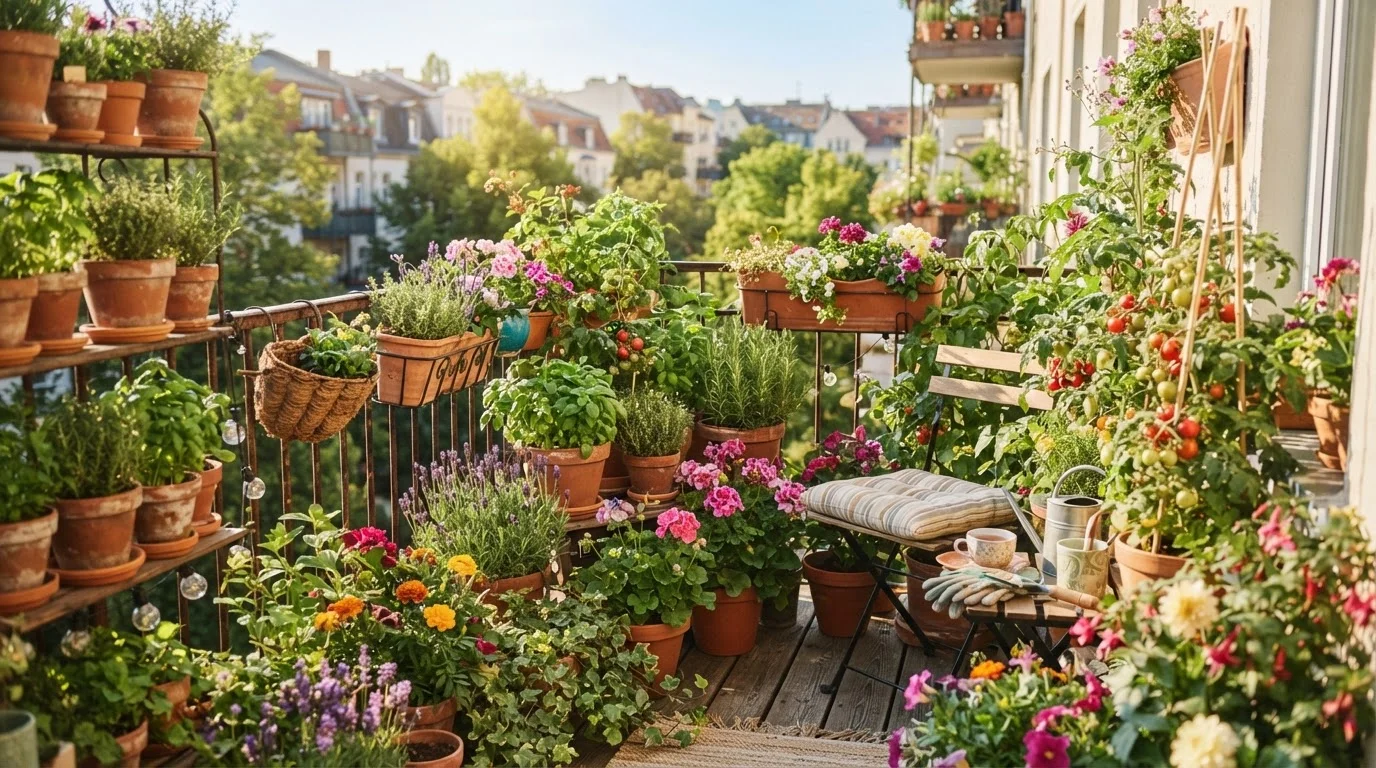
Key Takeaways
- Container gardening works well in small or paved spaces where in-ground planting isn't possible.
- Pots dry out faster than garden beds, so watering frequency is a genuine ongoing commitment.
- Soil quality and drainage are the two biggest factors separating thriving containers from struggling ones.
- Most vegetables, herbs, and many flowers adapt well to containers when given adequate pot size.
- Root-bound plants and nutrient depletion are common pitfalls that regular repotting and feeding can prevent.
Grows anywhere with adequate light
Containers work on balconies, patios, rooftops, and driveways — anywhere in-ground planting is impractical. This makes gardening possible for renters and those in urban or paved environments.
Full control over soil quality
You choose and amend the growing medium entirely, which is especially valuable where native soil is heavy clay, sandy, compacted, or contaminated.
Easier pest and disease management
Isolating plants in separate containers limits the spread of soil-borne diseases and certain pests. A sick plant can be moved and treated without affecting its neighbors.
Portable and seasonally flexible
Tender plants can be brought indoors before frost, relocated to chase sun as seasons shift, or rearranged to suit changing spaces.
Low barrier to entry for beginners
Starting with a single pot requires minimal investment, no heavy digging, and little prior experience — making it an accessible first step into gardening.
Dries out much faster than garden beds
Containers lose moisture quickly through evaporation and drainage, often requiring daily watering in warm weather. This is the most common cause of container plant failure.
Nutrients deplete rapidly
Regular watering leaches fertilizer from potting mix within weeks. Without supplemental feeding throughout the season, plants become pale, slow-growing, and unproductive.
Root space is strictly limited
Plants that outgrow their containers become root-bound, which stunts growth and reduces fruiting. Repotting into larger containers is necessary but not always convenient.
Extreme temperatures stress roots more
Pot walls heat up and cool down faster than ground soil, exposing roots to temperature swings that in-ground plants avoid. Dark-colored pots in full sun can overheat roots significantly.
Ongoing cost of potting mix and containers
Quality potting mix needs refreshing or replacing each season, and containers themselves represent an upfront cost that in-ground or even raised-bed growing avoids.
Our Verdict
Container gardening is a genuinely practical approach for many American homeowners and renters, offering flexibility and accessibility that in-ground growing simply can't match. Its real limitations — faster drying, restricted root space, and ongoing fertilizer needs — are manageable with good habits rather than a reason to avoid it altogether.
Ideal for renters, apartment dwellers, gardeners with limited mobility, or anyone working with a patio, balcony, or paved outdoor space.
Why Container Gardening Has Become So Popular
Not everyone has a yard, good native soil, or the physical capacity to dig and till. Container gardening solves all three problems at once. A pot, a bag of quality potting mix, and a sunny spot — on a balcony, a driveway, or a front stoop — are enough to grow food, flowers, or fragrant herbs. That accessibility drives the format's broad appeal.
But container gardening isn't simply a compromise for people without garden beds. Even experienced gardeners with ample outdoor space choose pots deliberately — to control soil conditions, display plants at eye level, or bring tender perennials indoors before frost. Understanding both the strengths and real limitations of containers helps you get the most from the method.
Grows anywhere with adequate light
Containers work on balconies, patios, rooftops, and driveways — anywhere in-ground planting is impractical. This makes gardening possible for renters and those in urban or paved environments.
Full control over soil quality
You choose and amend the growing medium entirely, which is especially valuable where native soil is heavy clay, sandy, compacted, or contaminated.
Easier pest and disease management
Isolating plants in separate containers limits the spread of soil-borne diseases and certain pests. A sick plant can be moved and treated without affecting its neighbors.
Portable and seasonally flexible
Tender plants can be brought indoors before frost, relocated to chase sun as seasons shift, or rearranged to suit changing spaces.
Low barrier to entry for beginners
Starting with a single pot requires minimal investment, no heavy digging, and little prior experience — making it an accessible first step into gardening.
Where Containers Fall Short
Recognizing the constraints of container growing is just as useful as knowing its advantages. The most common problems — overwatering, underwatering, nutrient exhaustion, and root restriction — all trace back to the fact that a pot is a finite, closed environment.
Dries out much faster than garden beds
Containers lose moisture quickly through evaporation and drainage, often requiring daily watering in warm weather. This is the most common cause of container plant failure.
Nutrients deplete rapidly
Regular watering leaches fertilizer from potting mix within weeks. Without supplemental feeding throughout the season, plants become pale, slow-growing, and unproductive.
Root space is strictly limited
Plants that outgrow their containers become root-bound, which stunts growth and reduces fruiting. Repotting into larger containers is necessary but not always convenient.
Extreme temperatures stress roots more
Pot walls heat up and cool down faster than ground soil, exposing roots to temperature swings that in-ground plants avoid. Dark-colored pots in full sun can overheat roots significantly.
Ongoing cost of potting mix and containers
Quality potting mix needs refreshing or replacing each season, and containers themselves represent an upfront cost that in-ground or even raised-bed growing avoids.
For a deeper dive into how container growing compares to other approaches, see our article on raised beds vs. in-ground planting to weigh all three options against your specific space and goals.
Soil, Drainage, and Feeding: The Non-Negotiables
The single most impactful decision in container gardening is what you fill your pots with. Garden soil from your yard is almost always a poor choice — it compacts in containers, restricts roots, and drains poorly. A quality, well-aerated potting mix designed for containers makes a measurable difference in plant health.
Potting Mix vs. Garden Soil: An Important Distinction
Potting mix and garden soil are not interchangeable in containers. Potting mix is formulated to stay loose and aerated in the confined space of a pot, while garden soil compacts under repeated watering and restricts oxygen to roots. Look for a mix that lists perlite, vermiculite, or bark among its ingredients — these components maintain drainage over time. Replacing or refreshing potting mix each growing season is good practice, especially in pots used for vegetables.
Feeding matters more in containers than in garden beds because nutrients leach out with every watering. A balanced, slow-release fertilizer worked into the potting mix at planting, supplemented with liquid feeding every few weeks during the growing season, keeps plants productive. For guidance on complementary techniques like pairing plants for mutual benefit, our companion planting guide applies the same principles at pot scale.
10–12 inches
Minimum pot depth for most vegetables
University cooperative extension programs generally recommend at least 10–12 inches of soil depth for tomatoes, peppers, and similar crops to develop adequate root systems.
1–2x daily
Summer watering frequency for small pots
In hot, dry climates, containers smaller than 12 inches in diameter may need watering once or twice daily to prevent wilting, compared to every 2–3 days for garden beds.
What Grows Well — and What Struggles
Herbs are arguably the best candidates for containers: basil, parsley, chives, mint (which actually benefits from containment, since it spreads aggressively in the ground), and thyme all perform well in pots with good drainage and adequate light. If you want to take herbs indoors year-round, our indoor herb growing guide covers what most windowsill setups get wrong.
Compact vegetable varieties — cherry tomatoes, peppers, lettuce, radishes, and bush beans — adapt well to containers when given deep-enough pots. Large, sprawling vegetables like pumpkins or full-size watermelons are poor choices; the root systems outgrow even large containers quickly. Flowering annuals like petunias, marigolds, and nasturtiums are reliably successful and add color to patios throughout the season. For selecting plants that earn their keep in a limited footprint, the article on plants suited to small gardens offers useful context.
Watering rhythm is the habit that most determines success. Containers — especially terracotta and smaller pots — can dry out within a day in summer heat. Our guide to watering habits explains how to read your plants and adjust frequency rather than following a fixed schedule.