
Watering Your Garden: The Habits That Separate Thriving Plants from Struggling Ones

Key Takeaways
- Deep, infrequent watering encourages roots to grow downward and builds drought resilience.
- Morning is the optimal time to water — foliage dries quickly, reducing disease risk.
- Overwatering is just as harmful as underwatering; soggy roots suffocate and rot.
- Mulching around plants significantly reduces how often you need to water.
- Soil type and weather conditions should guide your watering schedule, not a fixed calendar.
Why Watering Technique Matters More Than Frequency
Most gardeners who struggle with wilting or yellowing plants assume they're not watering enough. Often, the real problem is how they're watering — not how often. Technique, timing, and volume together determine whether the water you apply actually reaches plant roots where it's needed.
Plants draw water from the soil through their root systems, which extend downward and outward from the base of the stem. Shallow, frequent watering dampens only the top inch or two of soil, training roots to stay near the surface where they're vulnerable to heat and drought. Deep, slower watering — letting moisture penetrate six to eight inches — encourages roots to follow it downward, building a plant that can sustain itself longer between waterings.
Understanding this principle is the starting point for every good watering habit. For more on why soil structure influences how moisture moves, see our guide to soil health.
Water deeply and less frequently rather than lightly every day.
Shallow daily watering keeps moisture at the surface, encouraging weak, shallow root systems. Deep watering pushes moisture down through the soil profile, prompting roots to grow deeper where they access more nutrients and remain buffered from surface heat.
Apply water at the base of plants, not over their leaves.
Overhead watering wets foliage unnecessarily, creating conditions favorable to fungal diseases like powdery mildew and botrytis. Directing water to the root zone is also more efficient — less is lost to evaporation from leaf surfaces.
Mulch garden beds to slow moisture evaporation.
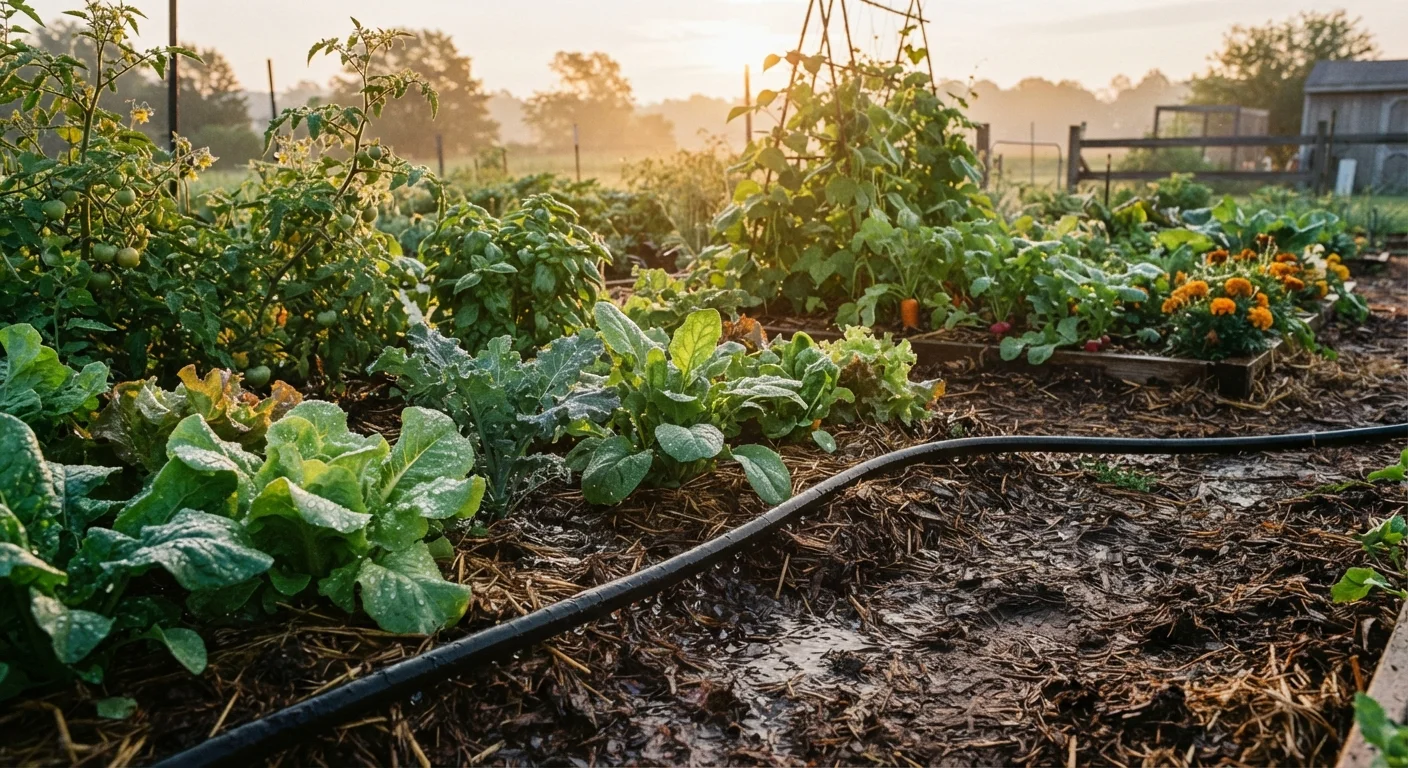
Bare soil loses moisture rapidly in warm, sunny weather. A two-to-three-inch layer of organic mulch — straw, shredded leaves, or wood chips — acts as an insulating barrier, slowing evaporation and keeping soil temperature more stable.
Adjust your watering schedule based on weather, not the calendar.
A fixed watering schedule ignores rainfall, temperature shifts, and seasonal changes — all of which dramatically affect how much moisture soil retains. Watering on a rigid schedule during a rainy week can lead to waterlogged roots, while skipping water during a heat wave can stress plants beyond recovery.
Check soil moisture before watering, not just plant appearance.
Visual cues alone can mislead — surface soil may look dry while deeper layers remain moist, or vice versa. Testing soil moisture directly at root depth prevents both overwatering and underwatering.
Timing, Tools, and Reading Your Plants
Morning is the single best time to water most gardens. Temperatures are lower, wind is usually calmer, and foliage dries naturally as the day warms — reducing the humid leaf surface conditions that fungal diseases need to take hold. Watering in the evening leaves moisture on leaves overnight, which can invite mildew and rot.
Midday watering isn't harmful to plants (the old myth that droplets act like magnifying glasses has no scientific basis), but much of the water evaporates before it soaks in, making it inefficient.
Use a Simple Finger Test Before Every Watering
Before reaching for the hose, press a finger two to three inches into the soil near the plant's base. If it feels cool and damp, the plant likely doesn't need water yet. This quick check takes five seconds and can prevent weeks of overwatering damage. Repeat it at multiple spots in a large bed, as soil moisture can vary across even a small garden.
Your plants will tell you a great deal about their water needs if you pay attention. Wilting during peak afternoon heat is normal and doesn't always signal drought stress — check again in the early evening. If leaves are still limp after sunset, the plant genuinely needs water. Yellowing lower leaves often point to overwatering rather than drought.
Gardeners growing plants in pots face a more demanding watering schedule than those with in-ground beds. Our container gardening guide covers the specific challenges of keeping potted plants adequately hydrated.
50%
Outdoor water used on lawns and gardens
According to the U.S. Environmental Protection Agency, roughly half of residential outdoor water use goes to landscaping — much of it applied inefficiently.
30–50%
Water saved with drip irrigation vs. sprinklers
The EPA's WaterSense program estimates that drip irrigation can reduce outdoor water use by 30–50% compared to conventional overhead sprinkler systems.
Quick Actions You Can Take This Week
Good watering habits don't require expensive equipment or a complete garden overhaul. Small adjustments made now can meaningfully improve how your plants perform through the rest of the growing season.
If your seedlings are wilting despite regular watering, the issue may be more than moisture — learn why seedlings die before reaching the garden to rule out other common causes. And if you're growing herbs on a windowsill, keep in mind that indoor plants dry out faster than outdoor ones — our indoor herb growing guide explains how to calibrate watering for that environment.
Water Needs Vary Widely by Plant Type
Native plants, succulents, and many drought-tolerant perennials need far less water than vegetables, annual flowers, or recently transplanted shrubs. New plantings of any species typically need more frequent watering until their root systems are established — often for the first season. Always research the specific water requirements of the plants you're growing rather than treating all garden beds identically.