

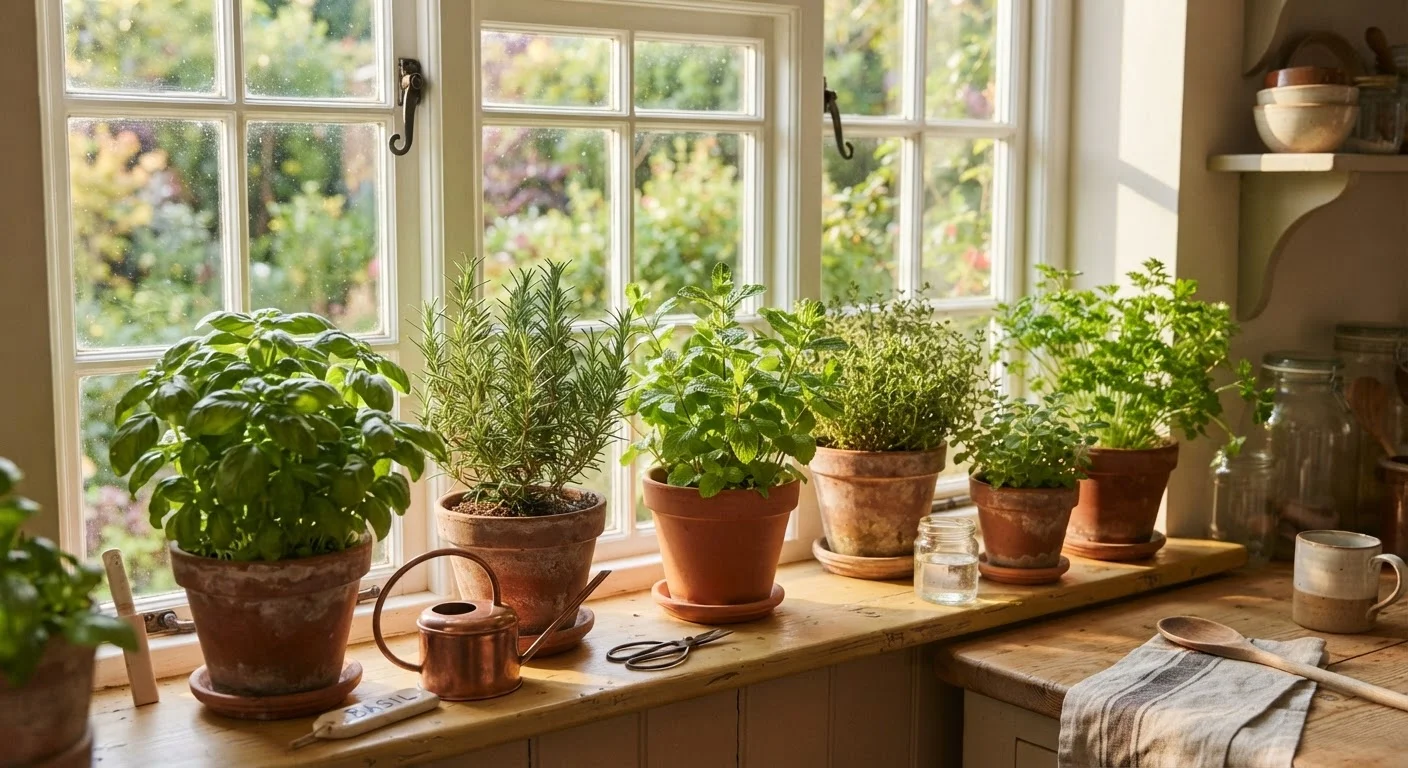
Key Takeaways
- Most herbs need at least 6 hours of direct light daily — insufficient light is the top reason indoor herbs fail.
- Drainage is non-negotiable: pots without holes cause root rot faster than almost any other mistake.
- Overwatering is more common than underwatering; always check soil moisture before adding water.
- Harvest regularly to encourage bushy, productive growth — timid trimming leads to leggy plants.
- Mediterranean herbs and tropical herbs like basil have meaningfully different care requirements.
What you will need
Why Indoor Herb Gardens So Often Disappoint
Indoor herb growing looks effortless on social media — a tidy row of pots on a sunlit sill, snipped fresh into dinner each night. In practice, many home gardeners watch those same herbs yellow, bolt, or collapse within a few weeks. The problem is rarely the plant. It's almost always a mismatch between what the herb needs and what the indoor environment actually provides.
Understanding a handful of core principles — light intensity, container drainage, and watering rhythm — closes that gap quickly. This guide walks through each factor and the steps to set yourself up for an herb garden that genuinely produces. If you're also thinking about growing food outside, see our guide to starting a vegetable garden from scratch for a complementary approach.
What you will need
What You'll Need Before You Start
Gathering the right materials before planting saves frustration later. The good news: indoor herb gardening requires very little equipment, and most of it is inexpensive and reusable.
Pots with drainage holes
Allows excess water to escape, preventing root rot — the single most important container feature.
Well-draining potting mix
Provides the airy, nutrient-appropriate medium herbs need; garden soil compacts indoors and impedes drainage.
Grow light (full-spectrum LED)
Supplements or replaces natural light in low-light spaces or during winter months.
Watering can with narrow spout
Delivers water to the soil surface precisely, avoiding wetting foliage which can encourage disease.
Saucers or drip trays
Catches drainage water to protect surfaces; should be emptied after each watering.
Liquid fertilizer (balanced or herb-specific)
Provides nutrients that potting mix depletes over time, supporting ongoing leafy growth.
Step-by-Step: Setting Up Your Indoor Herb Garden
Follow these steps in order. Each one addresses a specific failure point that trips up even experienced gardeners moving plants indoors.
Choose your location based on actual light, not assumption
Before selecting any herbs, measure how many hours of direct sunlight your windowsill receives on a typical day. Use a free light-meter app or simply observe the window from morning to evening. Most culinary herbs require 6 or more hours of direct sun. South-facing windows generally provide the most light year-round in the Northern Hemisphere; west-facing windows work well for afternoon sun.
If your best window falls short, a full-spectrum grow light placed 4–6 inches above the plants and run for 12–14 hours daily is a reliable substitute — not a luxury.
Select the right pot size and material
Choose pots with drainage holes — this is non-negotiable. A pot without drainage will eventually waterlog the soil regardless of how carefully you water. Terracotta pots are a practical choice because their porous walls allow soil to dry more evenly, which suits most Mediterranean herbs. Plastic pots retain moisture longer, making them better suited to basil or parsley.
Match pot size to the plant: a 4-inch pot suits a single basil or thyme plant; mint spreads aggressively and does better in a wider container kept separate from other herbs.
Fill with well-draining potting mix
Use a potting mix labeled for vegetables or herbs, or a general-purpose mix amended with perlite (roughly 20–25% perlite by volume) to improve drainage. Avoid outdoor garden soil, which compacts in containers, suffocates roots, and may introduce pests or pathogens indoors.
Fill the pot to about an inch below the rim to allow for watering without overflow. Gently firm the mix without compacting it.
Plant at the correct depth and spacing
If transplanting seedlings, plant at the same depth they were growing in their nursery cell. Burying the stem too deep invites rot; planting too shallow exposes roots. If sowing seeds, follow the packet depth guidance — most herb seeds are small and need only a light covering of soil.
Give each plant its own pot when possible. Combining multiple herbs in one container looks attractive but creates competition and makes it nearly impossible to tailor watering to each herb's preferences.
Establish a consistent, soil-moisture-based watering routine
Rather than watering on a fixed schedule, check soil moisture before every watering. Push your finger about an inch into the soil. If it feels damp, wait. If it feels dry, water thoroughly until water runs from the drainage hole, then empty the saucer after 30 minutes.
This approach accounts for seasonal variation, pot size, and individual herb needs. Overwatering is the most common cause of indoor herb death — wilting can look identical whether caused by too much or too little water, so the finger test is essential.
Harvest early and often
Begin harvesting once a plant has enough foliage to take a cutting without removing more than one-third of the total growth. Always cut just above a leaf node (the point where a leaf meets the stem). This triggers the plant to branch rather than grow taller and spindly.
With basil, pinch off any flower buds as soon as they appear — flowering signals the end of productive leaf production. Regular harvesting effectively delays this. See our related guidance on why seedlings struggle if you are starting from seed and having early-stage issues.
Fertilize Lightly During the Growing Season
Potting mix nutrients deplete within a few months. A diluted liquid fertilizer applied once every three to four weeks from spring through early fall supports steady leafy growth. Avoid over-fertilizing — excess nitrogen produces lush leaves with diminished flavor. Hold off on fertilizing altogether in winter when most herbs naturally slow down.
The Mistakes Most People Make — and How to Avoid Them
Even with the right setup, a few habitual errors undo progress quickly.
Treating all herbs the same
Mediterranean herbs — rosemary, thyme, sage, oregano — evolved in dry, rocky soil and tolerate drought well. Basil is subtropical and wants consistent moisture and warmth. Mint prefers shade-tolerant, consistently moist conditions. Grouping them all under the same watering schedule is one of the fastest ways to lose plants. Our article on watering habits that keep plants thriving covers the broader principles in depth.
Never harvesting
Herbs are stimulated by cutting. Leaving them untouched causes them to put energy into flowering (bolting), which turns leaves bitter and halts new growth. Harvest up to one-third of the plant at a time, cutting just above a leaf node to encourage branching.
Ignoring seasonal light shifts
A window that works perfectly in summer may drop to inadequate light levels by November as the sun tracks lower. Rotating pots and supplementing with a grow light through winter — even a modest one — can prevent the slow decline many gardeners mistake for a dying plant.
Watch for Pests on Indoor Herbs
Indoor herbs are not immune to pests. Fungus gnats (attracted by consistently moist soil), spider mites (thriving in dry indoor air), and aphids are the most common. Inspect the undersides of leaves weekly. Allowing the soil surface to dry between waterings discourages fungus gnats significantly. If you spot pests early, a spray of diluted insecticidal soap — following product label guidance carefully — is typically effective without harming edible leaves once rinsed.
For readers working with limited space, the principles here align well with the ideas in plants that earn their place in a small garden — especially choosing varieties that genuinely suit your conditions.