

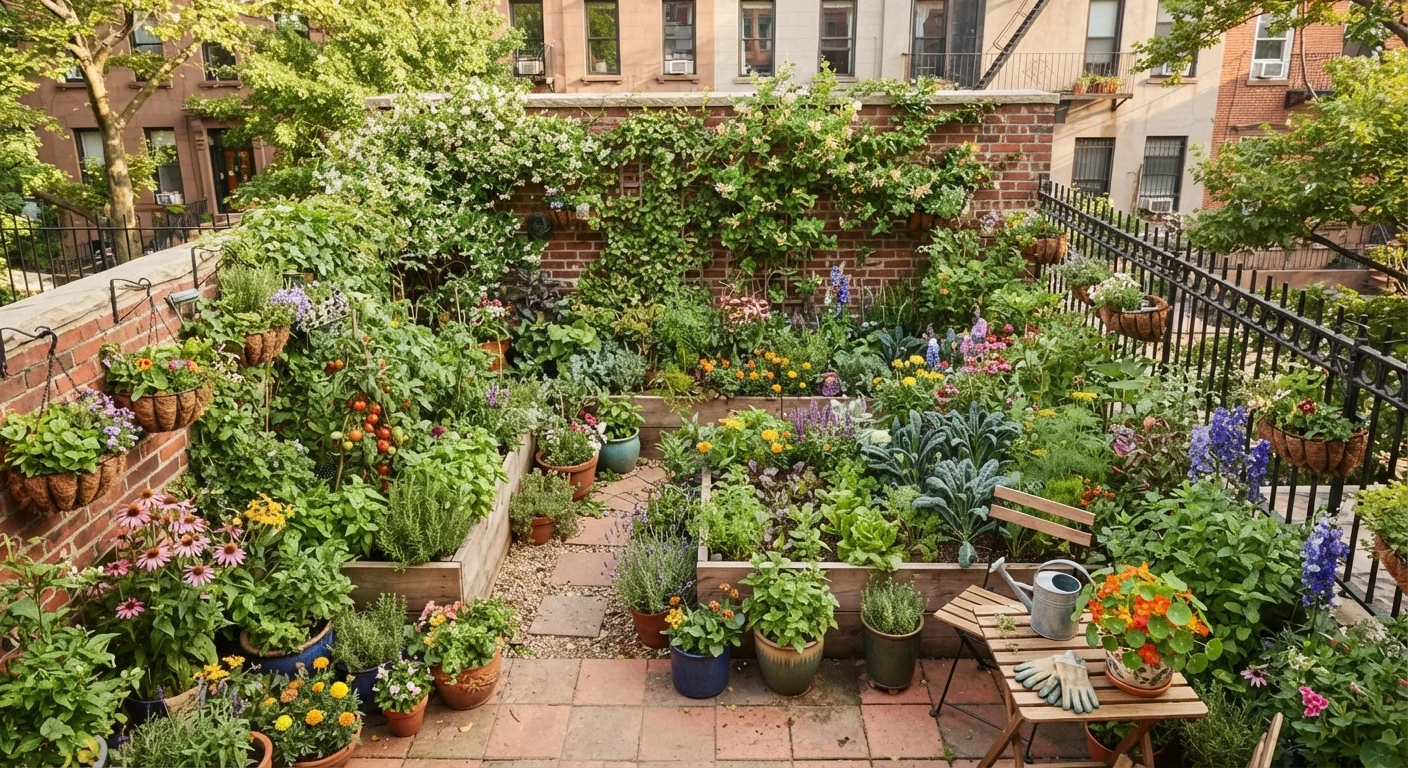
Key Takeaways
- Choosing multi-functional plants — those that offer color, food, or structure — maximizes limited garden space.
- Perennials tend to deliver better long-term value in small gardens than single-season annuals.
- Vertical growers, compact edibles, and pollinator-friendly plants each earn their footprint in different ways.
- Container-compatible varieties extend your options even when in-ground planting space is minimal.
- Matching plants to your specific light and soil conditions reduces maintenance and improves results.
Why Plant Selection Matters More in a Small Garden
In a large garden, a mediocre plant choice is easy to absorb — it blends in, gets crowded out, or quietly disappears by next season. In a small garden, every plant you choose is competing for the same limited square footage, sunlight, and water. An underperformer doesn't just fail quietly; it occupies space that a harder-working plant could fill.
The goal isn't to cram in as many species as possible — it's to select plants that do more than one thing well. The best small-garden plants offer a combination of long bloom periods, wildlife value, edible yield, structural interest, or adaptability to containers and raised beds. Think of each plant as pulling double or triple duty.
If you're still deciding on your garden's physical setup, our guide on raised beds vs. in-ground planting can help you map out what will fit your yard and goals before you commit to any plants. And if containers are your primary option, container gardening basics covers which approaches actually deliver results in pots.
Lavender
Lavender is a model small-garden plant: it's drought-tolerant once established, produces fragrant blooms that attract pollinators from early summer through late season, and requires very little intervention once it's settled. Plant it along a sunny border edge or in a container with sharp drainage, and it will largely look after itself.
Beyond its ornamental value, lavender discourages certain garden pests through its scent, and the flowers are edible and usable in cooking. Choose a compact variety suited to your hardiness zone — some cultivars stay under 18 inches, ideal for tight spots.
Lavender earns its place by attracting pollinators, repelling pests, and requiring minimal water once established.
Dwarf blueberry
Standard blueberry shrubs can reach six feet or more, but compact varieties bred for container and small-space growing stay under three feet while still producing a meaningful harvest. They offer spring flowers, summer fruit, and stunning red fall foliage — three seasons of visual interest plus edible yield.
They do require acidic soil (roughly pH 4.5–5.5), so a dedicated container with appropriate potting mix is often the easiest route. Two different varieties planted near each other will cross-pollinate and generally produce a better crop than a single plant.
Dwarf blueberries offer spring blooms, summer fruit, and vivid fall color — three seasons of value in one plant.
Echinacea (coneflower)
Coneflowers are native to North America, perennial in most US growing zones, and remarkably adaptable to imperfect conditions — including clay soil and periods of dry weather. They bloom prolifically from midsummer into fall, and their seed heads feed birds through winter if left standing.
They grow well in the ground or in large containers, require minimal fertilizing, and self-seed moderately — which can mean free new plants next season in a managed space. Their strong vertical presence also adds structure to a planting that might otherwise feel flat. For context on how perennials like echinacea compare to annual alternatives, see annual vs. perennial plants.
Coneflowers bloom for months, feed birds in winter, and return year after year without fussing.
Climbing nasturtium
Nasturtiums are fast-growing, fully edible (flowers and leaves both work in salads), and among the most beginner-friendly plants you can grow. The climbing varieties are especially useful in small gardens because they grow vertically rather than spreading outward — a trellis, fence, or even a string support is enough.
They thrive in poor soil and actually tend to produce more flowers when not heavily fertilized. Direct sow seeds after your last frost date and they'll be blooming within weeks. They also attract aphids away from more vulnerable plants, acting as an informal trap crop.
Climbing nasturtiums grow up rather than out, offer edible flowers, and actively draw pests away from other plants.
Chives
Among culinary herbs, chives stand out for their combination of productivity, low maintenance, and ornamental value. They produce attractive purple globe flowers that pollinators visit readily, their hollow leaves are edible from spring through fall, and they return reliably each year as a perennial in most US zones.
A single clump divided every two to three years will multiply your supply without any additional cost. They grow happily in containers — making them a natural fit alongside other herbs or edging a small bed. If you're interested in growing herbs indoors as well, our piece on growing herbs indoors covers the specific requirements for keeping them productive on a windowsill.
Chives produce edible harvests, ornamental blooms, and attract pollinators — all from a compact, perennial clump.
Japanese forest grass (Hakonechloa)
Not every small garden has a sunny, dry corner — and Japanese forest grass is one of the most reliable answers to a shady, moist spot where other ornamentals struggle. Its cascading, bright chartreuse or golden foliage brings light into darker areas and provides movement in the breeze where little else performs.
It's a slow-growing perennial that stays tidy without pruning, works beautifully in containers, and pairs well with hostas or ferns in a shade composition. It provides consistent structure and color from spring through the first hard frost.
Japanese forest grass brings genuine color and movement to shaded spots where most ornamentals fail.
Building a Garden That Works for You
None of these plants requires expert-level care, but all of them reward a little thoughtfulness — right placement, appropriate watering, and some understanding of what each one needs to settle in. Getting watering habits right makes a particularly large difference; see our guide on watering habits that help plants thrive for practical advice that applies to any garden size.
Start With Your Site Conditions
Before selecting any plant, observe where sun falls in your garden across different times of day — morning sun, afternoon sun, and full shade behave very differently for most plants. Match your plant list to actual conditions rather than ideal ones, and you'll spend far less time compensating for struggling plants. Most small-garden failures come from placing the wrong plant in the wrong spot, not from lack of care.
If you're mixing edibles and ornamentals — which works beautifully in compact spaces — pairing compatible plants strategically can also reduce pest pressure. Companion planting is worth exploring once your core plant list is set. And if you're planning to grow vegetables alongside these picks, starting a vegetable garden from scratch offers a grounded introduction to getting your first edible crop in the ground.
A small garden asks you to be intentional — and that's actually an advantage. With fewer plants to manage, you can learn each one well, notice problems early, and build real confidence as a gardener over successive seasons.