

| States with active ag inspection stations | Includes California, Arizona, Florida, and Texas, among others (U.S. state departments of agriculture) |
| Firewood transport rule | Many states restrict moving firewood to prevent invasive pest spread (USDA Forest Service guidelines) |
| Required ID for U.S.–Canada land crossing | Passport, passport card, or NEXUS card (driver's license alone insufficient) (U.S. Customs and Border Protection) |
| Cannabis at U.S.–Canada border | Illegal to transport in either direction, regardless of state/provincial law (CBSA and U.S. CBP) |
| Pet documentation for Canada entry | Dogs require valid rabies vaccination certificate (Canada Border Services Agency) |
Domestic Borders Aren't Always Formality-Free
Most drivers assume that crossing from one U.S. state — or between a U.S. state and a Canadian province — is as simple as driving through a green light. Often it is. But certain crossings involve inspection stations, regulated items, and documentation requirements that can catch unprepared travellers off guard. Knowing what to expect before you arrive saves time and avoids potential fines or delays.
| States with active ag inspection stations | Includes California, Arizona, Florida, and Texas, among others (U.S. state departments of agriculture) |
| Firewood transport rule | Many states restrict moving firewood to prevent invasive pest spread (USDA Forest Service guidelines) |
| Required ID for U.S.–Canada land crossing | Passport, passport card, or NEXUS card (driver's license alone insufficient) (U.S. Customs and Border Protection) |
| Cannabis at U.S.–Canada border | Illegal to transport in either direction, regardless of state/provincial law (CBSA and U.S. CBP) |
| Pet documentation for Canada entry | Dogs require valid rabies vaccination certificate (Canada Border Services Agency) |
For tips on keeping your vehicle ready for long drives, see our pre-trip vehicle checklist before you head out.
Agricultural Inspection Stations
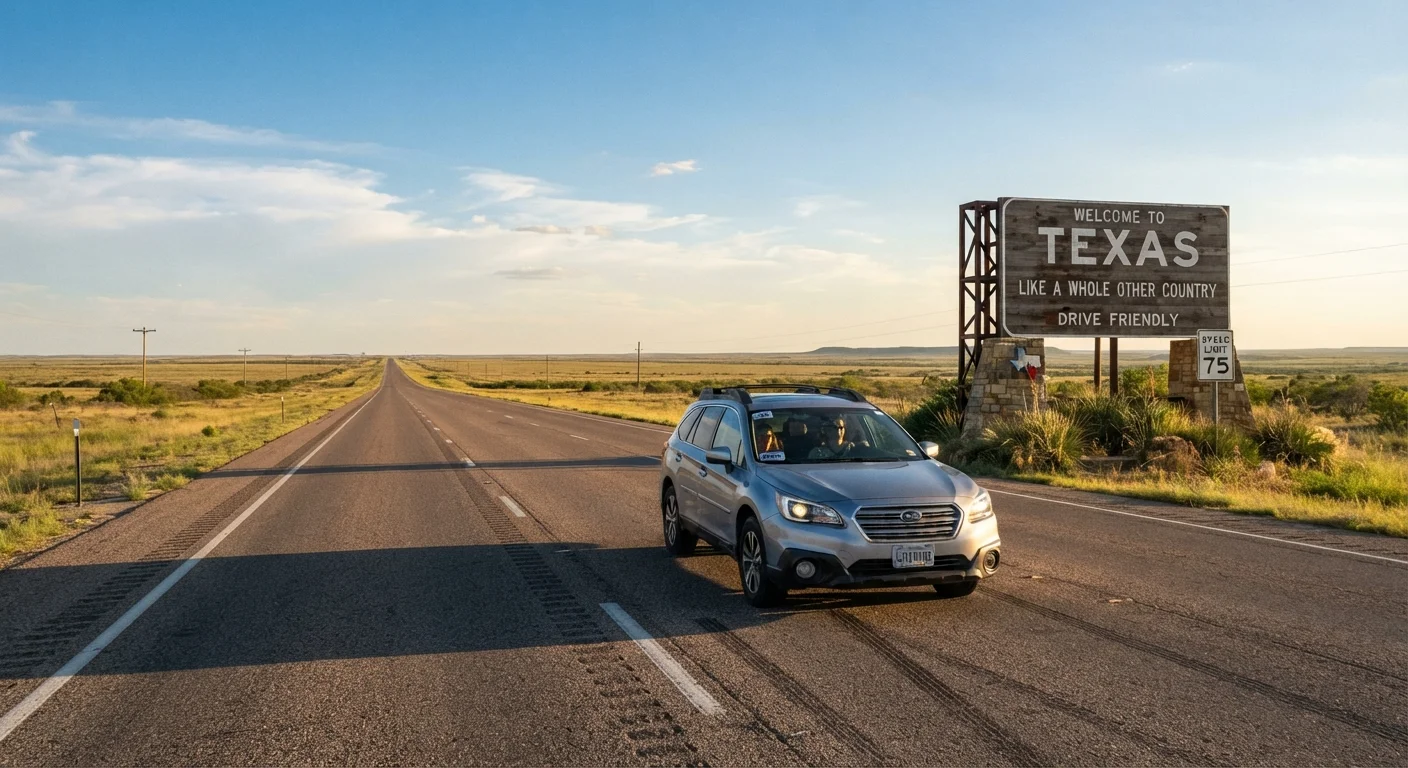
Several U.S. states operate agricultural inspection stations — staffed checkpoints near state borders where officers may ask about fresh produce, plants, soil, and firewood in your vehicle. California, Arizona, Florida, and Texas are among the states with active programs. The goal is to prevent invasive pests and plant diseases from spreading across state lines.
What this means practically:
- Some fruits, vegetables, and plants may be confiscated if they originate from regions with known pest alerts.
- Raw or untreated firewood is commonly restricted — many states prohibit transporting it more than a short distance from its origin to prevent the spread of insects like the emerald ash borer.
- Soil on camping or gardening equipment may also be flagged.
Rules change based on seasonal pest alerts, so check the destination state's department of agriculture website before your trip rather than relying on prior experience.
Check Before You Pack, Not After You Arrive
Agricultural rules are tied to active pest alerts, which shift seasonally. A fruit or plant that crossed without issue last summer may be restricted this year. State department of agriculture websites typically publish current prohibited items lists, and the USDA's Don't Pack a Pest program is another reliable reference for travellers carrying food across state or national lines.
Travelling with Pets Across Borders
If you're bringing a dog, cat, or other animal, domestic border crossings — especially at the U.S.–Canada boundary — may require documentation. For U.S.–Canada crossings, dogs generally need proof of rabies vaccination; the certificate should include the veterinarian's contact information, your pet's description, and the vaccine's expiration date.
Within the U.S., individual states rarely require pet documentation at the border, but some states do have rules about transporting certain exotic animals or birds. If you're travelling with anything outside a common household pet, verify regulations with both your departure and destination state's fish and wildlife agency.
See our guide on travelling with medications if you're carrying prescription pet medicine — rules can vary at international crossings.
Fuel, Emissions, and Vehicle Rules That Vary by State
Fuel formulations differ across regions. California, for instance, mandates specific reformulated gasoline blends, which is why fuel prices and availability can differ noticeably near its borders. This doesn't typically affect travellers in practical terms — you fill up where you are — but it's worth knowing if you're troubleshooting unexpected fuel economy changes.
More consequential are vehicle emissions standards. California has historically maintained stricter standards than federal minimums, and several other states have adopted similar rules. If you're relocating a vehicle or purchasing one across state lines, emissions compliance can become a real consideration — though for a typical road trip, it rarely affects day-to-day driving.
Traffic laws also vary. Speed limits, handheld phone restrictions, and passing rules differ state to state. Our traffic rules reference for U.S. drivers covers the most commonly misunderstood distinctions.
Agricultural Inspection Station
A staffed checkpoint near a state or national border where officers screen vehicles for regulated plants, produce, soil, or pests that could harm local agriculture.
Reformulated Gasoline
A cleaner-burning fuel blend mandated in certain regions to reduce air pollution. It meets specific chemical standards set by the EPA or state regulators.
NEXUS Card
A trusted traveller program card that expedites crossing at U.S.–Canada border points. It serves as an accepted travel document for land and air crossings between the two countries.
Duty-Free Limit
The maximum quantity of certain goods — such as alcohol or tobacco — a traveller may bring across an international border without paying import duties or taxes.
U.S.–Canada Border Crossings by Car
Crossing between the United States and Canada requires considerably more preparation than a domestic state crossing. All travellers — including U.S. citizens — must carry valid, accepted identification. A U.S. passport, passport card, or NEXUS card satisfies this requirement. A standard driver's license alone is generally not sufficient for adults.
Additional considerations for U.S.–Canada land crossings:
- Firearms: Strict rules govern bringing any firearm into Canada. Handguns are generally prohibited for most travellers; long guns may require advance declaration. Check the Canada Border Services Agency (CBSA) website for current requirements.
- Alcohol and tobacco limits: Both countries set duty-free limits on quantities you can bring across. Exceeding these may result in duty charges.
- Cannabis: Despite its legal status in both countries, transporting cannabis across the U.S.–Canada border in either direction remains federally illegal.
- Vehicle insurance: U.S. auto insurance policies often extend coverage in Canada, but confirm this with your insurer before crossing.
For broader international documentation guidance, see our travel document essentials reference guide. Always verify entry requirements with official government sources — CBSA for Canada, U.S. Customs and Border Protection for the U.S. — as rules can change.
This article is for general informational purposes only. Entry requirements, inspection rules, and border regulations are subject to change. Always verify current requirements with official government and agency sources before travelling.