

| Typical urban speed limit | 25–35 mph (Varies by state and municipality) |
| Highest posted interstate limit (US) | 85 mph (One specific Texas toll road segment; most western interstates are 75–80 mph) |
| Standard signal-before-lane-change distance | 100 feet minimum (Varies by state statute) |
| Right-of-way at simultaneous four-way stop | Yield to driver on your right (Uniform Vehicle Code; adopted by most US states) |
| School zone speed limit (common) | 15–25 mph when children present (Varies by state; fines are often doubled) |
Speed Limits: What the Numbers Mean and When They Change
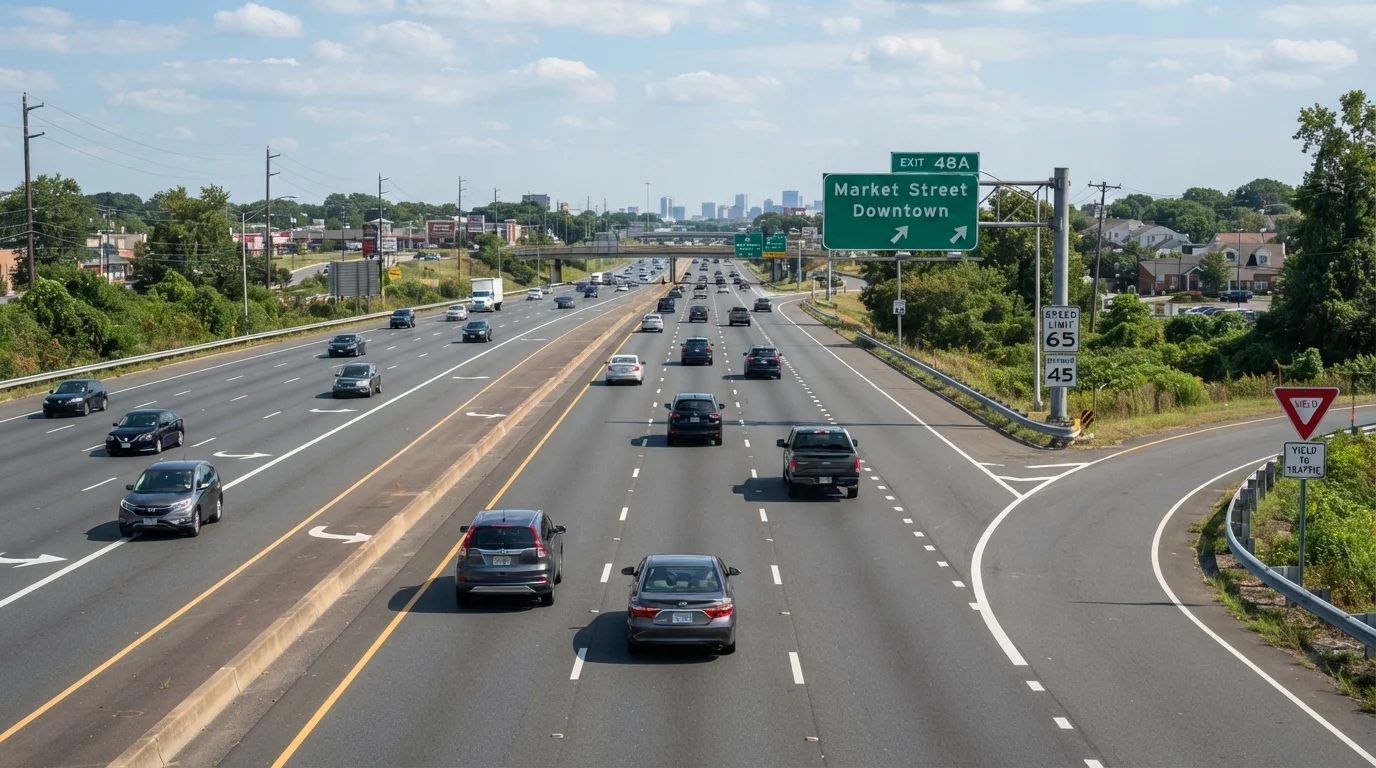
Posted speed limits in the US are set by state and local authorities, so they vary by road type and jurisdiction. However, some broad patterns apply almost everywhere:
- Residential streets: typically 25–30 mph unless posted otherwise
- Urban arterials: generally 35–45 mph
- Rural highways: often 55–65 mph
- Interstate highways: commonly 65–75 mph; a handful of western states permit up to 80 or 85 mph on specific segments
Beyond posted limits, drivers must reduce speed for conditions — rain, fog, construction zones, heavy traffic, or poor visibility. In most states this is codified as the basic speed law: you may not drive faster than is safe for current conditions, even if you are below the posted limit. Speed limits in school zones and work zones are strictly enforced and often carry doubled fines.
| Typical urban speed limit | 25–35 mph (Varies by state and municipality) |
| Highest posted interstate limit (US) | 85 mph (One specific Texas toll road segment; most western interstates are 75–80 mph) |
| Standard signal-before-lane-change distance | 100 feet minimum (Varies by state statute) |
| Right-of-way at simultaneous four-way stop | Yield to driver on your right (Uniform Vehicle Code; adopted by most US states) |
| School zone speed limit (common) | 15–25 mph when children present (Varies by state; fines are often doubled) |
For considerations specific to crossing into another state, see our article on what travellers often overlook at state borders.
Right-of-Way: Who Goes First
Right-of-way rules determine which driver proceeds through a shared space first. No driver can claim right-of-way — it must be yielded by the other party. The most common rules across US states include:
Basic Speed Law
A rule, adopted in most US states, requiring drivers to travel at a speed that is safe for current road and weather conditions — regardless of the posted limit.
Right-of-Way
The legal right to proceed through a shared space before another driver. Right-of-way must always be yielded — it cannot be claimed or demanded.
Yield
To slow down or stop and allow another vehicle, pedestrian, or cyclist to proceed before you enter or cross their path.
Blind Spot
The area alongside and slightly behind a vehicle that is not visible in the driver's mirrors. Checking blind spots requires a brief head-turn before changing lanes.
Shared Center Turn Lane
A lane in the center of a road, marked with dashed yellow lines, reserved for vehicles making left turns. It is not a travel or passing lane.
At Four-Way Stops
The first vehicle to come to a complete stop proceeds first. When two vehicles arrive simultaneously, the driver on the left yields to the driver on the right. When vehicles face each other and both intend to go straight, either may proceed; when one is turning left, that driver yields to oncoming traffic.
At Uncontrolled Intersections
Where no signs or signals are present, drivers yield to vehicles already in the intersection, then defer to the driver on the right.
Yield Signs and Merging
A yield sign requires you to slow or stop and allow crossing or merging traffic to pass. On highway on-ramps, merging drivers yield to vehicles already traveling in the target lane — though courteous drivers in the through lane often adjust speed to assist. For a full breakdown of lane-change technique, see highway merging and lane changes done right.
Pedestrians and Cyclists
Pedestrians in a marked or unmarked crosswalk generally have right-of-way over turning vehicles. Cyclists riding lawfully in a lane are treated as vehicle operators in most states.
Lane Rules: Positioning, Passing, and Changing
Proper lane use reduces conflict and is legally required. These rules apply in most US states:
~40%
Of US traffic fatalities at or near intersections
According to the Federal Highway Administration, a significant share of serious crashes occur at or near intersections — where right-of-way disputes are most common.
9 mph
Average speed over the posted limit in speeding-related fatal crashes
NHTSA crash data consistently show that many speed-related fatalities involve modest rather than extreme excess speed, underscoring the importance of posted limits.
- Keep right except to pass: On multi-lane roads, slower traffic should stay in the right lane. Many states explicitly prohibit traveling continuously in the left lane on divided highways.
- Signal before every lane change: Use your turn signal at least 100 feet before changing lanes in most jurisdictions (distances vary by state). Signaling is required even when no other vehicle is visibly near.
- Check mirrors and blind spots: Mirrors alone do not reveal blind spots. A quick head-check over your shoulder before moving is standard safe practice — and essential when changing into an adjacent lane.
- No weaving between lanes: Repeated unnecessary lane changes are illegal in most states and significantly raise collision risk.
- Center turn lanes: A shared center lane marked with dashed yellow lines on both sides is for left turns only — not for travel or passing.
Maintaining a safe following distance is closely related to lane discipline. The rules drivers get wrong most often about following distance explains when to extend beyond the basic three-second guideline.
These rules are the starting point for safe driving, but anticipating hazards goes further. See what defensive driving actually means on today's roads for the broader principles that experienced drivers apply.
Rules Vary by State — Always Check Locally
Traffic law in the US is set at the state level, and some rules differ meaningfully between states — including specific speed limits, turn-on-red permissions, cell phone restrictions, and passing rules. When driving in an unfamiliar state, a quick review of that state's driver handbook (available free from state DMV websites) is a practical precaution. This article reflects rules common to most US states but is not a substitute for your state's official regulations.