

Key Takeaways
- Budgeting doesn't mean eliminating fun — it means directing money intentionally, including toward things you enjoy.
- You don't need a spreadsheet or financial expertise to build a working budget.
- A budget is most useful when it's flexible, not rigid — it should adapt as life changes.
- Irregular income earners can and do budget successfully using income-averaging and priority-based spending.
- Starting imperfectly is far better than waiting until conditions feel ideal.
Why Budgeting Myths Persist
Most people have a complicated relationship with budgets — not because budgeting is genuinely hard, but because the stories surrounding it create unnecessary barriers before anyone opens a notebook or downloads an app. These myths travel through conversations, social media, and even well-meaning family advice until they become received wisdom.
The result? Many capable adults delay building a financial plan for years, convinced they lack the tools, discipline, or income to make it work. This article breaks down the most common misconceptions — and replaces them with what personal finance research and practice actually support. For readers who want foundational vocabulary before diving in, the Key Budgeting Terms Every Adult Should Know guide is a useful starting point.
Myth
Budgeting means cutting out everything you enjoy.
Fact
A budget is a spending plan — it tells money where to go, including toward things that matter to you.
The fear that budgeting equals deprivation keeps many people from starting. In reality, a well-designed budget includes a deliberate allocation for discretionary spending — dining out, entertainment, hobbies — because ignoring those needs entirely makes a plan unsustainable. The goal is awareness and intention, not punishment. Frameworks like the 50/30/20 rule explicitly carve out 30% of take-home income for personal wants. For a contrasting perspective on frugality pressures, see Myths About Frugality That Make Saving Feel Harder Than It Is.
Myth
You need a spreadsheet or accounting knowledge to budget properly.
Fact
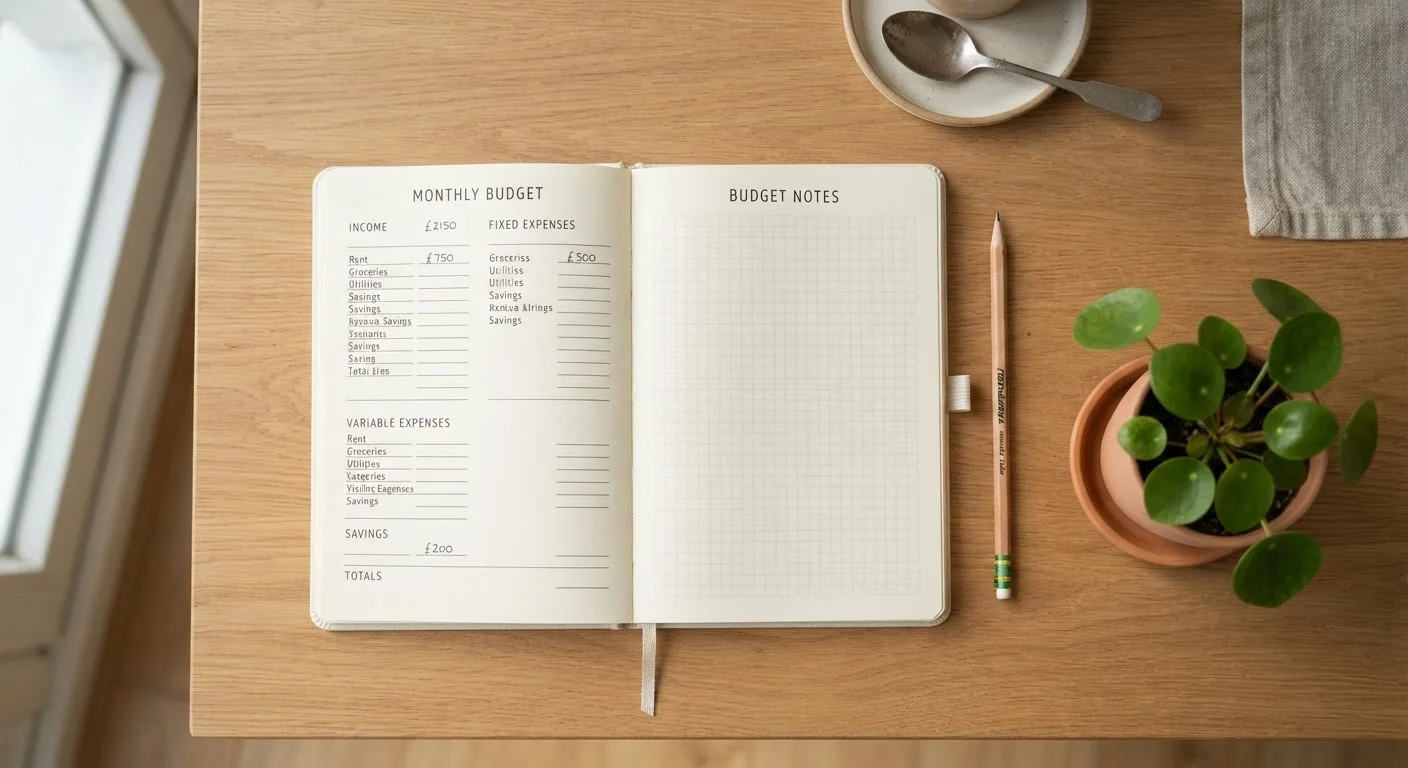
Effective budgets have been kept on index cards, in notebooks, and using basic arithmetic.
Spreadsheet tools and budgeting apps can be genuinely useful — but they're a means, not a requirement. The Consumer Financial Protection Bureau (CFPB) offers free, simple worksheet-based resources specifically designed for people with no financial background. The underlying skill is tracking inflows and outflows, which requires basic subtraction rather than financial expertise. If you've never built a budget before, Personal Budgeting From the Ground Up walks through every core concept in plain language.
Myth
If your income is irregular, budgeting doesn't work for you.
Fact
People with variable income — freelancers, gig workers, seasonal employees — can and do budget successfully using adapted methods.
One common approach for irregular earners is income averaging: calculate a conservative monthly estimate based on your lowest recent months, budget from that floor, and treat any surplus as a buffer or savings boost. Another method involves budgeting by priority rather than fixed categories — essential expenses are funded first, discretionary spending is funded only when income allows. These strategies require slightly more active management but are well within reach of most people.
Myth
A budget has to be followed perfectly or it's failed.
Fact
Flexibility is a feature of effective budgets, not a sign of weakness.
Personal finance research consistently shows that rigid, all-or-nothing thinking is one of the strongest predictors of budget abandonment. Overspending in one category in a given month is data — it signals that the original allocation may need adjusting. A useful mental model: treat your budget like a GPS. When you take a wrong turn, the system recalculates rather than shutting down. Habits That Keep a Budget Working Long-Term covers the evidence-backed practices that support sustained consistency.
Myth
You should wait until you earn more before starting a budget.
Fact
Lower incomes benefit from budgeting more, not less — every dollar allocation matters more when margins are tight.
This myth inverts the actual need. When income is limited, an unplanned dollar is a dollar that may not cover a critical expense. Knowing exactly where money is going — and building even a small buffer — provides the financial stability that makes larger income growth more manageable when it arrives. Major life events can further complicate this; Budgeting Through a Major Life Change offers a framework for adapting plans when circumstances shift.
Building a Budget That Actually Fits Your Life
Debunking myths is only useful if it clears the way for action. Once the misconceptions are set aside, a few practical principles tend to make budgets stick.
32%
Adults who follow a detailed written budget
A Gallup survey found that fewer than one in three American adults maintains a detailed household budget, despite widespread acknowledgment that budgeting improves financial outcomes.
65%
Adults living paycheck to paycheck at some point
Federal Reserve data has consistently shown that a significant share of U.S. adults have limited financial cushion, underscoring why intentional spending plans matter regardless of income level.
Start with one number. Rather than cataloguing every expense before you begin, identify your monthly take-home income and decide on one non-negotiable allocation — commonly savings or debt repayment. Everything else fits around that anchor.
Choose a format that matches your habits. A handwritten list works just as well as a digital tool if you'll actually use it. The Zero-Based Budgeting vs. the Envelope Method breakdown can help you identify which structure fits your style. Similarly, the 50/30/20 rule offers a simpler percentage-based approach for those who prefer less granularity.
Treat the first month as a data-gathering exercise. You will categorize something wrong, forget a subscription, or underestimate groceries. That's not failure — it's information. Budgets improve through iteration, not perfection. If you've already tried and struggled, Why Budgets Fall Apart After the First Week explores the behavioral reasons most plans stall and how to sidestep them.
Imperfect Action Beats Perfect Inaction
The single costliest budgeting mistake is waiting until circumstances feel ideal before starting. A rough budget begun today — even one that's partially wrong — generates real information you can act on. Refinement happens over time; the habit of tracking and planning is what produces long-term financial clarity. Start with what you know and adjust as you learn more.
This article provides general financial education and is not personalized financial advice. For guidance tailored to your specific situation, consider consulting a licensed financial professional.