

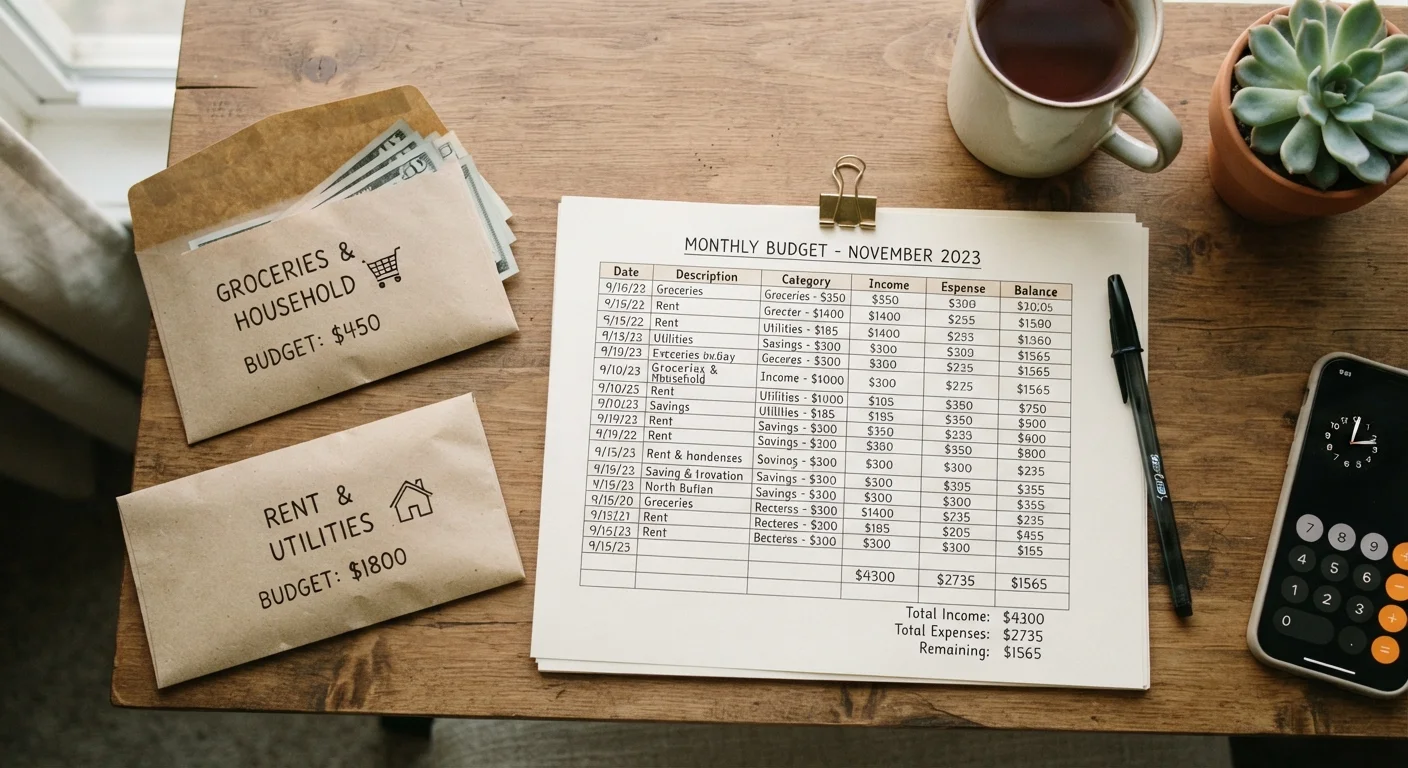
Key Takeaways
- Zero-based budgeting assigns every dollar of income a specific job each month, leaving zero unallocated.
- The envelope method uses physical or digital cash envelopes to cap spending in each category.
- Zero-based budgeting works well for detail-oriented planners; the envelope method suits tactile, cash-focused spenders.
- Both systems require a full accounting of income before allocating funds to expenses and savings.
- Hybrid approaches — using envelopes within a zero-based framework — are common and effective.
Our Verdict
Zero-based budgeting and the envelope method both deliver structure and intentionality, but in different ways. Zero-based budgeting is better suited to those who want a comprehensive, category-by-category plan they can track digitally. The envelope method excels for people who overspend on variable categories and benefit from a physical spending limit they can see and feel.
| Best for | Recommended |
|---|---|
| Detail-oriented planners who want full visibility over every dollar | Zero-Based Budgeting |
| People who struggle with overspending on groceries, dining, or entertainment | Envelope Method |
| Those who prefer digital tools and automated tracking | Zero-Based Budgeting |
| Cash-based households or those new to budgeting who need tactile feedback | Envelope Method |
The Core Philosophy Behind Each Method
Both systems share a foundational principle: spend intentionally, not accidentally. But their mechanics differ in meaningful ways.
Zero-based budgeting (ZBB) requires you to assign every dollar of monthly income to a category — housing, groceries, savings, debt repayment, entertainment — until the result is income minus expenses equals zero. The "zero" doesn't mean you've spent everything; it means every dollar has a designated purpose, including savings and investments. This approach is associated with financial educator Dave Ramsey and has roots in corporate finance, where departments justify every expense from scratch each cycle.
The envelope method takes a more physical approach. You divide cash into labeled envelopes — one per spending category — at the start of the month. When an envelope is empty, spending in that category stops until the next cycle. Originally a cash-based system, many people now apply it digitally using budgeting apps that simulate the same constraint.
If you've never built a budget before, our introduction to personal budgeting covers the foundational concepts both methods rely on.
How They Compare Across Key Criteria
Choosing between the two systems often comes down to your spending habits, lifestyle, and how much structure you need. The table below breaks down the most relevant differences.
| Zero-Based Budgeting | Envelope Method | |
|---|---|---|
| Core mechanism | Assign every dollar a category | Cap spending with physical cash envelopes |
| Best for | Comprehensive monthly planning | Controlling variable discretionary spending |
| Works with digital tools | Yes, highly adaptable | Yes, via digital envelope apps |
| Flexibility | High — adjust categories monthly | Low — fixed limits by design |
| Learning curve | Moderate — requires full income accounting | Low — intuitive once envelopes are set |
| Handles irregular expenses | Well, with dedicated categories | Requires proactive planning |
Zero-based budgeting tends to be more flexible — you can adjust category amounts month to month to reflect changing income or expenses. The envelope method is more rigid by design, which is actually its strength for people who need firm limits rather than guidelines.
Where Each System Tends to Succeed
Zero-based budgeting shines when income is variable or when someone has multiple financial goals competing for the same dollars — paying down debt, building an emergency fund, and saving for a vacation simultaneously. Because every dollar is deliberately routed, it's harder for money to quietly "disappear" into vague spending. It also scales well for households tracking irregular expenses like annual insurance premiums or car maintenance.
The envelope method is particularly powerful for curbing overspending in discretionary categories. Research in behavioral economics consistently shows that paying with cash creates more psychological friction than swiping a card — making it easier to pause before a purchase. For anyone whose budget consistently goes off-track in categories like dining out, personal care, or entertainment, envelopes provide a hard boundary that a spreadsheet cannot.
Try a Hybrid Approach First
If you're unsure which system to commit to, start with zero-based budgeting for the full monthly plan, then add envelope limits only to the one or two categories where you consistently overspend. This reduces overwhelm while giving you targeted behavioral guardrails where they matter most. Adjust after your first full month based on what actually felt manageable.
For a broader look at how these systems fit into a complete financial picture, see The Complete Guide to Personal Budgeting.
Common Pitfalls to Avoid
Neither method is foolproof. With zero-based budgeting, the most common failure is over-engineering the plan — creating so many sub-categories that maintaining the budget becomes a part-time job. Start with broad categories and subdivide only where you consistently overspend.
With the envelope method, the main risk is not accounting for non-monthly expenses. If your car registration is due in October, that cost needs its own envelope funded over multiple months — otherwise, the envelope system creates an illusion of control that breaks down when irregular bills arrive.
Don't Forget Non-Monthly Expenses
A frequent mistake with both systems is budgeting only for recurring monthly bills and ignoring annual or semi-annual costs — insurance premiums, vehicle registration, holiday gifts, and home maintenance. Divide these costs by 12 and allocate that amount each month into a dedicated category or sinking fund. Overlooking irregular expenses is one of the top reasons budgets fail in practice.
After you've run either system for a full month, use a structured review process. Our monthly budget health check provides a practical checklist to evaluate what worked and where to adjust.
Can You Use Both at the Same Time?
Yes — and many experienced budgeters do. A common hybrid approach uses zero-based budgeting as the master plan for all income allocation, then applies envelope-style limits to two or three high-risk spending categories (typically groceries, dining, and entertainment). This gives you the comprehensive overview of ZBB with the behavioral guardrails of the envelope method where you need them most.
If you're comparing budgeting frameworks more broadly, our article on zero-based budgeting versus the 50/30/20 rule explores another popular alternative worth considering.
The best budgeting system is ultimately the one you'll actually maintain. Both zero-based budgeting and the envelope method have helped millions of people get control of their finances — not because they're perfect, but because they replace guesswork with intention.
This article is for general informational and educational purposes only and does not constitute personalized financial advice. Consider consulting a qualified financial professional for guidance tailored to your specific circumstances.