

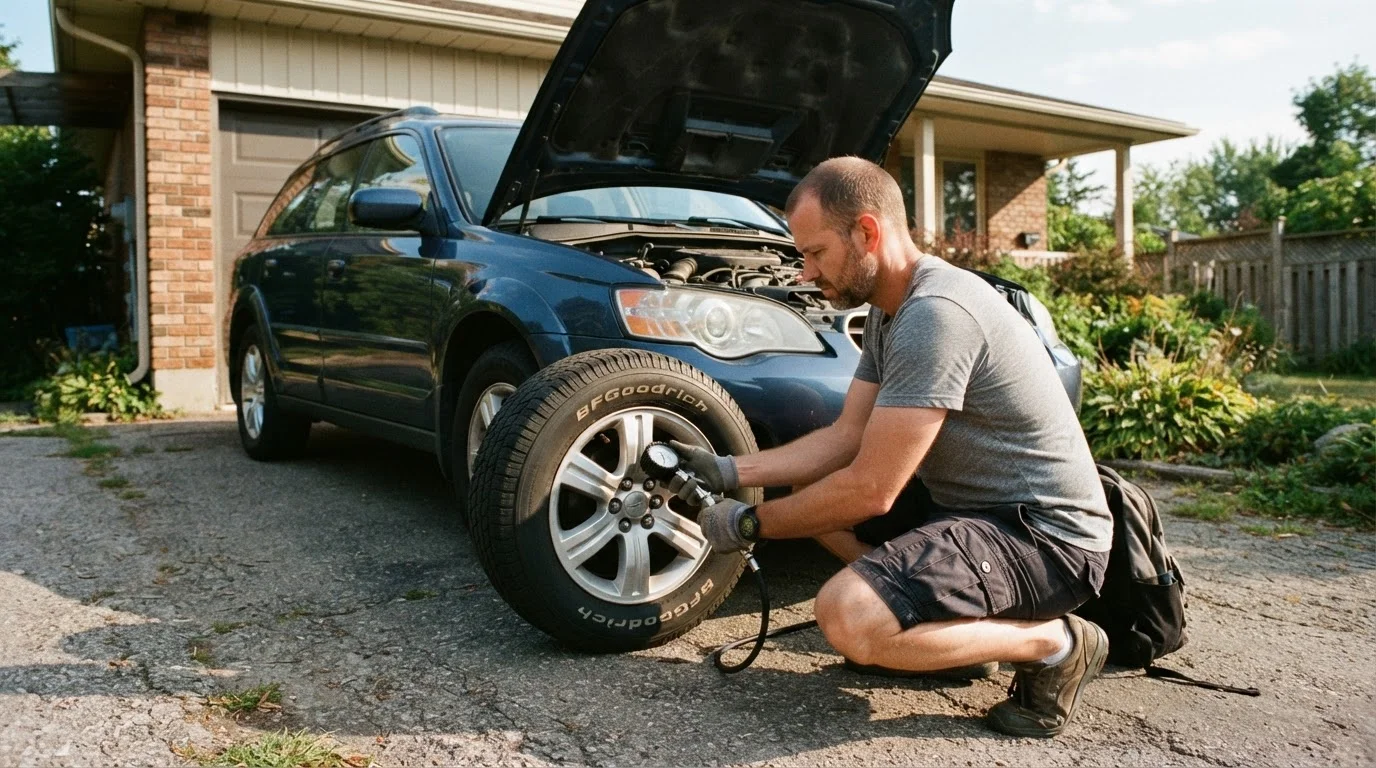
Key Takeaways
- Tyre pressure and tread depth are the single most safety-critical checks before a long drive.
- Fluid levels — oil, coolant, brake fluid, and washer fluid — should all be verified at least a day before departure.
- A compact emergency kit costs little but can significantly reduce the stress of an unexpected breakdown.
- Lights, wipers, and mirrors are easy to overlook but essential for visibility and legal roadworthiness.
- Many of these checks take only minutes and can be done without special tools or mechanical training.
Summary
22 items · 30–60 minutes
Why Pre-Trip Vehicle Checks Are Worth Your Time
A long road trip puts far more strain on a vehicle than the average daily commute. Hours of highway speeds, temperature swings, and heavy cargo loads can expose small problems you never noticed in town — and turning a minor issue into a breakdown 200 miles from home is a situation worth avoiding.
This checklist is designed for everyday drivers, not mechanics. Most items require nothing more than your eyes, a tyre pressure gauge, and about 30 to 60 minutes the day before you leave. If any check reveals something you're unsure about, have a qualified mechanic take a look before your departure — not after. For a broader look at what vehicle readiness really means, see what road-trip ready actually means for your vehicle.
When In Doubt, See a Mechanic First
This checklist is a practical guide for everyday drivers, not a substitute for professional inspection. If you notice anything during these checks that you can't identify or confidently resolve — an unfamiliar noise, an unexplained fluid leak, a warning light on the dashboard — book a pre-trip inspection with a qualified mechanic before you leave. A short delay at home is far easier to manage than a breakdown on a remote highway.
Once your vehicle is sorted, don't forget the rest of your trip preparation. Our full pre-departure checklist covers documents, home security, and digital backups alongside vehicle prep.
Tools You'll Want on Hand
You don't need a full garage setup to run through this checklist. Keep these basics accessible before you start:
Tyre pressure gauge
Measures tyre inflation accurately so you can adjust to the manufacturer's recommended PSI.
Penny (for tread depth test)
A quick, no-cost method to check whether tyre tread depth is within a safe range.
Clean rag or paper towel
Needed to wipe the oil dipstick clean before re-inserting it for an accurate reading.
Flashlight or phone torch
Helps you see clearly inside the engine bay and inspect tyres in shaded or dim conditions.
Owner's manual
Contains your vehicle's specific fluid specs, tyre pressure recommendations, and service intervals.
Portable jump starter
Allows you to restart a dead battery without needing another vehicle — useful on remote routes.
The Complete Pre-Trip Vehicle Checklist
Work through each group systematically. Tick items off as you go — it's easy to lose track when you're also packing and planning routes.
Tyres
Fluids
Lights and Visibility
Brakes and Belts
Emergency Kit
Don't Leave Brake Concerns for the Road
If your vehicle shows any sign of brake trouble — unusual noises, a soft or spongy pedal, or pulling to one side when stopping — do not defer inspection until after your trip begins. Brakes are a safety-critical system. Have a qualified mechanic evaluate them before departure, even if it means delaying your start date.
Once you're confident the vehicle is ready, think about what goes inside it. Our guide on what to pack in your car for a multi-day road trip covers safety gear, snacks, and comfort essentials experienced road trippers rely on.
After the Checks: Before You Pull Out of the Driveway
Once your vehicle checks are complete, take five minutes to handle a few final items. Confirm your route is loaded in your navigation app or printed as a backup. Let someone know your planned route and estimated arrival time — a simple safety habit on long drives.
If you're travelling with children, verify that safety seats are correctly installed and that you've planned rest intervals to avoid driver fatigue. Our article on travelling with children on long drives has grounded advice for managing family road trips. And if fatigue on long drives is a concern, understanding how fatigue builds can help you plan smarter breaks.
For multi-state routes, it's also worth checking whether any border crossings involve rules around produce, pets, or documentation — see what travellers often overlook at state borders for a quick overview. Safe travels.