

Key Takeaways
- Safety gear and emergency supplies are non-negotiable items regardless of trip length.
- Comfort and convenience items reduce driver fatigue and passenger friction on long days.
- Food and hydration planning saves money and keeps energy levels steady between stops.
- Organization inside the car matters as much as what you pack — accessibility prevents distracted driving.
- Vehicle documents and navigation backups belong in the car, not just on your phone.
Summary
28 items · 30–60 minutes
Why Your Packing List Matters as Much as Your Route
Most road trip planning energy goes into choosing destinations and mapping stops. But what you load into the car — and how you organize it — shapes the experience every hour you're on the road. A forgotten item at mile 400 isn't a minor inconvenience; it can mean an unnecessary detour, a safety risk, or a fraying temper in a confined space.
This checklist covers the practical essentials that experienced road trippers consistently pack, organized by category so you can work through it systematically before departure. For a broader trip-planning framework, see our road trip planning guide. And before you load the car, make sure the vehicle itself is ready — our pre-departure vehicle checklist covers what actually matters under the hood.
Safety & Emergency Gear
Navigation & Documents
Food, Water & Hydration
Comfort & Clothing
Hygiene & Personal Essentials
Entertainment & Focus
Vehicle Extras
How to Use This Checklist Without Overpacking
Running through 28 items doesn't mean every item weighs the same. Priority levels — must, should, and nice to have — are flagged in the list above. Start with every "must" item before adding anything else. If trunk space or weight is a concern, work through the "should" items next and cut from the optional tier first.
Don't Pack Your Emergency Gear at the Bottom
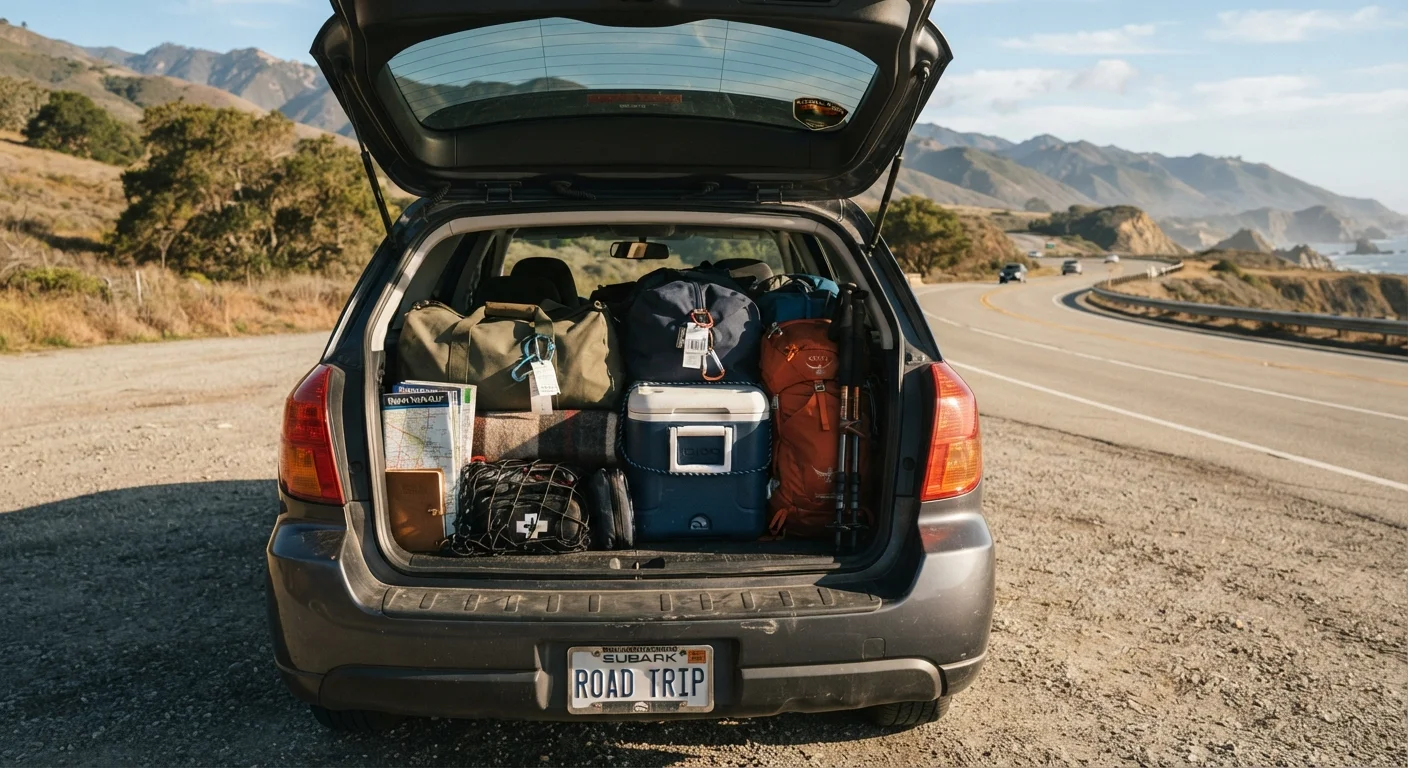
Jumper cables, a flashlight, and your first-aid kit are useless if they're buried beneath three days of luggage when you need them. Load emergency items last or store them in a dedicated side compartment so they're always reachable without unpacking the trunk. This is especially important if you're driving alone.
One mistake many drivers make is packing for a worst-case scenario on every front simultaneously — resulting in a car that's overloaded and hard to navigate mid-trip. Our article on the packing decision most drivers get wrong breaks down where that balance typically tips. If you're travelling with children, there's a separate layer of planning involved — see our guide to long drives with kids for age-specific strategies.
Finally, consider where items will live in the car, not just whether they're packed. Emergency gear belongs somewhere accessible — not buried under luggage. Snacks and water should be within reach of the passenger seat. If you're deciding between camping overnight and booking motels along the way, that choice also affects what you'll need to carry — our overnight stays guide walks through the tradeoffs.
Prescription Medications Require Extra Planning
Never pack prescription medications in checked or inaccessible luggage — keep them within reach at all times. Ensure you have enough supply for your full trip plus a few buffer days in case of delays. If you're crossing state lines with controlled substances, verify the applicable regulations for each state on your route. Consult your prescribing provider if you have questions about travel storage requirements for specific medications.
This checklist is intended as general planning guidance. Conditions, regulations, and requirements can vary by destination and route. Always verify entry requirements, local laws, and emergency protocols through official sources before travel.