

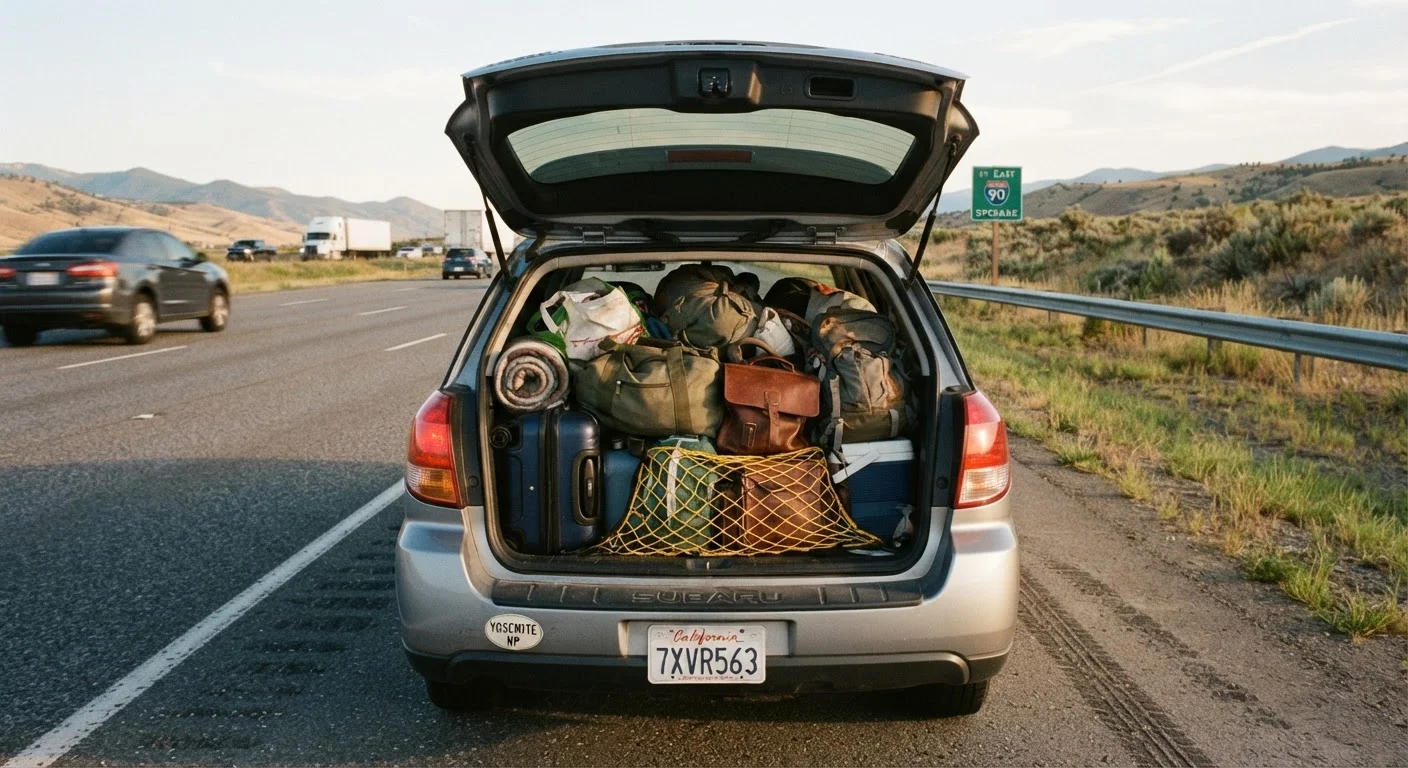
Key Takeaways
- Overpacking adds real weight that lowers fuel efficiency and strains your vehicle.
- Underpacking safety essentials — not clothing — is the more dangerous mistake most drivers make.
- A category-based packing approach prevents both extremes without requiring a long checklist.
- Roof cargo and trailer additions have specific load limits that drivers frequently ignore.
- Packing decisions should account for your route type, trip length, and access to supplies along the way.
Why Packing Decisions Go Wrong Before the Trip Starts
Most road trip packing mistakes aren't made on the driveway — they're made weeks earlier, when drivers default to one of two extremes: stuffing the car with everything they might conceivably need, or treating the trip casually and skipping items they'll genuinely miss. Neither approach reflects the actual demands of a multi-day drive.
The root problem is that packing for a road trip feels different from packing for a flight. Without baggage fees or weight limits at check-in, the car becomes a tempting catch-all. But vehicles do have real limits, and a poorly loaded car affects fuel efficiency, handling, and safety in ways that add up over hundreds of miles.
For a thorough starting point before any of these decisions, our road trip planning guide walks through the full planning process from routes to logistics.
Packing for every possible scenario rather than your actual itinerary.
Why it happens: Anxiety about being caught without something drives drivers to treat the car like a storage unit. "Just in case" reasoning adds bag after bag without a clear stopping point.
Deprioritizing safety and emergency gear in favor of comfort and entertainment items.
Why it happens: Drivers focus on what they'll use daily — pillows, snacks, entertainment — while safety gear feels abstract until it's urgently needed. Emergency kits often get left behind to make room.
Ignoring vehicle load limits when adding roof racks, cargo carriers, or trailers.
Why it happens: Roof cargo boxes and hitch carriers seem like easy capacity solutions, but drivers rarely factor in the added weight against what's already inside the vehicle.
Packing duplicate items that could easily be shared or purchased at the destination.
Why it happens: Multiple travelers each packing their own version of the same bulky items — beach towels, toiletry bottles, portable chairs — is one of the fastest ways to run out of space.
Not accounting for items you'll acquire during the trip when packing the car initially.
Why it happens: Drivers pack the car completely full at departure, leaving no room for souvenirs, groceries, gear rentals, or anything picked up along the way.
How to Find the Right Balance for Your Specific Trip
The fix isn't a universal packing list — it's a decision framework tied to your specific route and trip length. A weekend drive to a lake cabin has completely different requirements than a 10-day cross-country trip through mixed terrain and climates.
Overloading Your Vehicle Is a Safety Issue
Every vehicle has a Gross Vehicle Weight Rating (GVWR) — the maximum safe loaded weight set by the manufacturer. Exceeding it can compromise braking performance, tire integrity, and handling, particularly on long highway drives. Check your owner's manual or the sticker inside the driver's door jamb for your vehicle's specific limit before loading up.
Start by sorting everything into three categories: safety essentials (non-negotiable, always packed), trip-specific necessities (items tied directly to planned activities), and comfort additions (nice to have, cut first if space is tight). This structure prevents both the anxiety-driven overpack and the casual underpack.
Your route also matters. If you're driving through stretches with limited towns or services — remote highways, national park corridors, rural areas — you'll need to be more self-sufficient with food, water, and emergency supplies. On a well-serviced interstate route, you can reasonably rely on stopping to purchase forgotten items. Consider the trade-offs between scenic routes and major highways when evaluating how accessible supplies will be along the way.
Finally, revisit your packing choices after loading the car. Walk around the vehicle, check visibility from all mirrors, and confirm nothing is blocking emergency access. A packed car that feels fine in the driveway can handle very differently at highway speed — particularly on curves or in emergency braking situations. Our multi-day road trip packing checklist offers a practical reference for what experienced drivers consistently bring — and what they consistently leave behind.