

| Passport validity buffer required by many countries | At least 6 months beyond travel dates (US Department of State, travel.state.gov) |
| US adult passport validity | 10 years (US Department of State) |
| US minor passport validity (under 16) | 5 years (US Department of State) |
| Official US travel information source | travel.state.gov |
| Most commonly required vaccination certificate | Yellow fever (ICVP / Yellow Card) (World Health Organization (WHO)) |
| IDP issuing requirement | Must be obtained before departure from your home country |
Passports: Your Primary International Credential
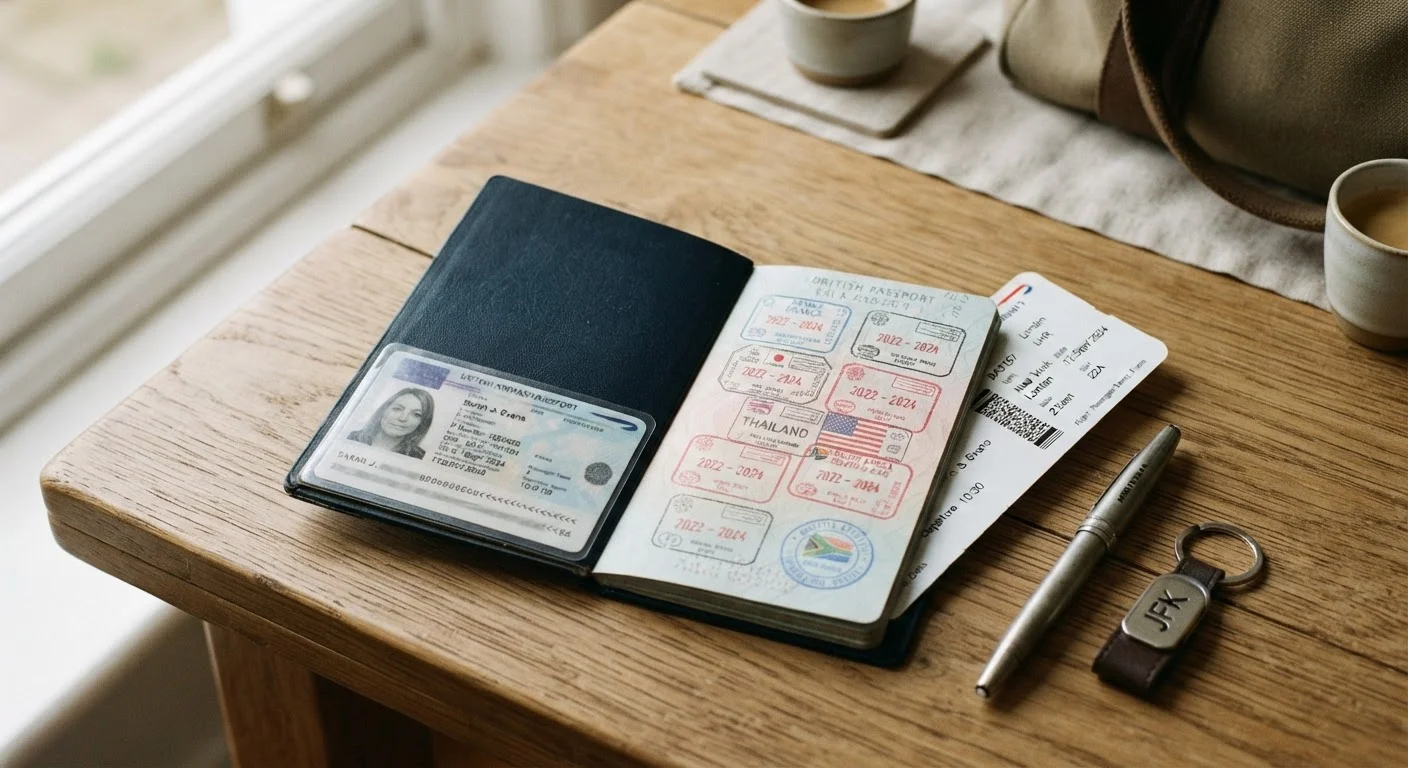
A valid passport is the single most important document for international travel. It serves as your universally recognized proof of citizenship and identity at borders, airports, and embassies worldwide. For US citizens, passports are issued by the US Department of State and are valid for ten years for adults and five years for minors under 16.
One detail many travelers overlook: a large number of countries require that your passport remain valid for at least six months beyond your intended departure date. If your passport expires in fewer than six months, several destinations may deny you entry — even if the travel dates technically fall within the validity window. Always check the specific entry rules for your destination before booking.
Keep a photocopy or secure digital scan of your passport's photo page stored separately from the original. If your passport is lost or stolen abroad, this copy significantly speeds up the replacement process at a US embassy or consulate. For a broader pre-trip checklist, see Before You Fly to a New Country.
| Passport validity buffer required by many countries | At least 6 months beyond travel dates (US Department of State, travel.state.gov) |
| US adult passport validity | 10 years (US Department of State) |
| US minor passport validity (under 16) | 5 years (US Department of State) |
| Official US travel information source | travel.state.gov |
| Most commonly required vaccination certificate | Yellow fever (ICVP / Yellow Card) (World Health Organization (WHO)) |
| IDP issuing requirement | Must be obtained before departure from your home country |
Visas, Entry Requirements, and Official Sources to Consult
A visa is an official authorization — typically stamped or affixed inside your passport, or issued electronically — that permits entry into a foreign country for a stated purpose and duration. Visa requirements vary significantly depending on your citizenship, the destination country, and your reason for travel (tourism, work, study, transit).
US citizens travel visa-free or with visa-on-arrival access to many countries, but that is not universal. Some destinations require a visa application weeks or months in advance. Electronic Travel Authorizations (eTAs) — used by countries like Canada and Australia for eligible nationalities — fall somewhere in between: they are mandatory but can often be obtained online within minutes before travel.
Requirements Can Change Without Notice
Visa policies, entry requirements, and health documentation rules are set by individual governments and can shift quickly in response to diplomatic, security, or public health developments. What was true when a friend last traveled to a destination may not reflect current rules. Always check the official immigration website of your destination country and the US Department of State's country-specific pages at travel.state.gov as close to your departure date as practical.
Always verify current entry requirements directly through the destination country's official immigration or consulate website, and cross-reference with the US Department of State's travel information pages at travel.state.gov. Requirements can change due to diplomatic, public health, or security developments. Do not rely solely on travel blogs or booking platforms for this information.
If you are planning a first international trip and need a broader orientation, Planning Your First International Trip covers passports, currency, and cultural norms in one place.
Supporting Documents Worth Carrying
Beyond a passport and any required visa, several supporting documents can ease entry, protect you during your trip, or be required under specific circumstances.
Passport
A government-issued travel document that certifies the holder's identity and citizenship. Required for entry into most foreign countries and for re-entry into your home country.
Visa
An official authorization granted by a destination country that permits entry for a specific purpose (tourism, work, study) and duration. It may be stamped in your passport or issued electronically.
Electronic Travel Authorization (eTA)
A pre-travel permission system used by some countries for eligible nationalities. It is linked electronically to your passport and does not appear as a physical stamp, but is mandatory before boarding.
International Driving Permit (IDP)
A supplementary document that translates your valid driver's license into multiple languages. Many countries require an IDP alongside your domestic license when renting or operating a vehicle abroad.
ICVP (Yellow Card)
The International Certificate of Vaccination or Prophylaxis — an official WHO-format document proving you have received required or recommended vaccines. Some countries demand it as a condition of entry.
Visa-on-Arrival
A visa granted to eligible travelers upon reaching the destination country's port of entry, rather than requiring advance application. Availability depends on the traveler's citizenship and the destination's rules.
- Travel insurance documentation: Some countries require proof of travel insurance as a condition of entry. Even where it is not mandatory, having your policy number and emergency contact details on hand is strongly recommended. See What Travel Insurance Actually Covers for a clear breakdown of coverage.
- Vaccination or health records: Certain countries require proof of specific vaccinations — yellow fever is the most common example — particularly when arriving from regions where those diseases are endemic. Carry the official vaccination certificate (the ICVP, or "yellow card") if applicable.
- Prescription medication documentation: If you travel with prescription drugs, carry a letter from your prescribing physician and, where possible, the original pharmacy-labeled containers. Travelling with Medications has detailed guidance on crossing borders with prescriptions.
- International Driving Permit (IDP): If you plan to rent or drive a vehicle abroad, many countries require an IDP alongside your valid US driver's license. IDPs are issued domestically before you travel and translate your license details into multiple languages.
- Hotel reservations and itinerary: Border officials may ask for proof of where you are staying or evidence of onward travel. A printed or downloaded confirmation serves this purpose without relying on internet access at the border.
Staying organized with your documents — and keeping digital backups accessible offline — helps you move through border crossings confidently. Packing Light Without Leaving Essentials Behind offers a practical framework for keeping your carry-on streamlined without dropping anything critical.
This article provides general travel information for educational purposes only. Entry requirements, visa rules, and documentation standards change frequently. Always verify current requirements with official government sources and the relevant embassy or consulate before you travel.