

| Number of standard OBD-II fault codes | Thousands (generic and manufacturer-specific) (SAE International OBD-II standard) |
| TPMS alert threshold (US federal standard) | 25% below recommended tire pressure (NHTSA TPMS rule, FMVSS No. 138) |
| Color coding: urgent action required | Red warning lights |
| Color coding: attention needed soon | Amber or yellow warning lights |
| Color coding: system active/informational | Green or blue indicator lights |
| Check engine light required since | 1996 (OBD-II mandate) (US EPA / CARB OBD-II regulations) |
Why Dashboard Warning Lights Matter
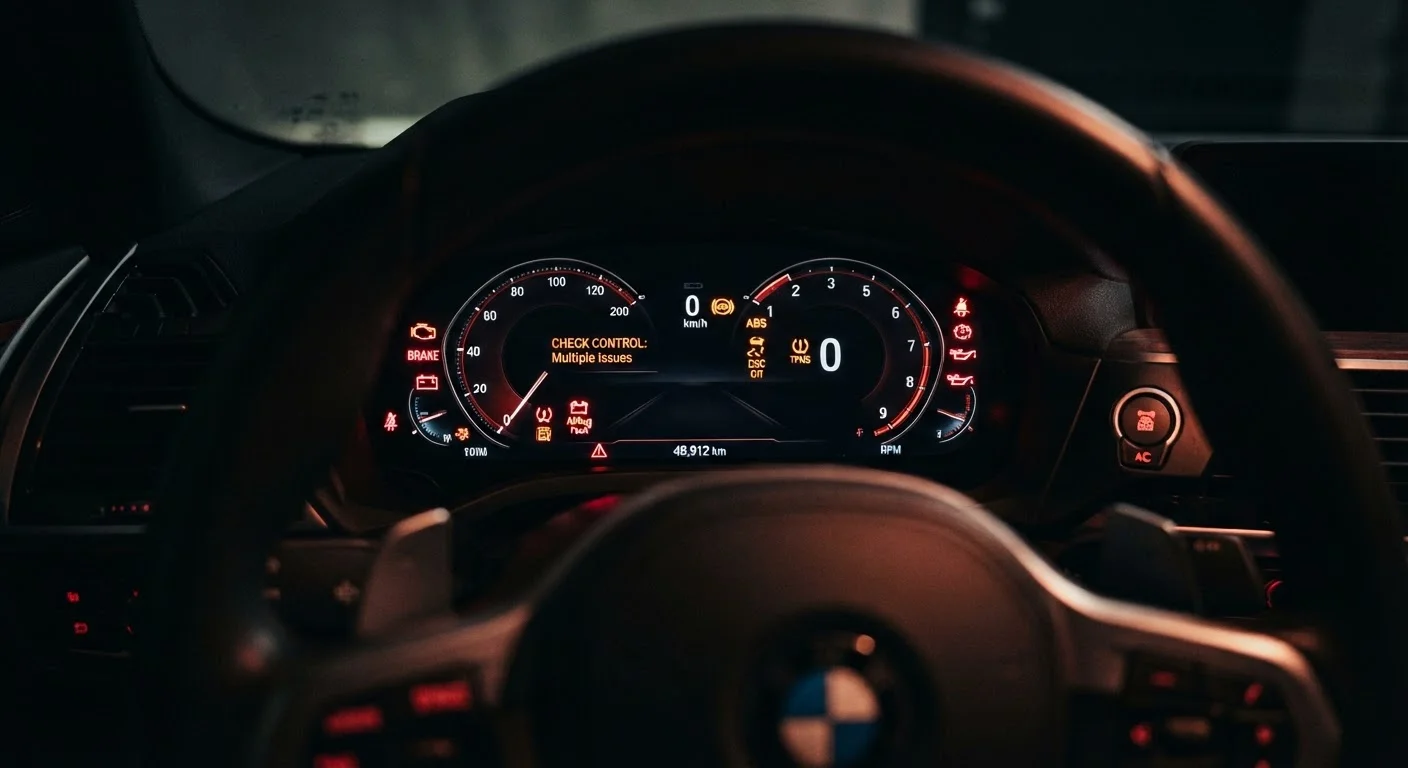
Modern vehicles monitor dozens of systems simultaneously and use dashboard warning lights to flag problems early. Ignoring them is one of the most common — and costly — mistakes drivers make. Some lights signal a minor inconvenience; others indicate a situation that requires pulling over immediately. Understanding the difference can protect your safety and your wallet.
Warning lights fall into three broad categories by color: red lights indicate serious, often urgent issues. Amber or yellow lights call for attention soon but are rarely immediate emergencies. Green or blue lights are informational, confirming a system is active rather than alerting you to a fault.
For a broader view of what your vehicle is communicating, the full guide to dashboard warning lights covers triggering conditions and safe-to-drive decisions in depth.
| Number of standard OBD-II fault codes | Thousands (generic and manufacturer-specific) (SAE International OBD-II standard) |
| TPMS alert threshold (US federal standard) | 25% below recommended tire pressure (NHTSA TPMS rule, FMVSS No. 138) |
| Color coding: urgent action required | Red warning lights |
| Color coding: attention needed soon | Amber or yellow warning lights |
| Color coding: system active/informational | Green or blue indicator lights |
| Check engine light required since | 1996 (OBD-II mandate) (US EPA / CARB OBD-II regulations) |
The Most Common Warning Lights, Explained
Below are the lights everyday drivers encounter most often, along with what each one typically signals.
Check Engine (Malfunction Indicator Light)
The check engine light — a small engine outline — is the most misunderstood light on any dashboard. It can reflect anything from a loose gas cap to a failing catalytic converter. A steadily illuminated light generally means the vehicle can be driven to a shop soon. A flashing check engine light indicates an active misfire that can damage the catalytic converter; reduce speed and seek service promptly.
Oil Pressure Warning
This red oil-can symbol means the engine is not receiving adequate oil pressure. Do not continue driving. Pull over safely, turn off the engine, and check the oil level before proceeding. Running an engine with low oil pressure can cause irreversible internal damage within minutes.
Battery / Charging System
A red battery icon signals that the electrical charging system is not functioning correctly — often a failing alternator or a worn battery. Electrical systems will begin shutting down as power drains. Minimize electrical loads and drive directly to a service facility.
Tire Pressure Monitoring System (TPMS)
An exclamation point inside a tire cross-section means one or more tires are significantly under-inflated (typically 25% or more below the recommended pressure). Check tire pressures at the nearest opportunity. Under-inflation affects handling, fuel economy, and tire wear.
Temperature Warning
A thermometer submerged in liquid — usually red — means the engine is overheating. Pull over safely and turn off the engine. Opening the hood to allow cooling is helpful, but never open the radiator cap on a hot engine. Continued driving risks a seized engine or warped cylinder head.
Brake System Warning
This light can appear for multiple reasons: the parking brake is engaged, brake fluid is low, or a fault exists in the braking system itself. Confirm the parking brake is released first. If the light persists, have the brake system inspected before driving further. See the companion guide on brake sounds and what they mean for related symptoms to watch for.
Traction Control / Stability Control
A flashing traction-control light (a car with wavy lines) is normal during slippery conditions — it indicates the system is actively working. A steadily illuminated light may mean the system has been manually switched off or has a fault. Both ABS and stability control lights appearing together warrant prompt diagnosis.
Malfunction Indicator Light (MIL)
The official name for the check engine light. It illuminates when the vehicle's onboard diagnostic system detects a fault in an emissions-related or engine management component.
TPMS
Tire Pressure Monitoring System. A sensor-based system that alerts the driver when one or more tires fall significantly below the manufacturer's recommended inflation pressure.
OBD-II Code
A standardized diagnostic trouble code stored by the vehicle's computer when a fault is detected. Mechanics use a scan tool to retrieve these codes and identify the root cause of a warning light.
Catalytic Converter
An emissions control device in the exhaust system that converts harmful combustion gases into less toxic compounds. Engine misfires can overheat and permanently damage it.
Alternator
An engine-driven generator that continuously recharges the battery and powers the vehicle's electrical systems while the engine is running. A failing alternator triggers the battery warning light.
ABS (Anti-lock Braking System)
A safety system that prevents wheel lockup during hard braking, helping the driver maintain steering control. An ABS warning light indicates a fault in this system.
When to Stop Driving vs. Schedule a Shop Visit
Not every warning light demands an immediate roadside stop. Use this general framework:
- Stop immediately: Oil pressure, engine temperature, and brake system warning lights. These involve systems where continued driving causes rapid, severe damage or a safety risk.
- Drive directly to a shop: Battery/charging and a flashing check engine light. The vehicle may still be operable but is deteriorating actively.
- Schedule service within a few days: TPMS, a steady check engine light, and service reminder lights. These indicate conditions that need attention but are unlikely to cause sudden failure.
Before any long journey, address outstanding warning lights as part of a thorough vehicle check. The pre-trip vehicle safety checklist outlines the full inspection routine, and what road-trip ready actually means expands on preparation for extended drives.
When your vehicle has been serviced and you receive a report, the guide to reading a mechanic's service report can help you make sense of the findings. If your vehicle features advanced driver-assistance systems, understanding those systems helps contextualize any ADAS-related warning lights — see the overview of ADAS features now standard on new cars.
Your Owner's Manual Is the Definitive Reference
Warning light symbols and their specific meanings can vary between vehicle makes, model years, and trim levels. While the lights described here follow common industry conventions, always consult your vehicle's owner's manual for the exact interpretation applicable to your car. If you no longer have a physical copy, most manufacturers make digital versions available through their official websites.