

Key Takeaways
- A high-pitched squeal often means brake pads are reaching the end of their service life.
- Grinding noises usually indicate metal-on-metal contact and require prompt professional inspection.
- Pedal pulsing or vibration typically points to warped rotors or uneven pad deposits.
- Some squealing is harmless and temporary, especially in cold or damp conditions.
- Brake problems that affect stopping distance should never be deferred — seek service immediately.
- Driving habits like hard braking accelerate brake wear significantly over time.
Brake Noise & Pedal Feel
Brake noises — squealing, grinding, or pulsing — are your vehicle's way of communicating that something in the braking system needs attention. Each sound or sensation typically points to a specific cause, ranging from minor and temporary to genuinely urgent. Understanding what each signal means helps you decide whether to schedule a routine appointment or pull over immediately.
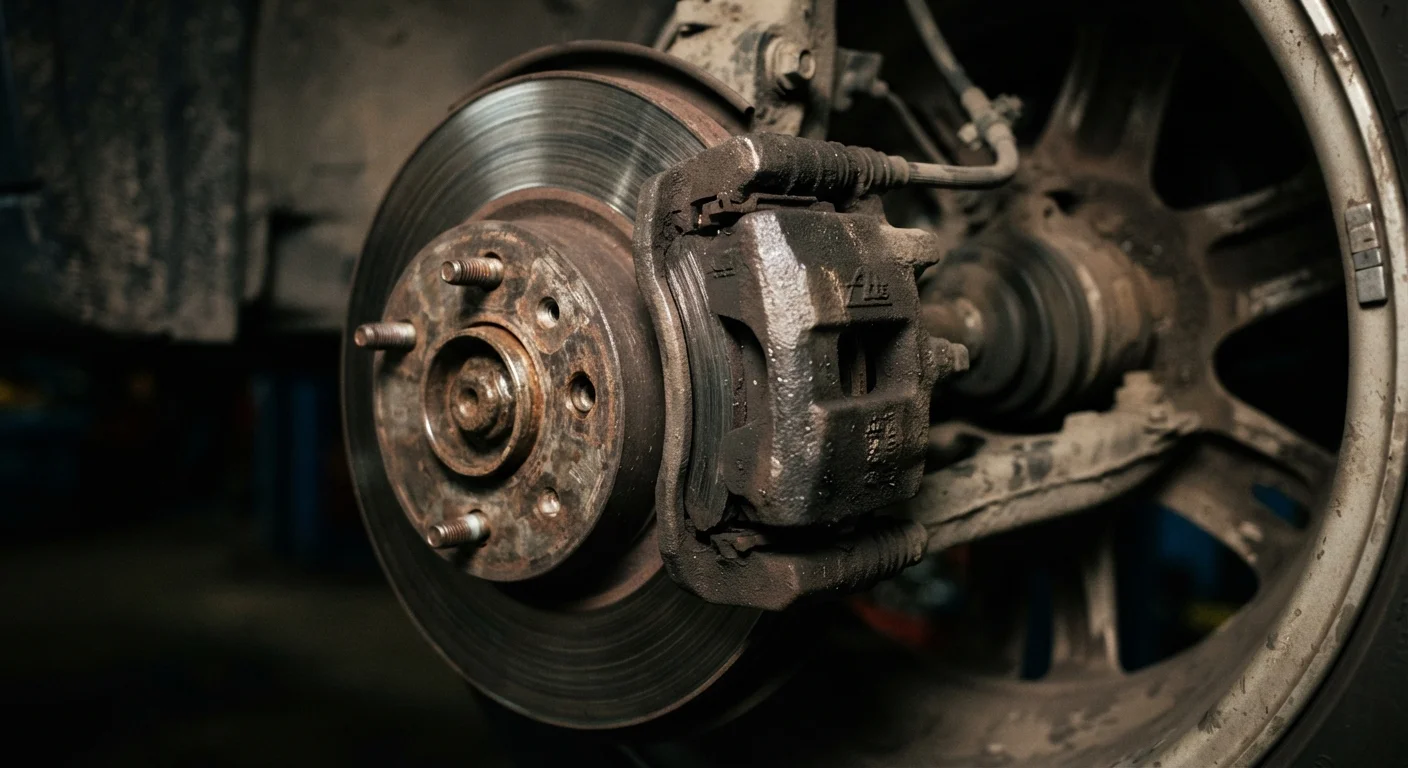
Most modern disc brake systems include a small metal wear indicator tab designed to contact the rotor and produce a high-pitched squeal when pads reach minimum thickness — this is intentional by design.
The Squeal: What That High-Pitched Sound Usually Means
The most common brake noise is a high-pitched squeal or screech that happens when you press the pedal. In most disc brake systems, manufacturers build in a small metal tab called a wear indicator. When pads thin down to their minimum safe thickness, this tab makes contact with the rotor and produces that distinctive sound — intentionally alerting you before the pad wears out entirely.
Not every squeal is a wear indicator, though. Brakes often squeal briefly in cold or wet conditions because moisture creates a thin film on the rotor surface. This typically disappears after the first few stops. Certain types of brake pad material are also more prone to squealing, particularly harder compounds used in performance applications.
The key distinction is persistence. If the squeal fades after your brakes warm up on a cold morning, it is likely benign. If the noise continues consistently during normal driving and braking, it is worth scheduling an inspection — preferably soon, before the situation progresses to grinding.
Easy Way to Test if It's the Wear Indicator
If the squeal disappears completely when you apply the brakes but returns when you release the pedal, it may be the wear indicator tab doing its job. Conversely, if the squeal happens only while braking, that points more toward pad-to-rotor contact noise. Either way, a visual inspection at your next service visit is a good idea.
The Grind: A Sound That Needs Prompt Attention
A grinding or growling noise when braking is a more serious signal. It almost always means the pad material has worn away completely, leaving bare metal pressing against your rotor. At this point, every stop is damaging the rotor surface — a component that is significantly more expensive to replace than pads alone.
Occasionally, grinding can result from a foreign object — a small stone or road debris — becoming trapped between the pad and rotor. In that scenario the noise may be intermittent and could resolve on its own, but the situation still deserves a professional look to rule out damage.
If you experience grinding, reduce your speed gradually and avoid hard braking where possible. Have the vehicle inspected by a qualified mechanic as soon as practical. Continuing to drive on metal-to-metal contact can compromise stopping distance. For a deeper look at how your brake components fit together, see our overview of disc and drum brake systems.
Rear Drum Brakes Behave Differently
Some vehicles — particularly older models and certain trucks — use drum brakes at the rear rather than disc brakes. Drum systems have different wear indicators and can produce squealing or grinding for related but distinct reasons, including worn brake shoes or scored drum surfaces. If you are unsure which type your vehicle uses, your owner's manual or a mechanic can confirm it.
The Pulse: Why Your Pedal Vibrates Under Braking
If your brake pedal vibrates, shudders, or pulses rhythmically as you slow down, the most likely culprit is a warped rotor or uneven deposits of brake pad material bonded to the rotor face. The rotor — the large metal disc your pads clamp against — needs to be extremely flat to provide smooth, consistent braking. When it warps or develops uneven thickness, the pedal (and sometimes the steering wheel) will oscillate in sync with the wheel's rotation.
Warping can result from overheating caused by sustained hard braking, such as descending a long mountain grade without engine braking. Thermal shock — rapidly cooling hot rotors, for example by driving through a puddle — can also cause distortion. Driving habits that accelerate brake wear are worth understanding if pedal pulsing is a recurring issue for you.
A mechanic can measure rotor thickness variation using a dial indicator. Depending on the degree of warping and remaining rotor thickness, resurfacing or full replacement may be recommended.
25,000–70,000 mi
Typical brake pad lifespan range
Lifespan varies significantly based on driving style, vehicle type, and pad material; city driving tends toward the lower end of this range.
~$100–$300
Estimated pad replacement cost per axle
Rotor damage from worn pads can add $200–$400 or more per axle; catching wear early is generally less costly.
When to Act Immediately Versus Schedule a Visit
Not every brake noise demands an emergency stop, but some do. Use these general guidelines:
- Act immediately (stop driving): Brakes feel soft or spongy, the pedal sinks toward the floor, you smell burning near the wheels, or stopping distance has noticeably increased.
- Schedule inspection soon: Persistent squealing during normal conditions, early-stage grinding, or consistent pedal pulsing without other symptoms.
- Monitor and watch: Squealing only on cold or damp mornings that disappears quickly, or occasional minor noise with no change in pedal feel or stopping performance.
If a brake warning light appears on your dashboard alongside any of these symptoms, treat it as urgent. Our guide to dashboard warning lights explains what that indicator means and when it's safe to keep driving.
If you drive a higher-mileage vehicle, brake components may be closer to the end of their service life than expected. Our guidance on maintaining high-mileage vehicles covers how maintenance priorities shift as vehicles age.
This article is for general informational purposes only. For any concerns about your vehicle's braking performance or safety, consult a qualified mechanic before continuing to drive.