

| Fluids to monitor regularly | 6 (oil, coolant, brake, power steering, transmission, washer) |
| Most safety-critical fluid | Brake fluid |
| Oil check method | Dipstick, engine off, vehicle on level ground |
| Coolant check timing | Only when engine is cold — never open a hot radiator cap |
| Brake fluid change interval | Typically every 2 years (verify with owner's manual) |
| Sealed transmission | Many modern vehicles — requires mechanic to inspect fluid |
Why Vehicle Fluids Matter
A modern vehicle depends on several distinct fluids to lubricate, cool, pressurize, and clean its systems. When any one of them drops too low or degrades past its useful life, performance suffers — and in some cases, so does safety. The good news: checking fluid levels takes minutes and requires no special tools for most vehicles.
This reference covers the six most important fluids, what each one does, where to find it, and what warning signs point to a problem. For a broader look at what each fluid does, or to prepare for a long drive, see our pre-road-trip vehicle check.
| Fluids to monitor regularly | 6 (oil, coolant, brake, power steering, transmission, washer) |
| Most safety-critical fluid | Brake fluid |
| Oil check method | Dipstick, engine off, vehicle on level ground |
| Coolant check timing | Only when engine is cold — never open a hot radiator cap |
| Brake fluid change interval | Typically every 2 years (verify with owner's manual) |
| Sealed transmission | Many modern vehicles — requires mechanic to inspect fluid |
The Six Fluids to Monitor
The fluids below cover the core systems in virtually every passenger vehicle. Always consult your owner's manual for vehicle-specific reservoir locations and recommended fluid types before adding anything.
1. Engine Oil
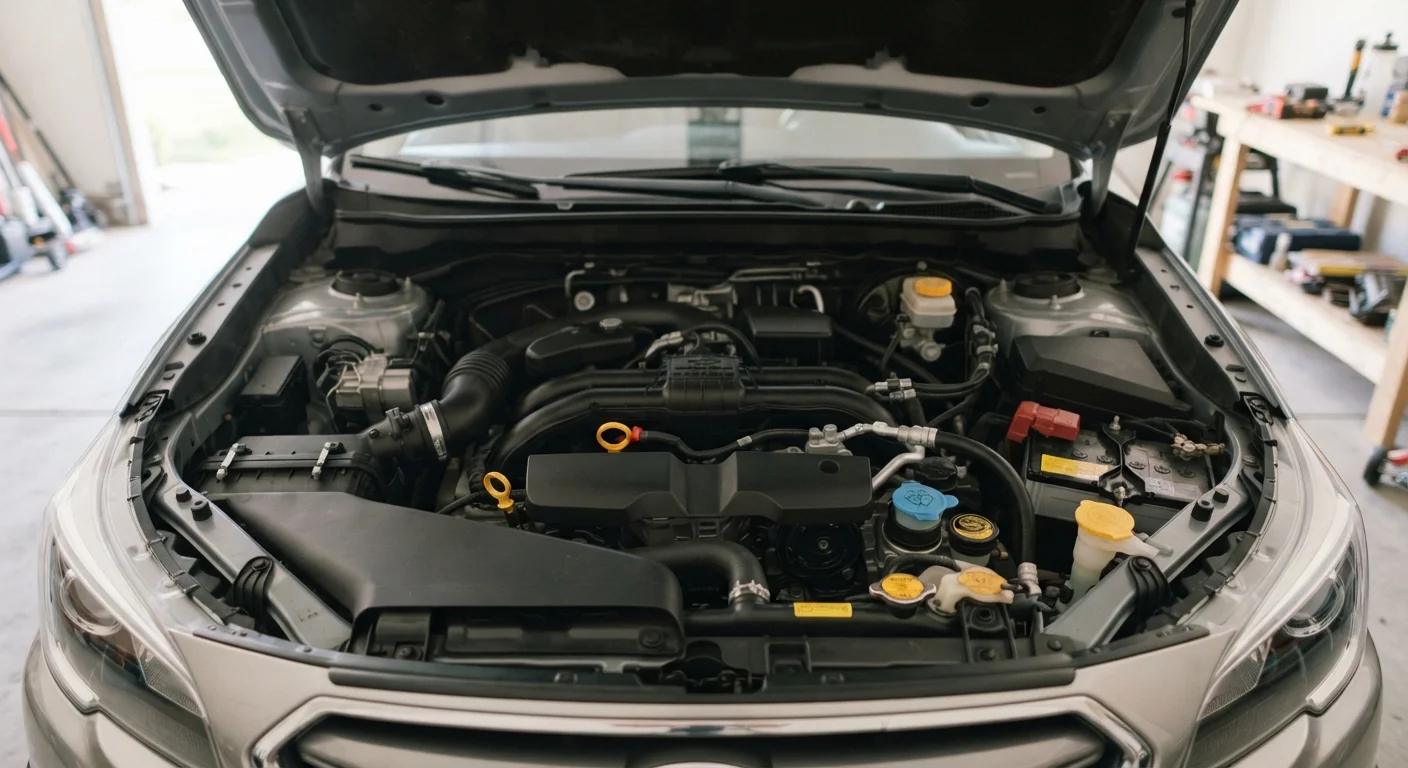
Engine oil lubricates moving metal parts, reduces heat from friction, and carries away microscopic debris. Check it with the dipstick — engine off and on level ground — and look for the level to fall between the MIN and MAX marks. Dark, gritty oil signals it's due for a change even if the level is fine. For guidance on viscosity grades and change intervals, see our engine oil deep dive.
2. Coolant (Antifreeze)
Coolant circulates through the engine to absorb heat and prevent both freezing and boiling. The translucent plastic overflow reservoir is usually marked HOT and COLD — never open the pressurized radiator cap when the engine is warm. Low coolant is one of the leading contributors to engine overheating. Learn how the full system works in our article on how a car's cooling system prevents overheating.
3. Brake Fluid
Brake fluid transmits the force from your pedal through hydraulic lines to the brake calipers. It lives in a small reservoir near the firewall. A low level can indicate worn brake pads (normal) or a leak (not normal — seek inspection immediately). Brake fluid also absorbs moisture over time, which lowers its boiling point and reduces stopping effectiveness.
Hydraulic fluid
A liquid that transmits force through a closed system of lines and cylinders. Brake fluid and power steering fluid are both hydraulic fluids — pressing the pedal or turning the wheel moves fluid to apply mechanical force elsewhere.
Dipstick
A long, thin metal rod inserted into the engine oil sump (and sometimes the transmission). Pulling it out and reading the oil line against MIN/MAX markers shows the current fluid level.
Coolant (antifreeze)
A liquid — typically a mixture of glycol and water — that circulates through the engine and radiator to regulate temperature. It prevents freezing in winter and boiling in summer.
Firewall
The metal barrier separating the engine bay from the passenger cabin. Several fluid reservoirs, including brake fluid, are typically mounted near it.
Viscosity
A measure of how thick or thin a fluid is and how readily it flows. Engine oil viscosity affects how well it lubricates at different temperatures — described by grades such as 5W-30.
4. Power Steering Fluid
On vehicles with hydraulic power steering, this fluid enables easy wheel turning. Many newer vehicles use electric power steering and have no fluid to check. If yours has a reservoir, the level should sit between MIN and MAX markings. A whining noise when turning often points to low fluid or a failing pump.
5. Transmission Fluid
Transmission fluid lubricates gears and, in automatic transmissions, also acts as a hydraulic fluid that enables gear changes. Some vehicles have a dipstick for this; others are sealed and require a mechanic to check. Slipping gears, delayed engagement, or a burning smell can all indicate a transmission fluid issue.
6. Windshield Washer Fluid
The only fluid that has no mechanical consequence when empty — but running out mid-drive in dirty conditions is a safety problem. Use a purpose-made washer fluid; plain water can freeze in cold weather and doesn't clean as effectively. Cold-weather performance is just one example of how temperatures affect your vehicle — our article on cold weather and your car covers the broader picture.
How Often to Check Each Fluid
Frequency depends on vehicle age, mileage, and driving conditions. As a general guide:
- Engine oil: Monthly, or before any long trip.
- Coolant: Every few months; check the overflow reservoir when the engine is cold.
- Brake fluid: Every six months; change typically recommended every two years or per manufacturer guidance.
- Power steering fluid: Every few months if your vehicle has a hydraulic system.
- Transmission fluid: Per your owner's manual — intervals vary widely by vehicle.
- Washer fluid: Whenever the reservoir appears less than half full.
High-mileage vehicles may need more frequent checks across the board. Our article on keeping a high-mileage car roadworthy explains how maintenance priorities shift as engines age.
When to See a Mechanic Immediately
If brake fluid is noticeably low and brake pads are known to be in good condition, or if any fluid shows signs of contamination (milky oil can indicate coolant mixing with engine oil), stop driving and have the vehicle inspected by a qualified mechanic. Topping up a fluid that has a leak only delays a potentially serious repair. Routine checks catch problems early — but they don't replace professional diagnosis when something looks wrong.