

Key Takeaways
- Most vehicles carry at least six critical fluids, each serving a distinct mechanical purpose.
- Many fluid problems are detectable early through color, smell, or level changes visible to any driver.
- Neglecting key fluids like brake fluid or coolant can lead to serious mechanical failure or safety hazards.
- Your owner's manual specifies the correct fluid type for every reservoir — substitutions can cause damage.
- Most fluid checks require no tools and take fewer than five minutes with a cool engine.
Why Fluids Are the Lifeblood of Your Vehicle
Modern cars are intricate systems where metal, rubber, and electronics interact under extreme conditions. What keeps those systems from destroying themselves is a set of carefully engineered fluids — each one formulated to lubricate, cool, transmit force, or protect a specific part of your vehicle. Ignore them long enough and the consequences range from expensive repairs to dangerous road situations.
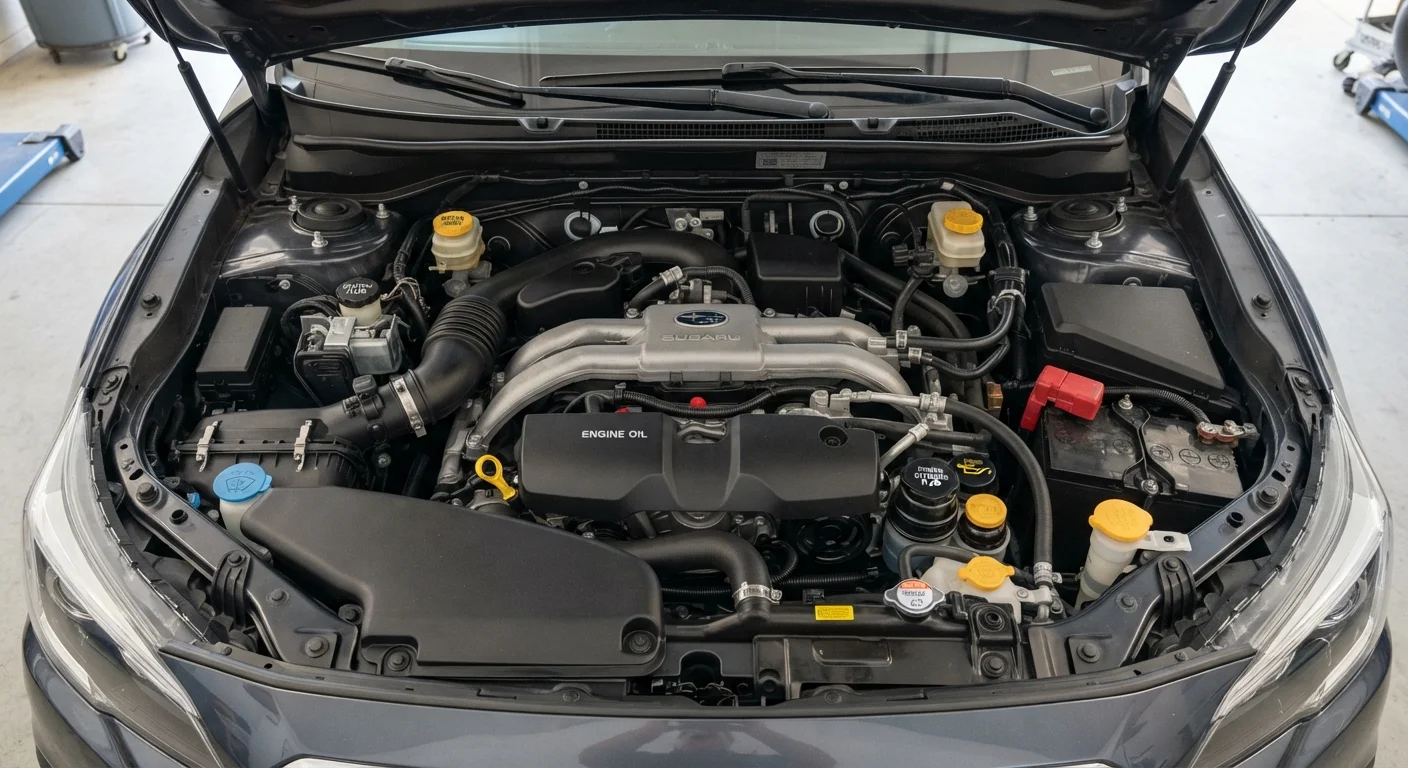
The good news: checking most of these fluids takes only minutes and requires nothing more than a clean rag and good lighting. For a deeper look at how your vehicle manual guides fluid selection and maintenance schedules, see what your owner's manual is actually telling you. Below are the six fluids every driver should be able to identify, locate, and monitor.
Engine Oil
Engine oil lubricates the hundreds of moving metal parts inside your engine, reducing friction and carrying heat away from areas the cooling system can't directly reach. It also suspends tiny contaminants and carries them to the oil filter. Without it, metal grinds against metal within seconds.
Check the level using the dipstick — typically bright yellow or orange — with the engine off and cooled. Wipe it clean, reinsert fully, then withdraw it to read the level. Healthy oil ranges from amber to light brown. Black, gritty, or milky oil signals it's time for a change or a possible coolant leak. For guidance on oil grades and change intervals, see engine oil viscosity grades and change intervals.
Engine oil is your car's first line of defense against catastrophic internal wear.
Engine Coolant (Antifreeze)
Coolant — a mixture of water and antifreeze — circulates through the engine and radiator to regulate operating temperature. It prevents the engine from overheating in summer and from freezing in winter. Most vehicles use a dedicated overflow reservoir with MIN and MAX markers on the side, making level checks straightforward.
Never open the radiator cap on a hot engine — pressurized coolant can cause severe burns. Check when the engine is fully cold. Healthy coolant is typically green, orange, or pink depending on formulation; brown or rusty coolant suggests contamination and should be flushed by a mechanic.
Never open the radiator cap on a hot engine — pressurized coolant can cause severe burns.
Brake Fluid
Brake fluid transmits the force of your foot on the brake pedal through hydraulic lines to the brake calipers at each wheel. It must withstand extremely high temperatures without boiling, which is why it has a specific boiling point rating (DOT 3, DOT 4, DOT 5.1 are the common US classifications).
The brake fluid reservoir is typically a small semi-transparent plastic container near the firewall on the driver's side. The fluid should be light yellow to nearly clear. Dark brown fluid indicates moisture contamination — brake fluid is hygroscopic, meaning it absorbs water over time, which lowers its boiling point and reduces braking performance. Most manufacturers recommend replacement every two to three years regardless of mileage.
Dark brake fluid absorbs moisture over time, reducing its boiling point and your stopping power.
Power Steering Fluid
Power steering fluid pressurizes the hydraulic system that makes turning your steering wheel effortless. Not all vehicles use it — electric power steering systems, now common in newer cars, don't require hydraulic fluid at all. If your vehicle has a traditional hydraulic system, there will be a dedicated reservoir, often labeled with a steering wheel icon.
Low or dirty power steering fluid commonly announces itself through a whining or groaning noise when turning. The fluid should be clear to slightly pink or reddish. Foamy or dark fluid, or a reservoir that consistently runs low, can indicate a leak that a mechanic should inspect.
A whining noise when turning is often the first sign your power steering fluid needs attention.
Transmission Fluid
Transmission fluid lubricates and cools the gears, clutch packs, and hydraulic components inside your transmission. In automatic transmissions, it also serves as the hydraulic fluid that facilitates gear changes. Many modern vehicles seal their transmission and label it as requiring no routine fluid checks — but that doesn't mean the fluid lasts forever.
On vehicles that do have a transmission dipstick, the fluid should be translucent red or pink. Dark brown or burnt-smelling fluid signals degradation. Delayed shifting, slipping, or shuddering during gear changes can all point to transmission fluid issues. Always use the fluid specification listed in your owner's manual — incorrect fluid can damage seals and internal components.
Burnt-smelling or dark transmission fluid is a clear signal the fluid has degraded and needs attention.
Windshield Washer Fluid
While not a mechanical fluid in the same sense as the others, windshield washer fluid directly affects driver visibility — which is a safety issue. Water alone can freeze in cold weather, leave mineral deposits on the glass, and is less effective at cutting through road grime and insects. Proper washer fluid contains antifreeze agents and surfactants formulated for the task.
The reservoir is usually a translucent tank with a windshield or water-drop symbol. It's safe to check and refill at any time without worrying about engine temperature. Never substitute other liquids such as household glass cleaner — they can damage rubber seals and spray nozzles.
Windshield washer fluid is a safety item — clear visibility depends on a full, functioning reservoir.
Staying on Top of Fluid Health
No single fluid check replaces a full service, but routine visual checks are genuinely effective at catching problems early. Low brake fluid, milky coolant, or dark and gritty power steering fluid are all warning signs a driver can spot without special equipment. If you notice any fluid pooling under your parked car — particularly anything red, green, or dark brown — have it inspected by a qualified mechanic promptly.
Make Fluid Checks Part of Refueling
A simple habit is to check your key fluid levels once a month, perhaps when you stop for fuel. Park on a level surface, let the engine cool for at least 10 minutes, and work through the reservoirs in a consistent order. Catching a low or contaminated fluid early is almost always cheaper and safer than dealing with the failure it prevents.
For a broader look at fluid monitoring habits and top-up intervals, fluid levels that keep a car running smoothly covers the full picture. And if you want to understand how coolant fits into a larger protective system, how a car's cooling system prevents engine overheating goes deeper on that topic. Staying informed is the simplest form of preventive maintenance.
Always Use the Fluid Type Your Car Specifies
Fluid types are not universal. Brake fluid ratings, coolant formulations, and transmission fluid specifications vary by manufacturer and model year. Using the wrong type — even a close substitute — can degrade seals, cause corrosion, or interfere with hydraulic performance. Your owner's manual lists the exact specification for every reservoir in your vehicle. When in doubt, consult a qualified mechanic before adding any fluid you're unsure about.