

Key Takeaways
- Coolant — not plain water — is the fluid that absorbs and carries engine heat away.
- The radiator releases that heat into the surrounding air before coolant cycles back through the engine.
- The thermostat regulates coolant flow so the engine reaches and holds its ideal operating temperature.
- The water pump keeps coolant moving continuously through the entire system.
- A temperature warning light on your dashboard means you should stop driving and investigate immediately.
Engine Cooling System
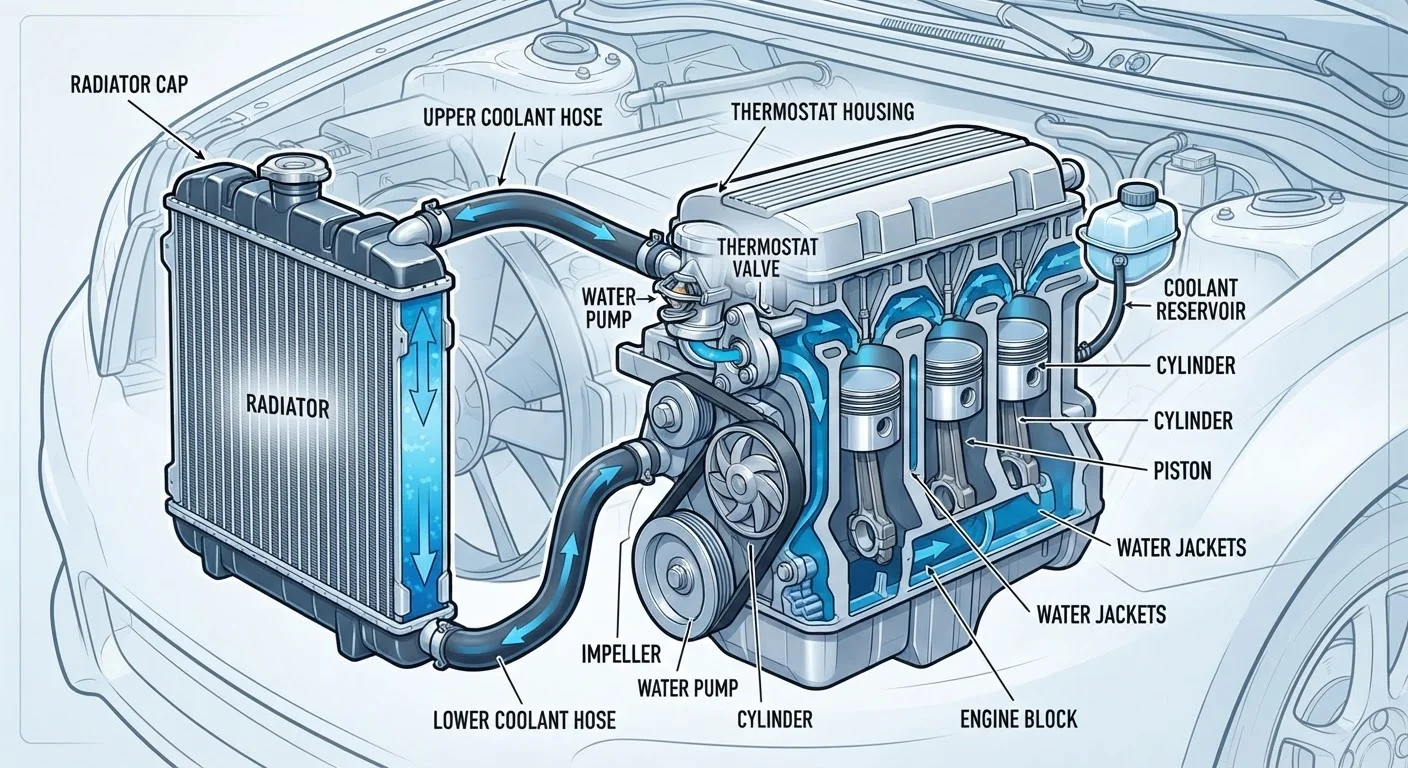
A car's cooling system is a network of components that absorbs heat generated by the engine and transfers it away before temperatures reach a damaging level. It circulates a liquid called coolant through the engine block and out to the radiator, where heat is released into the air. Without this system, an engine would overheat within minutes of starting.
Most modern vehicles use a pressurized closed-loop cooling system, which raises the coolant's boiling point and improves heat-transfer efficiency compared to unpressurized designs.
Why Engines Produce So Much Heat
An internal combustion engine generates power by burning fuel inside its cylinders. This process is remarkably energetic — but also inefficient. A significant portion of the energy released by burning fuel escapes as heat rather than motion. Left unchecked, that heat would quickly push metal components beyond their design limits, causing expansion, warping, and eventually failure.
Engines are designed to operate within a specific temperature range — typically between 195°F and 220°F (90°C–104°C). Below this range, the engine runs inefficiently and produces more emissions. Above it, components begin to degrade. The cooling system's job is to keep temperatures within that narrow, productive window at all times.
The Key Components and What Each One Does
Understanding the cooling system means understanding each part's role in a continuous loop.
Coolant
Coolant — a mixture of antifreeze and distilled water — is the working fluid of the system. It flows through passages cast into the engine block and cylinder head, absorbing heat directly from the metal surfaces. Its formulation allows it to remain liquid at temperatures well below freezing and resist boiling even above 250°F when the system is pressurized. For more on checking and maintaining this fluid, see this guide to vehicle fluid levels.
The Water Pump
The water pump is the engine of the cooling system — it circulates coolant continuously. Driven by a belt connected to the engine, it pushes coolant through the engine and out toward the radiator. If the water pump fails, coolant stops moving and overheating follows quickly.
The Thermostat
Positioned between the engine and the radiator, the thermostat is a small but critical valve. When the engine is cold, it stays closed, trapping coolant inside the engine so it warms up faster. Once the target temperature is reached, it opens and allows heated coolant to flow to the radiator. This valve is responsible for maintaining a stable operating temperature regardless of driving conditions.
The Radiator
Hot coolant arriving from the engine passes through a radiator — a grid of small metal tubes with thin fins attached. Air flowing through the radiator (either from driving speed or a fan) pulls heat out of the coolant. The now-cooled fluid then returns to the engine to absorb more heat, and the cycle repeats.
195–220°F
Ideal engine operating temperature range
Most gasoline engines are engineered to run efficiently within this temperature band; sustained operation above it causes component damage.
~30%
Engine energy lost as heat through cooling
Engineering estimates suggest roughly a third of fuel energy in a typical combustion engine is expelled as heat, underscoring the cooling system's workload.
Warning Signs the System Needs Attention
Cooling system problems rarely appear without some warning. The most obvious is the temperature gauge climbing into the red zone or a warning light appearing on the dashboard. Other signs include a sweet smell near the engine (which can indicate coolant leaking), white steam from under the hood, or coolant appearing as a puddle under a parked car.
Never Open a Hot Radiator Cap
The cooling system operates under pressure, which raises the coolant's boiling point. If you remove the radiator cap while the engine is hot, pressurized steam and scalding liquid can escape suddenly and cause serious burns. Always wait until the engine has cooled completely — at least 30 minutes — before opening the cap or inspecting the coolant reservoir.
Cold weather introduces additional stress on the cooling system. Coolant that has not been replaced on schedule may lose its antifreeze effectiveness, risking freezing in the hoses or radiator. You can read more about how winter conditions affect various vehicle systems in our article on cold weather and what happens under the hood.
If you notice any of these symptoms, have the vehicle inspected by a qualified mechanic rather than continuing to drive. Overheating damage is expensive and often preventable with early attention.