

Key Takeaways
- Research suggests a general 'prime booking window' of one to four months before domestic departures.
- Last-minute fares are rarely bargains; airlines typically raise prices as seats fill closer to departure.
- International routes, holiday travel, and peak seasons favor earlier booking windows.
- Flexible travelers with no firm plans may occasionally benefit from waiting, but with real risk.
- Fare alert tools can help you monitor prices without constant manual checking.
Our Verdict
For most travelers with fixed dates and destinations, booking within a one-to-four-month window ahead of domestic departures — and further ahead for international routes — tends to align with lower average fares based on observed pricing patterns. Waiting for last-minute deals is a high-risk strategy that pays off inconsistently. Neither approach guarantees the lowest price, since airline pricing is dynamic and varies by route, season, and demand.
| Best for | Recommended |
|---|---|
| Travelers with fixed dates and popular routes | Booking Early |
| International or peak-season travel | Booking Early (3–6 months out) |
| Highly flexible travelers with no firm commitments | Waiting — with caution and a backup plan |
| Budget-conscious travelers wanting to balance risk and savings | Prime Window Booking (1–3 months out) |
How Airline Pricing Actually Works
Before comparing strategies, it helps to understand the system you're navigating. Airlines use dynamic pricing — a model in which fares are adjusted continuously based on seat inventory, competitor prices, time until departure, and demand signals. A seat on a Tuesday morning flight might cost significantly less than the same seat on a Friday afternoon, and that same Tuesday fare can shift within hours.
Because of this, there is no single "correct" time to buy a ticket that applies to every route. What research and industry analysis can offer are patterns — tendencies in how prices behave across large datasets of routes and timeframes. Understanding those patterns, rather than expecting a fixed rule, is the practical starting point. For a deeper look at how this pricing mechanism functions, see how dynamic pricing works.
The Case for Booking Early
Analysis of domestic US airfare data — including work published by travel research firms and airlines' own revenue management disclosures — consistently shows that fares on popular routes tend to rise as the departure date approaches, particularly inside the final two to three weeks. Airlines often hold back a portion of seats at lower introductory prices, then increase fares as capacity fills.
1–3 months
General prime booking window for domestic US flights
Multiple fare analysis studies have identified this range as when domestic fares are frequently at or near their lower observed averages.
2–6 months
Recommended advance window for international routes
Industry analysis suggests international fares — particularly to Europe and Asia — tend to be more competitive in this advance window.
~10%–15%
Typical fare premium in the final two weeks before departure
Aggregated fare data from travel research firms has shown fares on popular routes commonly increase in the final weeks as remaining inventory tightens.
For international flights, the booking window matters even more. Long-haul routes to Europe, Asia, or Latin America often see the most competitive pricing between three and six months out. Premium cabin seats, which have fewer units per aircraft, tend to disappear even earlier.
Holiday travel — Thanksgiving, winter break, spring break — follows a particularly clear early-booking pattern. Seats on high-demand holiday dates can sell out at lower price tiers well before the travel period, leaving late bookers with premium fares or limited options.
Booking early also provides planning certainty. When flights are confirmed, you can arrange accommodation, ground transport, and activities without the anxiety of an unresolved itinerary. If your trip involves companions, group coordination becomes far easier with a locked-in flight. For tips on what else to prepare once your flights are booked, review a pre-departure checklist before traveling internationally.
The Case for Waiting
The appeal of waiting rests on a genuine, if inconsistent, phenomenon: airlines do sometimes discount unsold seats close to departure to avoid flying with empty inventory. On less popular routes or during off-peak travel periods, last-minute fare drops are more plausible than on high-demand routes where seats reliably fill.
Last-Minute Deals Are Less Common Than They Appear
The idea of scoring a steeply discounted seat days before departure is appealing but increasingly rare on popular routes. Modern airline revenue management systems are designed to fill planes at optimal prices — meaning deeply discounted last-minute fares are more the exception than the rule. Relying on this strategy for important travel, especially during busy periods, carries meaningful risk of paying more or finding no suitable flights at all.
Waiting also makes sense if your travel plans are genuinely uncertain. Booking early on a non-refundable fare and then canceling or changing it can cost more than any savings achieved. Many standard economy tickets carry change fees or restrict credit use, so flexibility has real financial value if your schedule is fluid.
The critical caveat: the image of the savvy traveler snagging a deeply discounted last-minute seat to a popular destination is largely a remnant of an older airline pricing era. Most revenue management systems today are calibrated to prevent that scenario on high-demand routes. Waiting is a strategy best suited to the genuinely flexible traveler — one who can depart from multiple airports, travel midweek, and accept the destination the market offers rather than the one they originally intended.
Comparing the Two Approaches
The table below summarizes the main trade-offs across common planning scenarios.
| Booking Early | Waiting / Last-Minute | |
|---|---|---|
| Typical fare pattern | Lower on popular routes in prime window | Rises on high-demand routes; may drop on low-demand |
| Planning certainty | High — itinerary confirmed well in advance | Low — destination and dates remain uncertain |
| Seat and schedule choice | Wider selection of times and seat positions | Limited inventory, especially on busy routes |
| Best suited for | Fixed dates, groups, holidays, international | Truly flexible solo travelers, off-peak routes |
| Risk level | Low-to-moderate (price may dip slightly after) | Moderate-to-high (fares often surge near departure) |
| Accommodation coordination | Easier — flights confirmed first | Harder — other bookings remain in limbo |
As a general rule of thumb drawn from aggregated fare data: for domestic US routes, a booking window of roughly one to three months before departure tends to capture fares in a lower range compared to booking either very far out (more than six months) or very close in (under two weeks). For international routes, that window typically shifts to two to six months ahead.
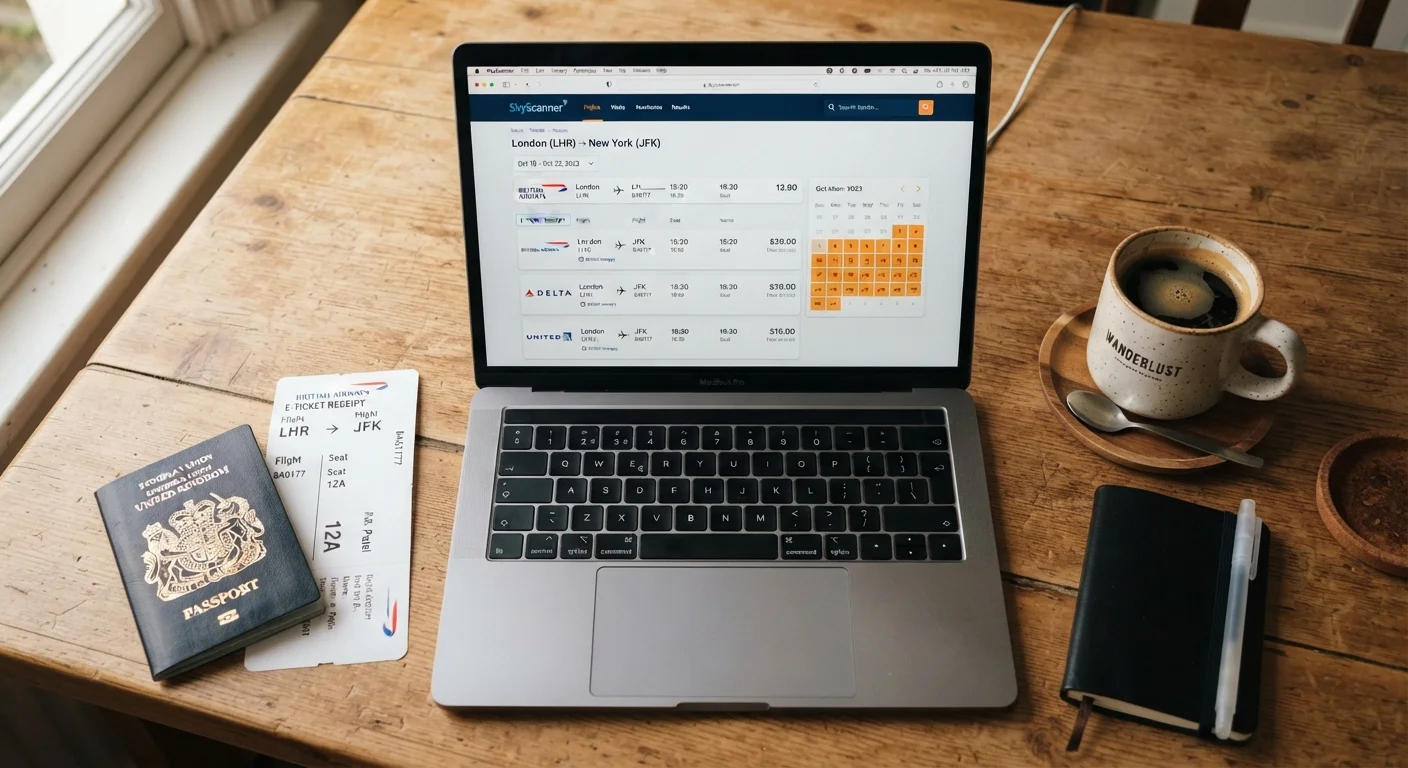
These are tendencies, not guarantees. Individual routes, airlines, and travel dates vary considerably. Setting up price alerts through flight search tools — which notify you when a fare on your route changes — is a practical way to monitor the market without checking manually every day. This approach reflects the broader principle of doing structured pre-purchase research before committing to a significant expense.
Practical Guidance for Your Next Trip
Rather than committing rigidly to either extreme, most travelers benefit from a middle-path approach based on their specific circumstances:
- Fixed travel dates and popular routes: Book as soon as your plans are confirmed, ideally within the one-to-four-month window for domestic travel.
- International or holiday travel: Prioritize booking earlier — three to six months out — to access a wider range of fares and seat choices.
- Uncertain plans: Consider whether a flexible or refundable fare (typically priced higher) is worth the premium given your schedule.
- Off-peak or regional routes: Monitor fares over a few weeks; these routes show more pricing variability and occasional last-minute softness.
Once your flights are sorted, decisions like choosing between carry-on and checked luggage and selecting your cabin class on long-haul routes become the next layer of travel planning to consider.
This article provides general travel information based on observed fare patterns. Airfare is highly variable; no booking strategy guarantees the lowest price on any specific route or date. Always verify fares and booking conditions directly with airlines or reputable flight search tools.