

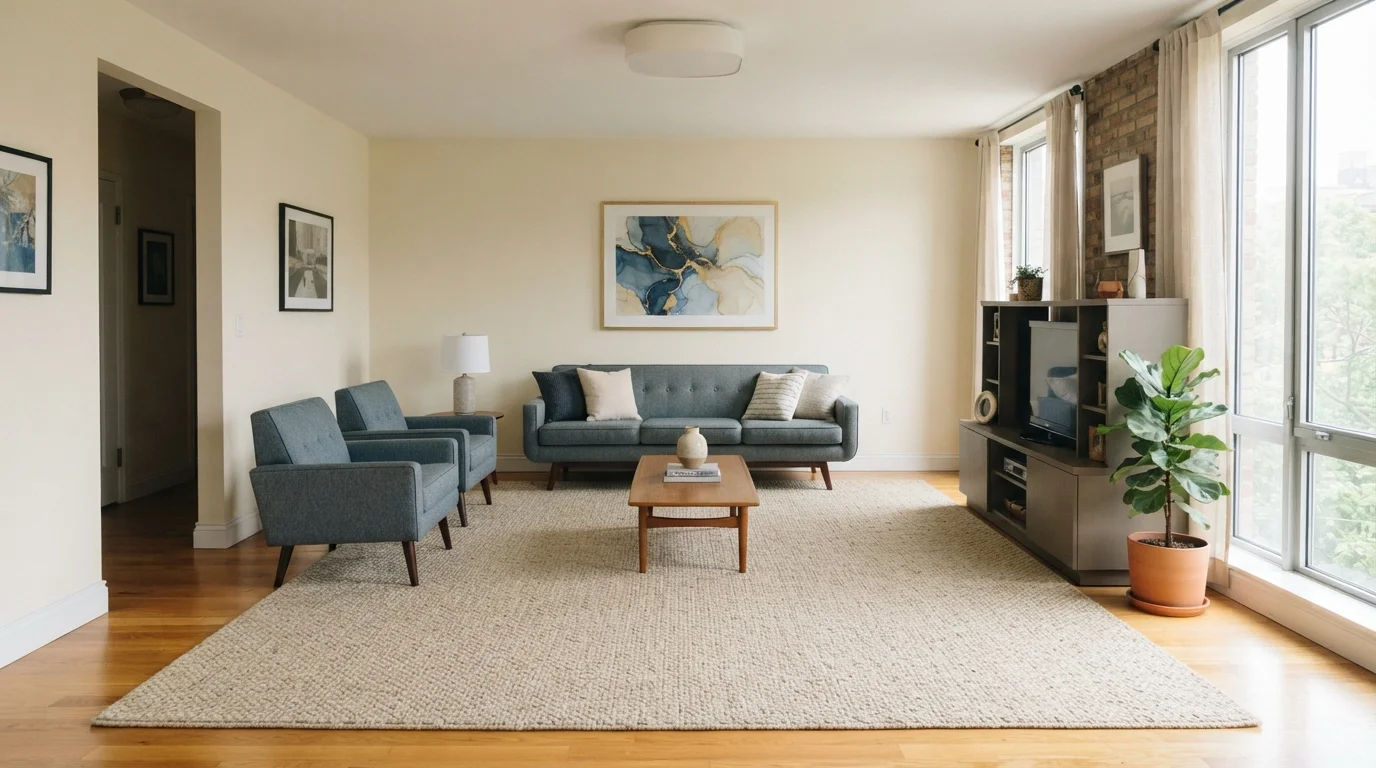
Key Takeaways
- Matching colours and furniture sets don't guarantee a room will feel cohesive or comfortable.
- Scale, proportion, and furniture placement are often more impactful than colour palette choices.
- Lighting layers and textile depth are frequently overlooked but dramatically affect how a room feels.
- Small adjustments to layout and accessories can resolve a room's 'off' feeling without major expense.
The Gap Between 'Matching' and 'Working'
A room can have coordinated throw pillows, a unified colour palette, and furniture from the same collection — and still feel strangely flat or uncomfortable. This disconnect frustrates a lot of homeowners, especially after they've invested real time and money in getting things to look right on paper.
The reason is that visual harmony isn't the same as spatial harmony. Interior styling is less about individual pieces and more about how those pieces relate to one another, to the room's architecture, and to the people moving through it. Understanding that gap is the first step toward fixing it. For a deeper look at the principles at play, see the principles behind every well-decorated room.
Pushing all furniture against the walls.
Why it happens: It feels like the logical way to maximise floor space, and many people default to it without questioning whether it actually serves the room.
Using a rug that is too small for the seating area.
Why it happens: Undersized rugs are often cheaper, and people misjudge scale when shopping without measurements in hand.
Relying on a single overhead light source.
Why it happens: Most rooms come with one ceiling fixture, so it becomes the default — and ambient light from above flattens a room and creates unflattering shadows.
Hanging artwork too high on the wall.
Why it happens: People instinctively hang art at eye level while standing, which often places it far above where viewers actually see it when seated.
Over-matching every element to a single colour or style family.
Why it happens: Cohesion feels safe, and matching sets are marketed as a complete solution — but rooms where everything is from the same palette or era tend to feel sterile.
Ignoring the room's traffic flow when placing furniture.
Why it happens: Aesthetic decisions often override practical ones during decorating, leaving pathways that feel awkward or blocked.
The Fixes That Make the Biggest Difference
Most of the issues listed above don't require new purchases to solve — they require rethinking arrangement, proportion, and layering. Pull furniture away from walls and angle pieces toward a focal point. Swap a single overhead fixture for a combination of floor lamps, table lamps, and accent lighting. Add a second textile layer with a throw or additional cushions in a contrasting texture.
57–60"
Ideal artwork centre height from floor
Interior design practitioners widely recommend this range as it aligns with average seated eye level in most residential rooms.
3+
Light sources recommended per room
Layering three or more light sources at varying heights is a standard technique used by lighting designers to create depth and eliminate flat, overhead-only illumination.
Before committing to any redecorating spend, it's worth auditing what you already have. The practical audit checklist for redecorating walks you through assessing layout, lighting, and existing pieces before buying anything new. And if your room is on the smaller side, techniques for making a small living room feel larger offers targeted spatial fixes that don't involve structural changes.
Don't Redecorate Before Auditing
It's easy to assume a room's problems require new purchases, but many 'off' feelings come from layout, lighting, and proportion — all of which can be addressed without spending money. Rearranging and reassessing first can save significant cost and prevent repeating the same mistakes with new furniture.
If you've addressed scale and layout but the room still feels thin or uninviting, layering textiles is often the missing piece. Layering throws, rugs, and cushions strategically adds acoustic softness, visual depth, and warmth — qualities no paint colour alone can deliver. And if you suspect you've been following some widely repeated styling rules that are quietly working against you, popular décor myths worth reconsidering may reframe how you approach the room entirely.