
Styling a Small Living Room: Making Space Feel Larger Without Knocking Down Walls

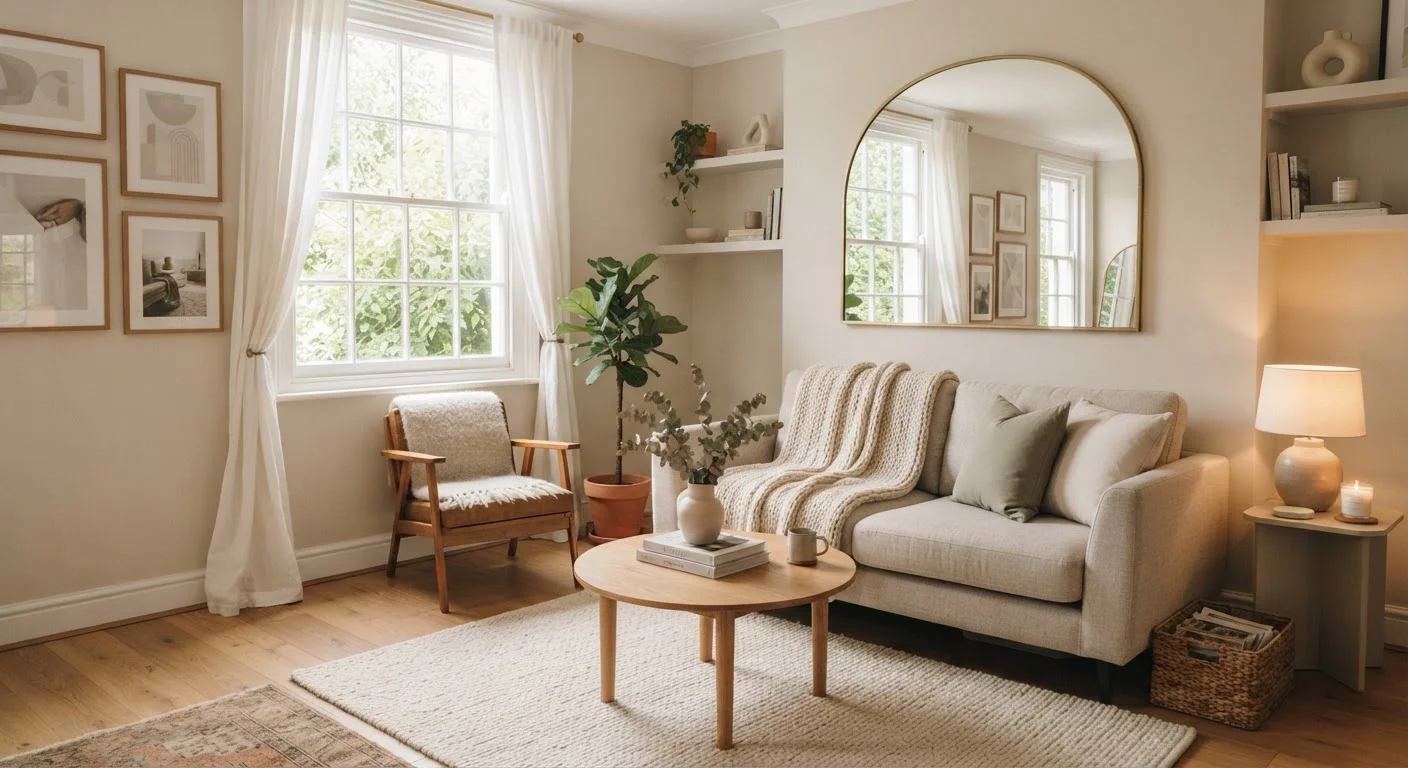
Key Takeaways
- Light colors on walls and ceilings push visual boundaries outward and amplify natural brightness.
- Right-sized furniture — not just fewer pieces — is the foundation of a spacious-feeling room.
- Mirrors positioned opposite windows effectively double perceived light and depth.
- Tall curtains and vertical lines draw the eye up, making low ceilings feel higher.
- Reducing visual clutter through smart storage matters as much as any decorating choice.
What you will need
Why Small Rooms Feel Smaller Than They Are
Square footage sets a physical limit, but it rarely determines how a room feels. A 200-square-foot living room can feel cramped or comfortable depending almost entirely on styling decisions: the colors on the walls, where the sofa sits, how light moves through the space, and how much visual noise competes for attention.
Most small living rooms suffer from a handful of recurring problems — furniture that's too large or too numerous, walls painted in dark or inconsistent tones, windows blocked by heavy treatments, and floors interrupted by too many area rugs in conflicting scales. These aren't permanent problems. None require a contractor.
Understanding the core principles behind well-decorated rooms — proportion, balance, and visual flow — gives you a reliable framework before you move a single piece of furniture. Read that first if you're approaching this from scratch.
What you will need
Step-by-Step: Styling Techniques That Work
Follow these steps in order. Each builds on the last, and skipping ahead often means making changes you'll undo later. You don't need to complete every step in one session — start with what's immediately actionable and revisit the rest.
Establish a Light, Consistent Color Palette
Paint walls in light, neutral tones — off-white, warm greige, soft sage, or pale blush. These shades reflect light rather than absorb it, making walls recede visually. Painting the ceiling the same color as the walls (or one shade lighter) removes the visual 'lid' effect that darker ceilings create.
Consistency matters as much as lightness. A room where walls, trim, and ceiling are all within the same tonal family reads as larger than one where each surface is a distinct color. Resist the urge to add an accent wall — in a small room, it typically shortens rather than deepens the space.
Right-Size Your Furniture
Measure your room before moving or purchasing anything. A sofa that extends within 18 inches of each side wall typically dominates a small living room. Look for furniture with exposed legs — pieces that show floor beneath them feel lighter and less bulky than skirted or floor-length alternatives.
Prioritize one anchor piece (the sofa) and keep secondary seating to one or two lean options — an armchair or a pair of small accent chairs. A glass, lucite, or slim-legged coffee table maintains function without blocking sightlines across the floor. Avoid nesting tables that accumulate into clusters; a single side table per seating position is enough.
Place Mirrors to Multiply Light and Depth
A large mirror hung opposite a window reflects daylight back into the room and creates the impression of a second opening in the wall. This is one of the most impactful single changes you can make in a small space. The mirror should be substantial — a small decorative mirror has minimal spatial effect.
Position the mirror so it reflects something visually pleasant: a window, a planted corner, or a well-styled shelf. A mirror that reflects a blank wall or a cluttered surface simply doubles the problem. Lean a large floor mirror against a wall as an alternative to hanging — it adds the same depth effect with no commitment.
Draw the Eye Upward with Vertical Lines
Hang curtains from as close to the ceiling as possible, even if your window sits lower. Floor-length panels that start near the ceiling visually heighten the room by several feet. Use simple, unfussy fabrics in a tone close to the wall color — curtains that blend with the wall extend it rather than interrupt it.
Tall, narrow bookshelves work the same way: vertical emphasis draws the gaze up and makes ceilings feel higher. Artwork hung in a vertical column rather than a horizontal line reinforces this effect. Avoid wide, horizontal arrangements of frames — they emphasize width over height and can make a room feel lower than it is.
Unify the Floor and Anchor with One Rug
Multiple area rugs in a small room chop the floor into competing zones and make the space feel fragmented. Use a single rug large enough for at least the front legs of all seating to rest on — this visually anchors the furniture into one cohesive grouping. A rug that's too small floats beneath the coffee table like an island and actually makes the room look smaller.
Choose a low-pile rug in a light to mid-tone with a simple pattern or none at all. Heavily patterned rugs draw the eye downward and create visual busyness. If you love pattern, keep it to the rug only and let surrounding surfaces stay calm. For layering textiles beyond the rug — throws, cushions, and curtains — see our guide on layering textiles for depth and warmth.
Layer Lighting Across Three Heights
A single overhead fixture leaves a small room feeling flat and shadowless — not spacious. Add floor lamps or table lamps to bring light down to eye level, and consider a small uplight or a lamp that directs light toward the ceiling to create warmth overhead without relying on a bright central fixture.
Three points of light at varying heights — ceiling, mid-level, and low — give the room dimension and allow you to shift the mood between daytime functionality and evening comfort. Warm-toned bulbs (around 2700K) tend to make spaces feel more inviting; cooler tones can feel clinical in a small, residential room.
Start with What You Already Own
Before buying anything, rearrange what's already in the room using the principles above. Move furniture away from walls, rehang curtains higher, and declutter surfaces. Many small rooms feel dramatically different after a reorganization alone. Spending money on new pieces before doing this risks adding to the problem rather than solving it.
Once you've rearranged and styled, take a photo from the doorway. The camera flattens space the way a visitor's first glance does — you'll immediately see what reads as cluttered and what reads as open. If your room still feels off after these changes, explore why rooms feel 'off' even when everything matches for the subtler missteps that styling alone can't fix.
Storage, Shelving, and the Clutter Question
No styling technique compensates for chronic clutter. In a small living room, every item left on a surface competes for visual attention, shrinking the perceived space. Closed storage — ottomans with lids, media consoles with doors, built-in cabinetry — dramatically reduces this visual noise without requiring you to own less.
If you prefer open shelving, be deliberate. A shelf styled with grouped objects and deliberate breathing room reads as intentional. One loaded with miscellaneous items reads as overflow. Our guide on open shelving in the living room covers exactly where the line falls between curated display and visual clutter trap.
For overlooked corners and alcoves — common in older homes with irregular floor plans — purpose-built storage or a narrow console can activate dead space without crowding the room. See styling corners, alcoves, and awkward nooks for practical ideas suited to those specific challenges.
Clutter Returns Without a System
Styling a small room for openness only holds if there's a realistic home for everyday items. If remote controls, books, and mail have no designated spot, they'll colonize every flat surface within days. Before finishing your styling, identify where frequently used items will live — and make sure those spots are convenient enough to use consistently.
Before you redecorate further or invest in new furniture, it's worth doing a structured audit of what the room actually needs. The practical room audit checklist walks you through lighting, traffic flow, and storage needs before you spend anything.