

Key Takeaways
- Paint is faster to apply, easier to change, and generally less expensive upfront than wallpaper.
- Wallpaper offers richer texture and pattern options that paint alone cannot replicate.
- High-moisture rooms like bathrooms require moisture-resistant products regardless of which treatment you choose.
- Wallpaper removal can be labor-intensive; consider this before committing to a rented space.
- Sheen level in paint affects both aesthetics and durability — higher sheens clean more easily.
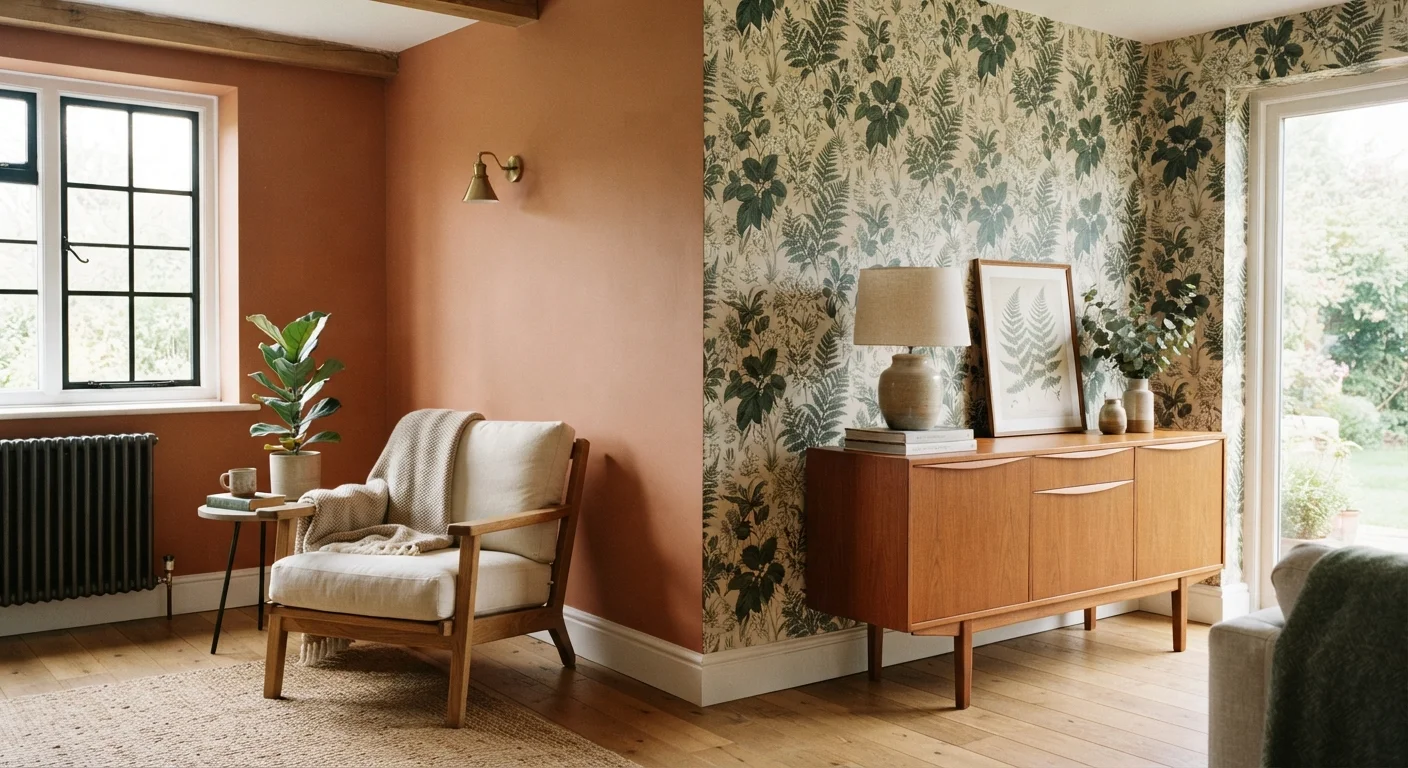
- Combining both treatments in one room — an accent wall strategy — is a practical middle ground.
Option A
Paint Finish
The flexible, familiar workhorse of interior walls.
Best for: Homeowners wanting fast, affordable updates they can change easily over time.
Option B
Wallpaper
The pattern-rich, textural statement-maker.
Best for: Rooms where bold visual character and long-lasting design impact are priorities.
If you rent your home or redecorate frequently
Paint Finish
Paint is far easier to update between tenancies or style refreshes, and most landlords require walls returned to a neutral painted state.
If you want a dramatic, long-lasting focal point in a dining room or bedroom
Wallpaper
Wallpaper's pattern depth and texture create a visual richness that paint struggles to match, and quality paper can last well over a decade.
If you're covering a high-traffic hallway or children's room
Paint Finish
A satin or semi-gloss paint finish is wipeable and easily touched up, making it more practical where scuffs and marks are frequent.
If you're styling a powder room or small accent space
Wallpaper
Small rooms need fewer rolls, keeping costs manageable while allowing bold, expressive patterns that would overwhelm a larger space.
If you are new to DIY and want to tackle the project yourself
Paint Finish
Painting requires fewer specialized tools and skills than hanging wallpaper, and mistakes are much easier to correct mid-project.
How Paint and Wallpaper Actually Differ
At the most basic level, paint is a liquid coating applied directly to a primed wall surface, while wallpaper is a sheet material — paper, vinyl, fabric, or natural fiber — adhered on top of it. That structural difference drives almost every practical consequence that follows: cost, labor, lifespan, and versatility.
Paint's biggest advantage is its speed and reversibility. A standard room can be painted over a weekend, dried, and ready to use. Changing the color means applying another coat. Wallpaper, by contrast, involves more careful prep, precise alignment of pattern repeats, and a commitment that can last ten to fifteen years. Removal, especially of older non-peel-and-stick paper, is one of the more grueling DIY jobs in home improvement.
Understanding core design principles — like scale, proportion, and visual weight — will help you predict how each treatment will behave before you pick up a roller or hang a first strip.
| Criterion | Paint Finish | Wallpaper |
|---|---|---|
| Upfront cost | Generally lower | Higher (material + adhesive) |
| DIY difficulty | Beginner-friendly | Moderate to advanced |
| Pattern & texture range | Limited to color and sheen | Extensive — prints, textures, murals |
| Lifespan | 3–7 years before refresh | 10–15+ years when well hung |
| Moisture resistance | Good (semi-gloss/satin) | Variable; vinyl-coated best |
| Ease of removal | Very easy (paint over) | Labor-intensive |
| Rental suitability | High | Low (unless peel-and-stick) |
Room-by-Room Guidance
No single treatment wins across every room. The right choice depends on how the space is used, how much moisture it sees, and how often you expect to redecorate.
Living Rooms and Bedrooms
Both treatments work well here. Wallpaper excels as a feature wall behind a bed or sofa, adding depth without overwhelming the whole room. A flat or eggshell paint finish on the remaining walls keeps the space balanced. If you'd like a deeper breakdown of sheen options, see our guide on interior paint finishes explained.
Kitchens and Bathrooms
Moisture is the deciding factor. Standard wallpaper in high-humidity areas can lift, blister, and grow mildew. Vinyl-coated wallpaper is more resistant, but a semi-gloss or satin paint finish remains the most straightforward, durable option for kitchens and full bathrooms. Powder rooms — lower in humidity — are where wallpaper genuinely shines.
Hallways and Entryways
These high-traffic zones accumulate scuffs and handprints. A washable satin paint finish is the most practical choice, though durable vinyl wallpaper can also hold up well if properly applied. Before either treatment, good surface prep is essential — our article on surface prep and technique covers the fundamentals.
350–400 sq ft
Coverage per gallon of interior paint
A standard figure cited by most paint manufacturers for properly primed interior walls.
10–15 years
Typical lifespan of quality wallpaper
Industry estimates for properly installed vinyl or coated wallpaper in moderate-use rooms.
~10–30%
Extra wallpaper to order for pattern matching
Interior design guidance generally recommends ordering this surplus to account for repeat alignment waste.
Cost, Skill Level, and Long-Term Commitment
Paint is generally less expensive upfront: a gallon covers roughly 350–400 square feet and typically requires only basic tools. Wallpaper costs more per square foot once you account for material, adhesive, and the pattern repeat waste that comes with matching designs. For complex rooms, professional installation is often advisable — adding further to the overall cost.
That said, wallpaper's longevity can make it competitive over time. Quality paper, properly hung, can outlast a dozen or more paint jobs. If you're decorating a first home and building your scheme gradually, our guide to decorating from scratch offers a sensible framework for prioritizing where to invest.
Skill level matters too. Painting is a learnable skill for most adults — mistakes are fixable and tools are inexpensive. Hanging wallpaper, particularly around corners, outlets, and windows, demands patience, precision, and the right adhesive for your wall type. Peel-and-stick options lower the barrier considerably, though they are best suited to smooth, well-prepared surfaces.
Peel-and-Stick Wallpaper: A Middle Ground
Peel-and-stick (removable) wallpaper has improved considerably in quality and has become popular for renters and experimenters. However, it performs best on smooth, clean, flat surfaces — textured or freshly painted walls can reduce adhesion significantly. Always test a small section before committing to a full wall, and follow the manufacturer's guidance on surface compatibility.