

Key Takeaways
- Plan before you buy — a clear direction prevents costly, mismatched impulse purchases.
- A limited color palette ties every room together even when furniture styles vary.
- Tackle rooms in order of daily use to get the most comfort from your budget early on.
- Lighting is one of the most impactful — and often overlooked — décor decisions in any room.
- Decorating a first home is a process; it's normal and healthy to build gradually over time.
Start here
Start With a Plan, Not a Shopping Cart
Next
Build a Cohesive Color and Style Direction
Then
Prioritise Room by Room
Going deeper
Layer In Texture, Light, and Personality
Final step
Pace Yourself and Avoid Common Pitfalls
Start With a Plan, Not a Shopping Cart
The most common decorating mistake first-time homeowners make is shopping before planning. Walking into a store with an empty house and an open wallet tends to produce mismatched pieces and buyer's remorse. A clearer approach starts on paper.
Begin by sketching a rough floor plan for each room — even a simple hand-drawn outline helps. Note the fixed elements you can't move: windows, doors, fireplace openings, and any structural features. If you're thinking about altering walls, read up on load-bearing walls before making any structural assumptions.
Next, set a realistic total budget and break it into room-level allocations. Think in terms of categories: furniture, window treatments, lighting, and accessories. Having a rough figure for each prevents overspending in one area that leaves another bare. This stage also helps you identify what you already own and can carry forward.
Anchor piece
The largest, most visually dominant item in a room — such as a sofa or bed — around which all other furniture and décor are arranged.
Color palette
A curated set of colors used consistently across a space to create visual harmony and a sense of intention.
Layering
The practice of adding multiple elements — textures, light sources, and accessories — on top of a foundational furniture arrangement to create depth and warmth.
Accent color
A secondary or contrasting color used in small doses through cushions, art, or accessories to add visual interest without overwhelming a space.
Ambient lighting
The primary, general light source in a room that provides overall illumination — usually from ceiling fixtures or large floor lamps.
Scale
The size of a piece of furniture or décor item relative to the room and to the other objects around it — getting scale right prevents rooms from feeling cramped or sparse.
Build a Cohesive Color and Style Direction
Choosing a consistent color palette is the single most effective way to make a home feel intentional rather than assembled at random. You don't need a rigid theme — just a thread that connects the rooms visually.
A practical starting point is selecting two to three neutrals (for walls and large furniture) and one to two accent colors (for cushions, art, and accessories). This framework gives you flexibility to mix furniture styles while keeping spaces harmonious.
For wall treatments, consider how paint finish or wallpaper affects the mood and practicality of each room. Our article on choosing the right wall treatment breaks down the strengths of each option by room type, which is especially useful when you're deciding on multiple spaces at once.
Use a 'mood board' before buying anything
Collecting images of rooms you love — digitally or on paper — before spending a dollar is one of the most effective planning tools available. Look at your collected images together and identify which colors, materials, and shapes appear most often. That pattern is your personal style direction, and it will guide purchases more reliably than any single trend.
Prioritise Room by Room
Rather than spreading your budget thinly across the entire house, work room by room in order of daily importance. For most people, that means the bedroom, living room, and kitchen area before guest rooms, offices, or storage spaces.
In each room, start with the largest anchor piece — the bed frame, the sofa, the dining table — and build outward from there. This approach naturally generates a sense of scale and proportion that smaller impulse buys often miss.
Don't overlook overlooked spaces. Corners and alcoves are genuinely useful opportunities once the primary furniture is placed. A narrow bookcase, a reading chair, or a simple floor lamp can transform a dead corner into a purposeful part of the room.
Layer In Texture, Light, and Personality
Once your foundational pieces are in place, layering is what transforms a room from functional to genuinely inviting. Layering works across three dimensions: texture, light, and personal objects.
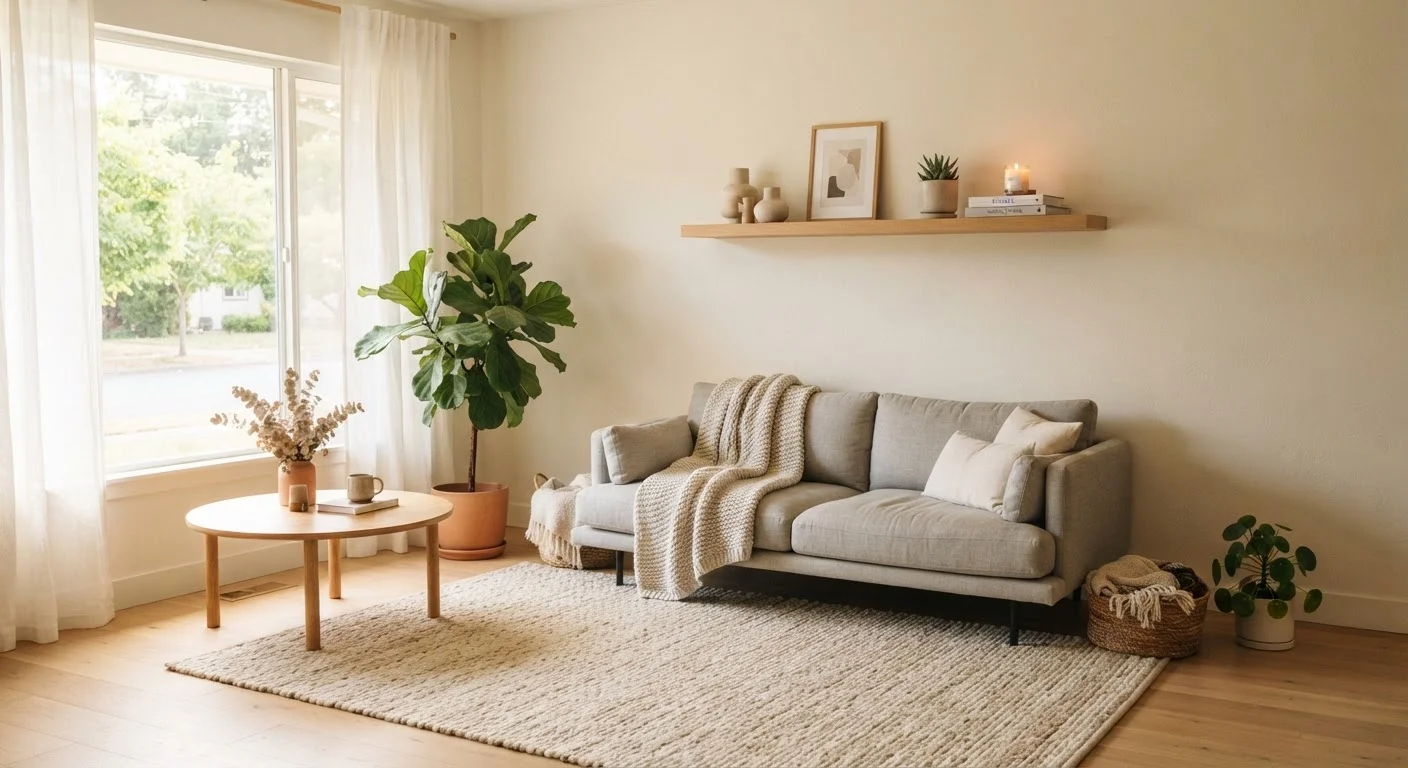
Texture comes from rugs, cushions, throws, curtains, and natural materials like wood, ceramic, or woven baskets. A room where every surface is smooth and hard tends to feel cold; mixing soft and hard materials creates warmth without requiring additional color.
Lighting deserves particular attention. Most first-time decorators rely on a single overhead fixture per room, which produces flat, unflattering light. Layering ambient, task, and accent sources — table lamps, floor lamps, under-cabinet lights — changes how a room feels at different times of day. See the complete guide to lighting your home well for a thorough walkthrough of this process.
Personal objects — art, books, plants, travel mementos — are what ultimately make a home feel lived-in rather than staged. If you're adding open shelving to display these items, consider how open shelving actually lives in a real home before committing to the look.
Pace Yourself and Avoid Common Pitfalls
Decorating a first home is not a project with a deadline — it's a gradual, ongoing process. Rushing to fill every room quickly often leads to choices you'll want to reverse within a year. Give yourself permission to live in a space for a few weeks before committing to large purchases; the way you actually use a room often differs from how you imagined using it.
If you're drawn to integrating technology into your décor, smart home devices like adjustable bulbs and smart plugs can add both convenience and ambiance without structural changes. It's worth planning for these alongside your lighting decisions rather than retrofitting them later.
Finally, remember that a home reflects its occupants, not a magazine. Cohesion matters more than perfection, and a space built slowly and thoughtfully tends to feel far more authentic than one assembled in a single weekend.
Avoid Filling Space Just to Fill It
Empty space in a room is not a decorating failure — overcrowding is often a harder problem to fix than sparseness. If you're unsure whether a piece belongs, wait before buying it. Living with a gap is far less costly than owning furniture you don't love or can't comfortably use.