

Key Takeaways
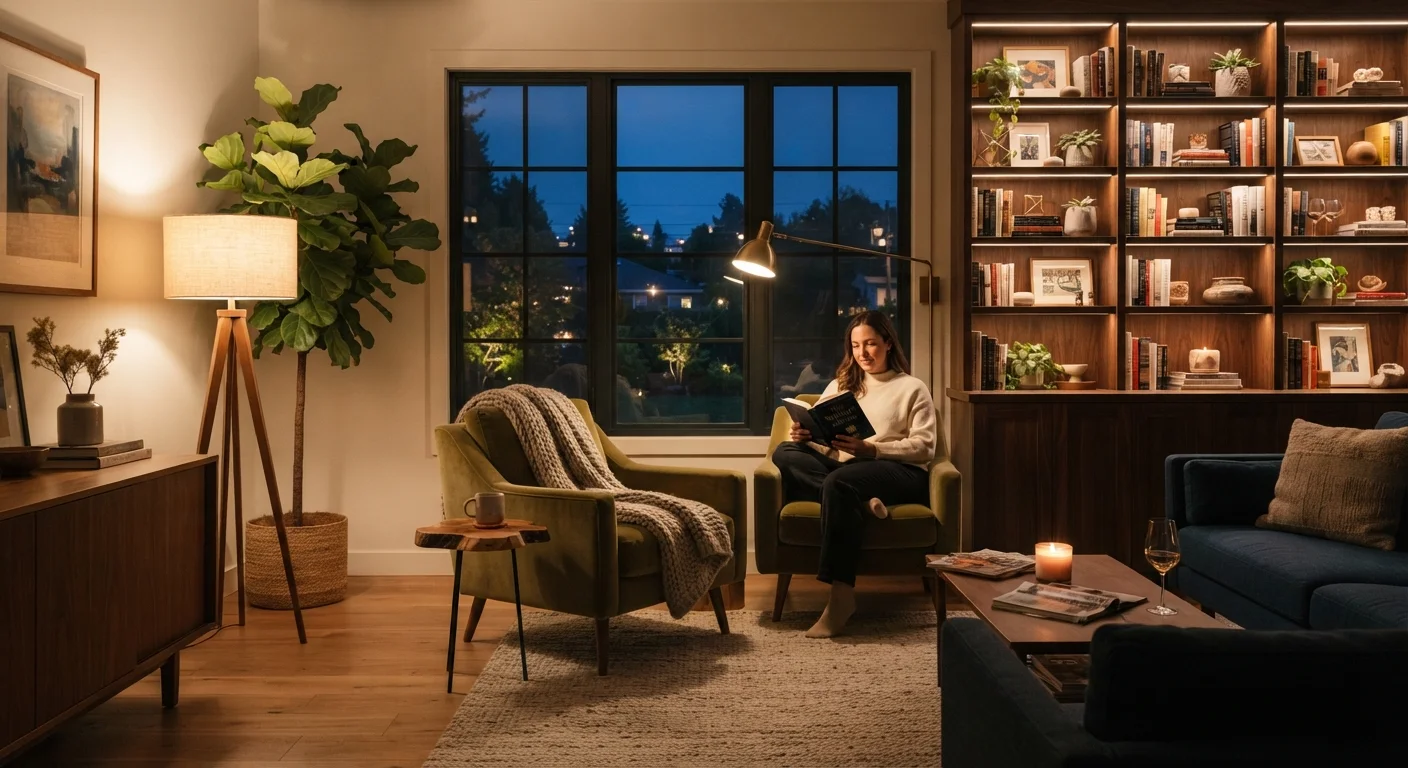
- Every room benefits from three distinct layers: ambient, task, and accent lighting.
- Colour temperature (measured in Kelvin) shapes mood as powerfully as paint colour.
- Dimmers are one of the most cost-effective lighting upgrades available to homeowners.
- Overhead fixtures alone create flat, unflattering light — floor and table lamps add depth.
- Electrical work involving wiring or panel changes requires a licensed electrician.
Why Lighting Is the Most Underestimated Design Tool
Most homeowners spend months choosing paint colours and furniture, then treat lighting as an afterthought. That's a missed opportunity. Lighting determines how every other design decision reads — the same sofa can feel cosy or clinical depending on the light around it.
Good lighting isn't about buying expensive fixtures. It's about understanding how light behaves and using that knowledge intentionally. As our guide to well-decorated rooms explains, light is one of the core elements that makes a space feel cohesive rather than assembled.
~10–15%
Energy used by lighting in typical US homes
According to the U.S. Energy Information Administration, lighting accounts for roughly 10–15% of household electricity consumption.
75%
Energy savings switching incandescent to LED
The U.S. Department of Energy estimates LED bulbs use about 75% less energy than traditional incandescent bulbs.
3 layers
Lighting types designers use in every room
Interior design professionals consistently apply a three-layer framework — ambient, task, and accent — to create functional, visually balanced spaces.
The Three Layers of Light Every Room Needs
Professional interior designers consistently rely on a three-layer framework. Understanding each layer is the foundation of any well-lit room.
Ambient Lighting
Ambient light is the room's base layer — general illumination that replaces daylight. Ceiling fixtures, recessed lights, and large pendant lamps all serve this role. The goal is even, shadow-free coverage across the floor area.
Task Lighting
Task lighting targets specific activities: reading, cooking, applying makeup, or working at a desk. It needs to be brighter and more focused than ambient light, positioned to avoid shadows falling across the work surface. Under-cabinet lights in a kitchen and a dedicated desk lamp are classic examples.
Accent Lighting
Accent lighting adds visual interest by drawing the eye to architectural features, artwork, or plants. Wall sconces, picture lights, and directional spotlights all serve this purpose. A general guideline is that accent lighting should be approximately three times brighter than the ambient layer it highlights against.
When layering light, switch off your overhead fixture entirely and see how the room reads with only lamps and accent sources active — this reveals whether your base layers are strong enough to stand alone.
Rooms feel most inviting when overhead light is supplemented rather than relied upon. Testing without the ceiling source exposes gaps in your layering strategy before you commit to fixture placement.
Always buy two or three bulbs of a new colour temperature and test them in the actual room before purchasing in bulk — showroom lighting bears no resemblance to home conditions.
Colour temperature reads very differently depending on wall colour, natural light levels, and reflective surfaces. What looks neutral in a bright store can feel clinical or dull at home.
Colour Temperature: Choosing Warm, Cool, or Neutral
Every light source has a colour temperature measured in Kelvin (K). Lower numbers produce warm, amber-toned light; higher numbers produce cool, blue-toned light. This single variable shapes how a room feels as much as its paint colour.
- 2700–3000K (warm white): Mimics incandescent bulbs. Relaxing and flattering — ideal for living rooms, bedrooms, and dining areas.
- 3500–4000K (neutral/cool white): Crisp and energising. Works well in home offices, bathrooms, and kitchens where clarity matters.
- 5000K+ (daylight): High-energy and harsh if overused indoors. Best reserved for garages, workshops, or spaces where colour accuracy is critical.
For a deeper look at how temperature affects atmosphere, our article on colour temperature in home décor covers the topic in full detail.
Keep Colour Temperature Consistent Per Room
Choose one colour temperature range — warm, neutral, or cool — and stick to it for all light sources in a given room. Mixing warm lamps with cool ceiling fixtures creates visual incoherence that's hard to pinpoint but immediately felt. When in doubt, 2700–3000K works harmoniously in most living spaces.
Room-by-Room Lighting Priorities
Each room in a home has a distinct function, and lighting should reflect that.
Living Room
This is the room where layering matters most. Use a ceiling fixture or recessed lighting for ambiance, floor lamps beside seating for task reading, and accent lighting on shelving or artwork. Aim for multiple switch or dimmer circuits so the mood can shift from movie-watching to entertaining.
Kitchen
Overhead ambient light is a given, but under-cabinet task lighting over countertops is essential — not decorative. A pendant above an island adds accent interest while doubling as task light for food prep.
Bedroom
Keep overhead lighting gentle (or absent entirely — a well-placed ceiling fan with a light kit can suffice). Prioritise bedside reading lamps on dimmers so each occupant can control their own light independently.
Bathroom
Avoid placing the only light source directly overhead — it casts downward shadows that make grooming difficult. Side-mounted or front-mounted vanity lighting at eye level is far more practical. Combine with a ceiling fixture for general ambiance.
If you're reassessing an entire space before spending, our room audit checklist walks you through evaluating existing lighting as part of a broader redecorating plan.
Controls, Dimmers, and Smart Lighting
Dimmers are among the highest-value upgrades available to homeowners — they're relatively affordable and fundamentally change how flexible a room feels. Most standard dimmers require compatible bulbs (check that LED bulbs are labelled as dimmable before purchasing).
Smart bulbs and smart switches add another layer of control, allowing you to adjust colour temperature and brightness by time of day, or to group multiple fixtures on a single app or voice command. For a grounded introduction to how these systems work together, see our guide to smart home devices.
Electrical Work Requires a Licensed Professional
Installing new circuits, replacing junction boxes, or adding dimmer switches that involve wiring changes should be performed by a licensed electrician. Unpermitted electrical work can void homeowners' insurance and create safety hazards. Always verify local permit requirements with your municipal building department before starting any electrical project.
When planning lighting circuits or installing new fixtures that require rewiring, always consult a licensed electrician. Permit requirements vary by locality — check with your local building authority before beginning any electrical work.
Common Lighting Mistakes and How to Avoid Them
Even well-intentioned lighting plans fall into predictable traps. Here are the most common ones and how to sidestep them.
- Relying on a single overhead source: One ceiling light creates flat, unflattering light with no depth. Add at least one lamp at a lower level to break this up.
- Mismatched colour temperatures in one room: Mixing a 2700K lamp with a 5000K ceiling fixture creates visual tension. Choose a consistent temperature range across all sources in a room.
- Ignoring natural light when planning: A north-facing room needs warmer artificial light to compensate; a sun-drenched south-facing room can handle cooler temperatures. Always test bulbs in the actual space and at different times of day.
- Oversizing or undersizing fixtures: A tiny pendant in a large dining room disappears visually. A rough guide: add the room's length and width in feet; that sum in inches approximates a suitable fixture diameter.
Lighting planning pairs naturally with broader decorating decisions. If you're starting from scratch, our article on decorating your first home offers a helpful sequence for tackling each room with intention.