

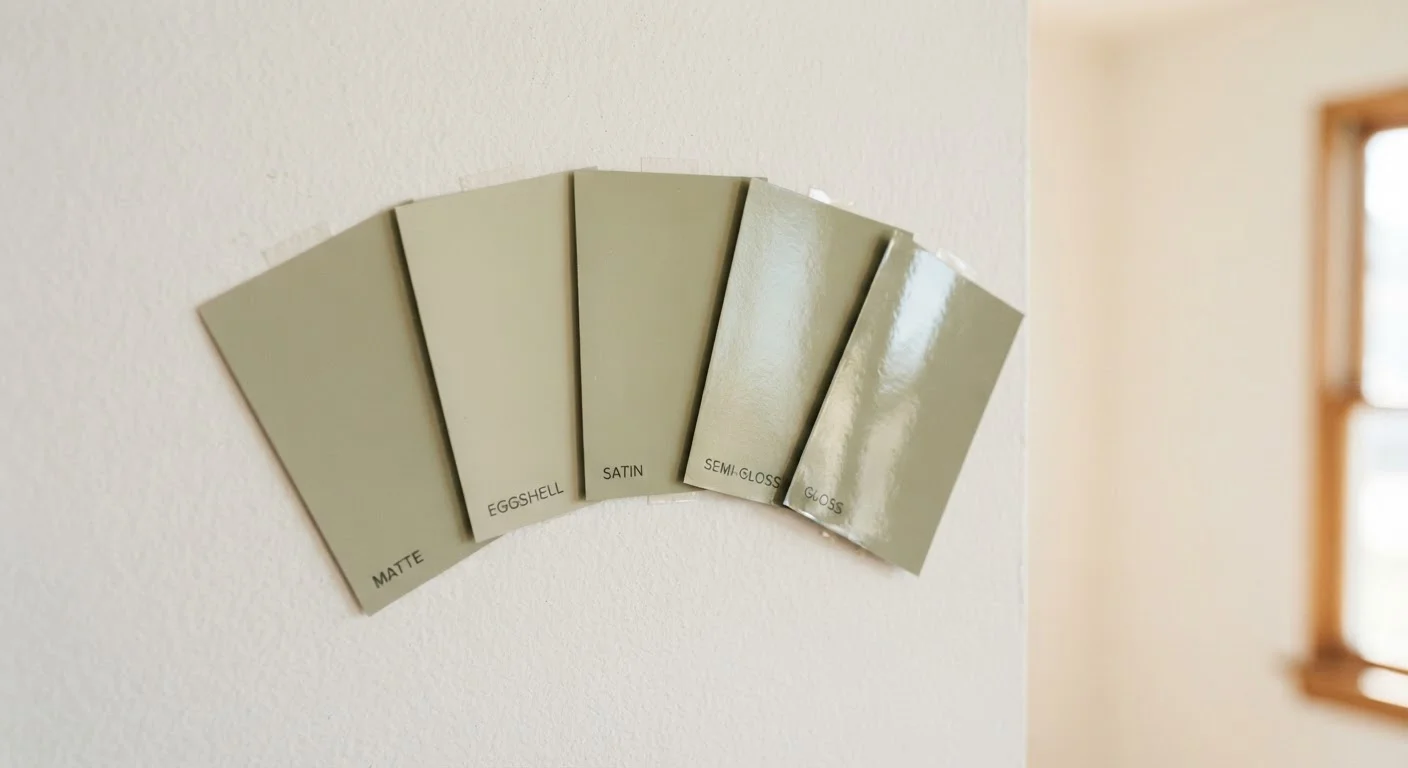
| Flat finish sheen level | 0–5% (near-zero reflectivity) |
| Eggshell finish sheen level | 10–25% (subtle, soft glow) |
| Satin finish sheen level | 26–40% (pearl-like, noticeable) |
| Best finish for ceilings | Flat — hides texture, reflects no glare |
| Most washable of the three | Satin — withstands repeated scrubbing |
| Best at hiding wall imperfections | Flat — absorbs light rather than reflecting it |
Why Paint Finish Matters as Much as Color
Most homeowners spend the bulk of their paint-shopping energy on color — and completely overlook finish. That's a mistake. Sheen level determines how much light a painted surface reflects, how easily it cleans, and how long the paint holds up to daily wear. A color you love on a flat-finish swatch can look entirely different in an eggshell or satin version on your wall.
Paint finishes exist on a spectrum from completely matte to high-gloss. The three finishes most commonly used on interior walls — flat, eggshell, and satin — occupy the lower half of that spectrum. Understanding where each one sits, and why, helps you choose the right finish for each room in your home rather than defaulting to whatever the hardware store pre-mixes.
| Flat finish sheen level | 0–5% (near-zero reflectivity) |
| Eggshell finish sheen level | 10–25% (subtle, soft glow) |
| Satin finish sheen level | 26–40% (pearl-like, noticeable) |
| Best finish for ceilings | Flat — hides texture, reflects no glare |
| Most washable of the three | Satin — withstands repeated scrubbing |
| Best at hiding wall imperfections | Flat — absorbs light rather than reflecting it |
Before diving into each finish, it helps to understand what "sheen" actually measures. Paint contains resin binders that, when dry, create a film. More resin produces a smoother, harder film that reflects light — and that reflection is what we see as sheen. Higher sheen generally means more durability and better washability, but it also amplifies wall imperfections. Lower sheen hides flaws beautifully but scuffs more easily.
Flat, Eggshell, and Satin: A Side-by-Side Breakdown
Flat finish (also called matte) contains the least resin and reflects almost no light. It gives walls a soft, velvety appearance and excels at masking surface imperfections like nail holes, dings, and uneven texture. That makes it a strong choice for low-traffic areas — adult bedrooms, formal dining rooms, and ceilings. The tradeoff: flat paint is difficult to wipe clean without dulling or removing the surface. It's best in rooms that won't see much touching, splashing, or scrubbing.
Eggshell finish sits just above flat on the sheen scale, taking its name from the subtle sheen of an actual eggshell. It reflects a small amount of light, giving walls a gentle warmth and depth that flat can't achieve. Eggshell is considerably more washable than flat — a damp cloth removes most everyday smudges — without the reflectivity that highlights wall flaws. This balance makes it the go-to finish for living rooms, hallways, and adult bedrooms where some durability is desirable.
Satin finish has a noticeable, pearl-like sheen that reads as slightly glossy in bright light. It's the most durable of the three, standing up well to repeated washing and moderate scrubbing. That durability earns satin a regular spot in kitchens, bathrooms, kids' rooms, laundry rooms, and any space that collects grease, moisture, or fingerprints. Be aware: satin's reflectivity shows surface imperfections more readily than eggshell or flat, so thorough wall prep matters more here. See our guide to surface prep and technique before applying satin to older or damaged walls.
Paint sheen
The degree to which a dried paint film reflects light. Sheen is determined by the ratio of resin binders to pigment in the paint formula — more resin creates a smoother, shinier surface.
Flat finish
A paint finish with minimal to no reflectivity, also called matte. It provides excellent coverage of surface imperfections but offers limited washability.
Eggshell finish
A low-sheen paint finish that reflects slightly more light than flat. It provides a gentle warmth and is considerably more washable, making it suitable for moderate-traffic rooms.
Satin finish
A mid-range sheen finish with a pearl-like quality that is noticeably reflective in direct light. It is the most durable of the three common wall finishes and holds up well to repeated cleaning.
Resin binder
The component in paint that forms the dried film on a surface. Higher resin content creates a harder, shinier, and more washable finish.
Matching Finish to Room: A Practical Guide
No single finish is right for every room. The table below summarizes where each finish performs best based on traffic level, moisture exposure, and how much wall imperfection needs hiding.
| Room | Recommended Finish | Key Reason |
|---|---|---|
| Ceilings | Flat | Hides texture; low traffic |
| Formal dining room | Flat or eggshell | Low contact; appearance priority |
| Living room | Eggshell | Balanced durability and warmth |
| Adult bedroom | Flat or eggshell | Low moisture; easy on eyes |
| Hallways & stairs | Eggshell or satin | Higher contact; needs washability |
| Kitchen | Satin | Grease and steam resistance |
| Bathroom | Satin | Moisture and mildew resistance |
| Kids' rooms | Satin | Frequent scrubbing required |
Trim, doors, and window frames are a separate consideration — these areas typically call for semi-gloss or high-gloss finishes for maximum durability and a crisp visual contrast against wall finishes. Understanding how finish layers interact with each other is covered in detail in our breakdown of primer, paint, and topcoat.
Touching Up Satin Walls Is Trickier
Satin's higher sheen makes spot touch-ups more visible than with flat or eggshell finishes — the repaired area can look slightly different in raking light. When touching up satin walls, feather the paint outward from the damaged spot and use the same batch of paint when possible. If a significant area needs repair, repainting the entire wall from corner to corner typically produces the most seamless result.
When you're weighing finish alongside broader wall-treatment decisions, comparing paint finish to wallpaper can help you decide which approach suits each room's demands.