

Key Takeaways
- Primer improves adhesion and seals porous surfaces — skipping it often leads to peeling or uneven color.
- Paint delivers color and coverage, but it's not always designed to withstand heavy wear or weather on its own.
- Topcoat adds a protective barrier and is most critical in high-traffic or outdoor environments.
- On some surfaces and in some conditions, one coat serves double duty — but knowing the rules prevents costly mistakes.
- Surface type, location (interior vs. exterior), and the existing condition of a wall all determine which layers you actually need.
Primer, Paint, and Topcoat
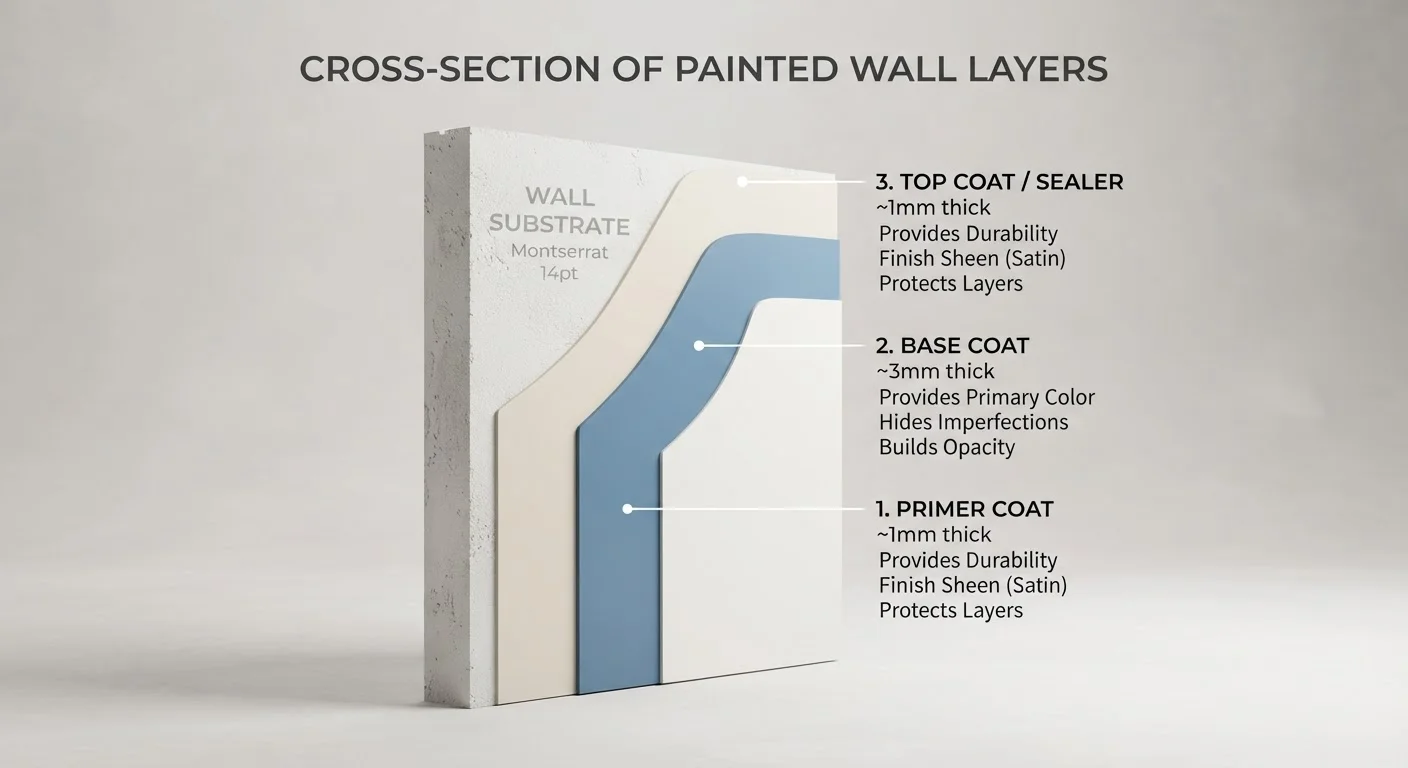
A coating system is typically made up of three layers: primer, paint (or color coat), and topcoat. Each layer serves a distinct function — adhesion, color, and protection — and together they create a finish that looks good and holds up over time. Understanding what each layer does helps you decide when all three are necessary and when fewer layers will still get the job done.
In professional painting, the system is sometimes called a 'three-coat system.' Primer is the foundation coat; the build coat (paint) provides color and opacity; the topcoat seals and protects the surface.
What Primer Actually Does
Primer is the first coat applied to a surface, and its job has nothing to do with color. It creates a stable, uniform foundation that the paint can grip. Without it, paint applied directly to porous surfaces — like bare drywall, concrete, or raw wood — is absorbed unevenly, leaving a blotchy, dull result that may peel within months.
Primer also serves as a sealer. It locks in stains, tannins from wood, and residual odors so they don't bleed through the final finish. On previously painted surfaces with heavy color, a tinted primer dramatically reduces the number of paint coats needed to achieve even coverage.
There are three main types of primer: water-based (latex), oil-based, and shellac-based. Water-based primers work for most interior drywall and previously painted surfaces. Oil-based primers are preferred for bare wood and metal. Shellac-based primers are the heavy hitters for blocking severe stains and odors.
Tint Your Primer to Match the Paint Color
Ask your paint supplier to tint your primer to a shade close to your topcoat color. This simple step reduces the number of paint coats needed for full, even coverage — especially when transitioning from a dark to a light color. It costs little extra and can save you an entire additional coat of paint.
What Paint Actually Does
Paint — the color coat — is what most people think of when they imagine a painting project. Its primary jobs are to deliver color, create opacity (so what's underneath doesn't show through), and begin establishing the surface's sheen or finish level.
The formulation of the paint determines how well it clings, how washable it is, and how it behaves in different environments. Interior paints are designed for low UV exposure and indoor humidity ranges. Exterior paints include additives that resist mildew, UV degradation, and temperature cycling.
Paint sheen — flat, eggshell, satin, semi-gloss — affects both appearance and durability. Higher sheens are more reflective and easier to clean. For a detailed breakdown of each finish level, see our guide on interior paint finishes explained.
Interior and Exterior Paints Are Not Interchangeable
Interior paints are formulated for low VOC off-gassing in enclosed spaces and are not built to resist outdoor UV or moisture. Exterior paints contain additives — such as mildewcides and UV stabilizers — that make them unsuitable for indoor use due to higher VOC content. Always use each paint type where it's intended.
What Topcoat Actually Does
A topcoat — sometimes called a clear coat or finish coat — is a transparent layer applied over dried paint. Its job is protection, not color. Topcoats resist scratching, moisture penetration, UV light, and physical abrasion in ways that standard paint usually cannot.
Topcoats are most commonly required on painted wood floors, kitchen cabinets, furniture, exterior trim, and decks. On standard interior walls, the paint itself typically provides adequate durability — a separate topcoat is rarely needed. However, skipping a topcoat on a high-traffic floor or a painted exterior door can shorten the life of the finish significantly.
Common topcoat materials include polyurethane (water- or oil-based), varnish, and lacquer. Each has different dry times, sheen levels, and durability profiles. Your choice should match the surface's function and exposure conditions.
3–5 years
Typical exterior paint lifespan without topcoat
Industry painting guides generally estimate exterior paint on wood lasts 3–5 years without a protective topcoat, compared to longer with one.
2x
Additional coats often needed without primer on bare drywall
Professional painters commonly note that skipping primer on new drywall can require twice as many paint coats to achieve uniform coverage.
When You Can Skip a Layer — and When You Can't
Knowing when each layer is optional saves time and money. Here's the general guidance:
- Skip primer when: You're repainting over a sound, previously painted surface with a similar color, using a quality paint on a non-porous surface.
- Don't skip primer when: You're painting bare drywall, raw wood, masonry, metal, or covering a dramatically different color or significant stains.
- Skip topcoat when: You're painting standard interior walls or ceilings with a modern latex paint — the built-in sheen typically provides enough protection.
- Don't skip topcoat when: You're finishing painted floors, cabinetry, exterior wood trim, or any surface that faces heavy use, moisture, or direct sun exposure.
Paint-and-primer-in-one products combine adhesion and color into a single coat and are genuinely useful on surfaces already in good condition. They are not a substitute for a dedicated primer on raw or problem surfaces. For a complete walkthrough of surface prep before any paint project, see our guide to painting a room without the mess.
If you're also weighing whether paint is even the right treatment for your walls, paint vs. wallpaper covers how to decide between the two options by room type and lifestyle.