

Key Takeaways
- Plants add organic texture and visual depth that manufactured décor cannot replicate.
- Leaf shape, scale, and placement determine how a plant changes a room's proportions.
- Greenery softens hard surfaces acoustically, reducing perceived echo in bare rooms.
- Plants work alongside colour temperature and textiles to shape a room's emotional tone.
- Low-light and easy-care varieties make plant styling accessible at any experience level.
Plants as Design Elements
Using indoor plants as intentional design elements means treating them the way you'd treat furniture, lighting, or textiles — not as afterthoughts, but as active contributors to how a room looks, sounds, and feels. Plants introduce organic texture, living colour, and visual rhythm that manufactured décor rarely replicates. Their presence can make a space feel calmer, more human-scaled, and more complete.
In environmental psychology, this effect is studied under the concept of 'biophilic design' — the idea that human wellbeing is supported by visual and sensory connection to natural elements.
Why Plants Read Differently Than Other Décor
Most decorative objects are static — a vase holds its shape, a cushion keeps its colour. Plants are categorically different. They grow, respond to light, and change with the seasons, which means they bring a quality of aliveness that no manufactured object can quite match. That aliveness is precisely why a room with a healthy plant in it feels subtly different from an identical room without one.
This goes beyond aesthetics. When we encounter natural forms — irregular edges, asymmetric branching, the gentle movement of leaves in air flow — we process them differently than we process geometric, man-made shapes. Interior designers working within core decorating principles have long understood that organic elements soften the rigidity of structured interiors and bring visual balance that hard-edged furniture alone cannot achieve.
~66%
US adults who own at least one houseplant
Survey data from the National Gardening Association indicates houseplant ownership is common across a broad demographic range in the United States.
15%
Reduction in perceived stress reported in plant-adjacent spaces
Multiple environmental psychology studies have found associations between the presence of indoor plants and lower self-reported stress, though findings vary by study design and context.
How Leaf Shape and Plant Scale Shape a Room
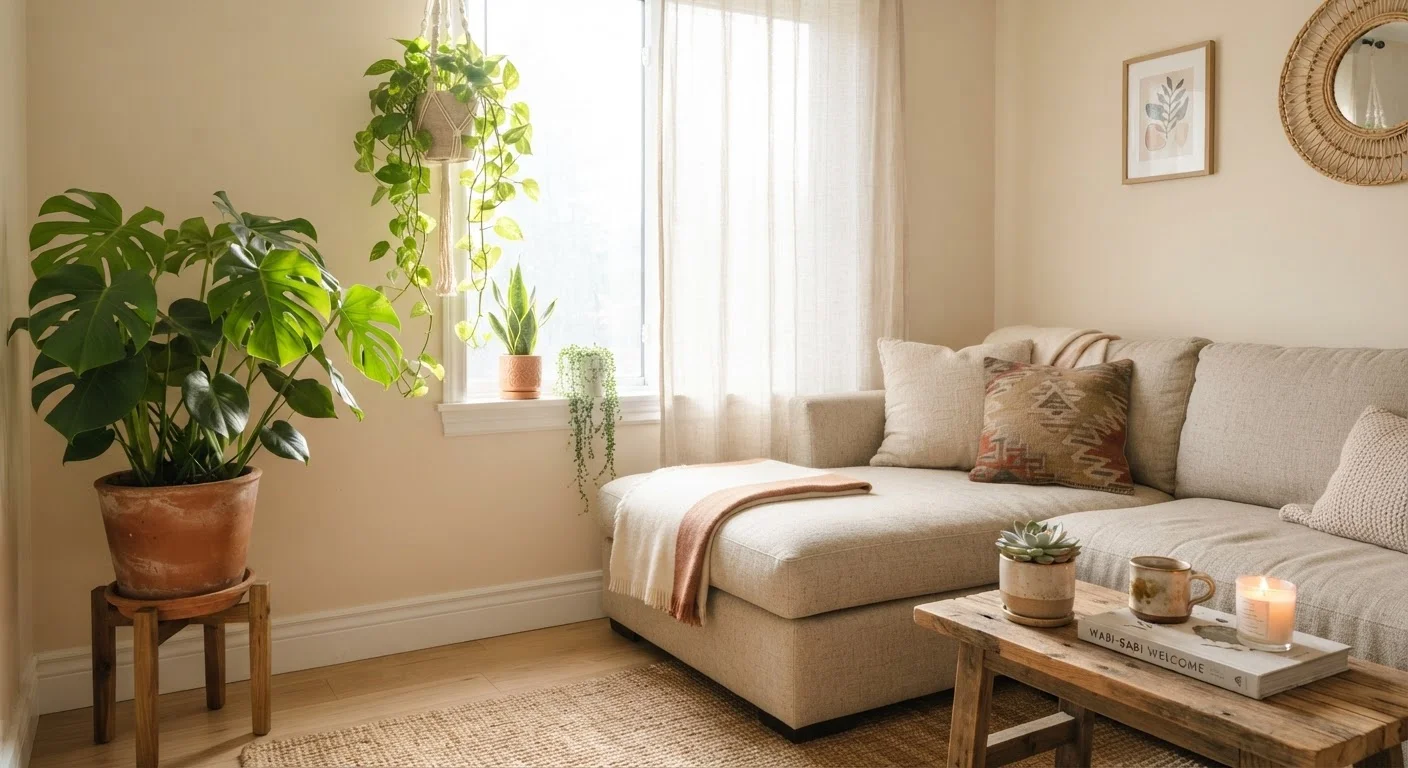
Not all plants do the same design work. A large-leafed monstera placed in a corner creates a focal point with architectural weight — it occupies space the way a sculpture does. A trailing pothos draped from a shelf adds downward movement and softens a horizontal line. Fine-leafed ferns introduce a feathery texture that contrasts with smooth walls or polished surfaces.
Scale matters enormously. A small succulent on a windowsill functions as a detail element — a finishing touch. A floor-standing fiddle-leaf fig or bird of paradise becomes a structural anchor, capable of making an oversized, underdecorated room feel more intentional. When choosing a plant for a specific spot, consider the scale of the surrounding furniture first, then select a plant that either contrasts with it deliberately or reinforces its proportion.
Match Plant Scale to Your Room's Proportions
Before buying a plant, measure the intended spot and note the ceiling height and surrounding furniture scale. A plant that looks large in a garden centre can disappear in a high-ceilinged room, while the same plant can overwhelm a small nook. A general rule: in a standard 8-foot-ceiling room, floor plants should stand at least 3–4 feet tall to read as intentional design elements rather than afterthoughts.
The Acoustic and Emotional Effects of Greenery
One underappreciated effect of indoor plants is their contribution to acoustic softness. Hard surfaces — concrete floors, bare walls, glass — reflect sound and contribute to a room feeling echoey and cold. Plants, like textiles, absorb some of that reflected sound. A cluster of large-leafed plants near a hard wall won't transform your acoustics the way layered textiles will, but they contribute meaningfully to an overall sense of softness and enclosure.
Emotionally, plants signal care and attention — both toward living things and toward a space itself. Rooms that include healthy plants tend to feel curated rather than incidental. Research in environmental psychology suggests that access to natural elements in indoor spaces is associated with perceptions of reduced stress and greater comfort, though individual responses vary and context matters significantly.
“We respond to plants not just visually but instinctively. They carry associations of health, growth, and the natural world that few other design elements can replicate — and that effect doesn't require a large collection or rare species to be felt.”
— Environmental Psychology Research Community, Collective perspective from academic research in human-environment interaction
Combining Plants with Colour and Light
Green is not a neutral — it interacts with the colour temperature of your walls, furniture, and lighting. Cool-toned greens like those of a eucalyptus or a blue-green succulent complement grey or white walls with a crisp, contemporary feel. Warm, yellow-greens like golden pothos or certain philodendrons read more lush and inviting against warm white or terracotta tones. Understanding colour temperature in home décor helps you select plants that harmonise with your existing palette rather than clash with it.
Natural light placement affects both the plant's health and its visual contribution. A plant backlit by a window creates a silhouette effect with dramatic visual interest. A plant positioned to catch side light shows off its leaf texture and colour depth. Neither approach is universally better — it depends on the atmosphere you're building and the specific plant's light requirements.
For those interested in expanding their plant repertoire beyond interior styling, container gardening offers a practical path to growing a wider range of varieties in moveable, manageable pots — many of which transition well between outdoor and indoor settings seasonally.