

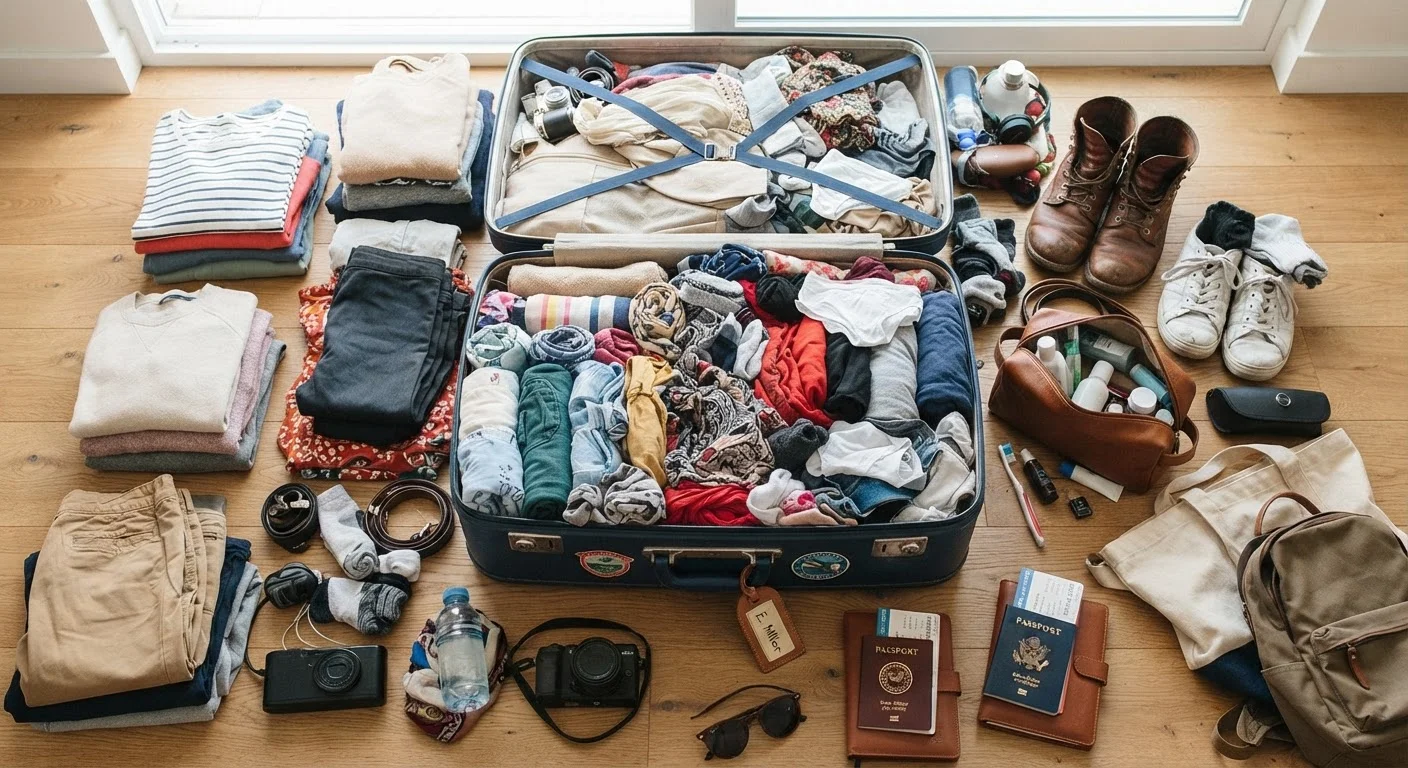
Key Takeaways
- Overpacking is driven by predictable anxiety patterns, not actual trip requirements.
- The 'what if' mindset leads travellers to pack for unlikely scenarios rather than realistic ones.
- Most destinations have stores where forgotten or depleted items can be replaced easily.
- Reviewing your packing list against your actual daily itinerary cuts unnecessary items significantly.
The Psychology Behind Overpacking
Most travellers don't overpack because they're disorganized — they overpack because packing triggers a specific kind of anticipatory anxiety. When facing an unfamiliar or uncertain situation, the brain defaults to worst-case planning. The suitcase becomes a portable safety net, and filling it feels like preparation rather than excess.
This impulse is understandable. Travel involves genuine unpredictability: weather shifts, schedule changes, unexpected occasions. But there's a meaningful difference between thoughtful contingency planning and packing as emotional reassurance. Understanding where that line sits is the first step toward travelling lighter and more confidently.
The mistakes below reflect the most common reasoning patterns that push travellers toward overpacking — along with practical ways to recalibrate before you zip up the bag.
Packing for every possible scenario rather than your actual itinerary.
Why it happens: Without a clear day-by-day plan, travellers fill gaps with hypothetical needs — formal wear for a dinner that may never happen, hiking boots for a trail they might visit.
Duplicating items 'just in case' the primary one fails or is lost.
Why it happens: Anxiety about losing something essential — a phone charger, a medication, a key document — leads travellers to pack redundant backups for nearly everything.
Treating the destination as if it were an undeveloped wilderness with no shops.
Why it happens: The mental image of travel as 'leaving civilization' persists even when the destination is a well-supplied city or resort town with pharmacies, supermarkets, and convenience stores.
Packing a full wardrobe without considering re-wearing or laundry options.
Why it happens: Many travellers feel social pressure — real or imagined — to wear a different outfit every day and never repeat clothing in photos or around travel companions.
Using packing as a way to manage pre-trip anxiety rather than as practical preparation.
Why it happens: The physical act of adding items to a bag creates a sense of control and readiness, which temporarily eases travel nerves — regardless of whether each item is actually necessary.
Smarter Packing Starts Before the Bag Opens
The most effective packing decisions happen at the planning stage, not in front of an open suitcase. Before you start pulling items from your closet, map out your itinerary day by day. Note the actual activities — a museum visit, a beach afternoon, a dinner reservation — and consider what each genuinely requires. Vague planning produces vague packing, which almost always means too much.
The 'Just in Case' Trap Adds Up Fast
Each 'just in case' item seems low-cost to include, but five or six of them can push a carry-on over the weight limit or force a checked bag you didn't budget for. Before adding any item on the basis of possibility rather than probability, ask yourself: how likely is this scenario, and could I handle it if it arose? Most of the time, the honest answer changes the decision.
A practical rule of thumb: draft your packing list, then set it aside for a day. When you return to it, identify the two or three items you'd be least likely to use and remove them. Repeat this with each category. This cooling-off period weakens the emotional pull of 'just in case' thinking and lets you evaluate items on their actual merit.
If you're still weighing how to distribute what you do bring, choosing between carry-on and checked luggage has real implications for how much you're tempted to pack. Carry-on constraints are one of the most reliable natural limits on overpacking. For a structured approach to reducing your load without leaving essentials behind, see packing light without leaving essentials behind.
~50%
Packed items estimated never used on a typical trip
Travel industry surveys consistently find that roughly half of what travellers pack returns home unused, regardless of trip length.
$30–$60+
Average checked bag fee per flight (one way)
US domestic airlines commonly charge between $30 and $60 or more per checked bag each way, making overpacking a directly measurable added cost.
Road trip travellers face their own version of this challenge. Unlike air travel, a car imposes no weight fee — which removes a financial check on overpacking. The result is trunks crammed with items that never leave the vehicle. The packing decisions most drivers miscalculate are worth reviewing before your next drive.
Finally, run a full pre-departure review once your bag is packed. A structured pre-departure checklist helps confirm you have the essentials — documents, medications, chargers — without reopening the door to 'just in case' additions.