

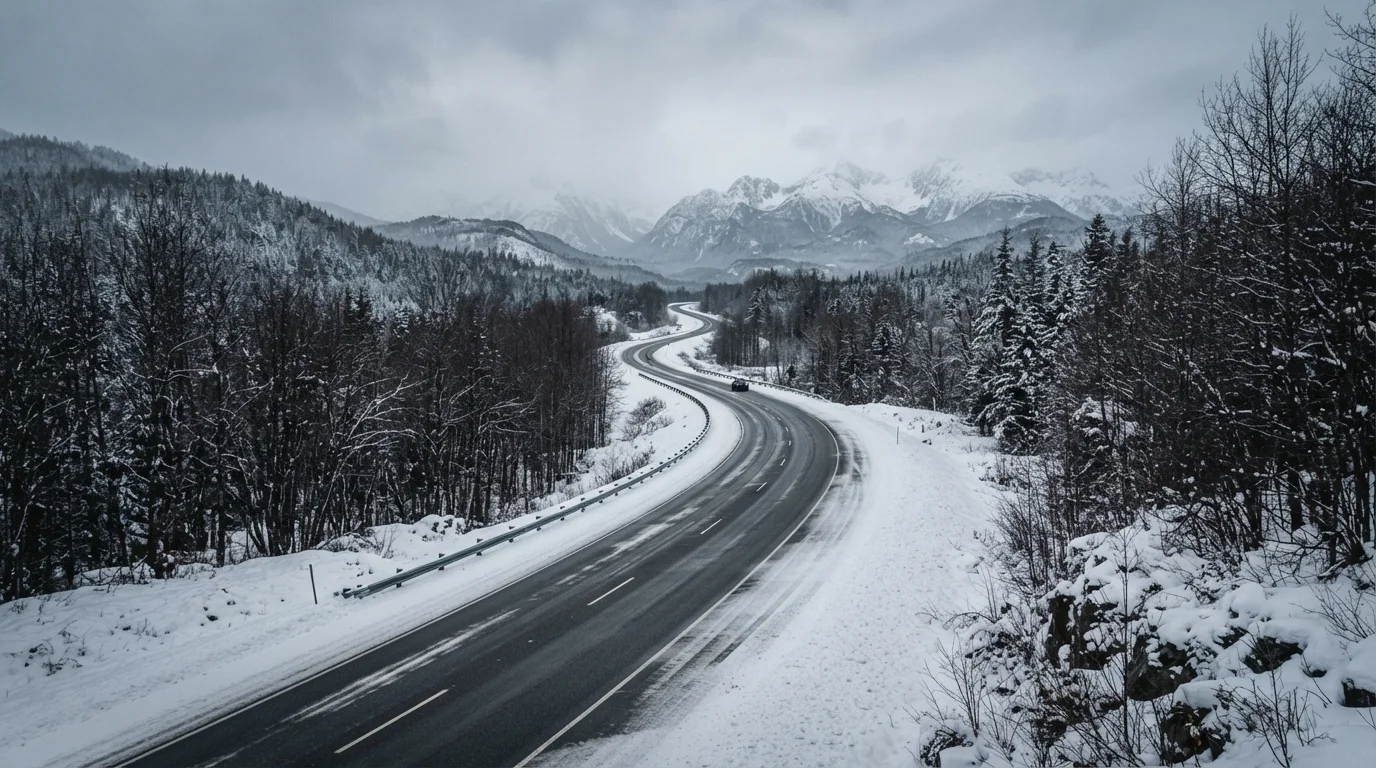
Key Takeaways
- Winter road trips require vehicle checks beyond the basics, including battery health and tire traction.
- Shorter daylight hours compress your safe driving window and demand earlier daily cutoffs.
- Road and weather conditions can change rapidly; flexible itineraries reduce risk significantly.
- Emergency supplies become essential, not optional, when driving in cold or remote winter conditions.
- Driving behavior — speed, following distance, braking — must be adjusted for low-traction surfaces.
Why Winter Changes the Road Trip Equation
A summer road trip and a winter road trip share the same basic structure — a vehicle, a route, a destination — but almost every practical detail is different. Cold temperatures, reduced daylight, unpredictable precipitation, and the possibility of ice or snow rewrite the planning process from the ground up.
This isn't a reason to avoid winter driving. For many destinations, the off-season brings real advantages: lighter traffic, dramatic scenery, and a quieter travel experience. But those benefits come with trade-offs that need to be taken seriously. See what many travelers overlook about off-season trips before finalizing your plans.
The key shift in mindset is this: winter rewards preparation and penalizes assumption. What worked in July may not be adequate in January.
Vehicle Preparation: What the Cold Specifically Demands
Cold weather places demands on your vehicle that mild conditions never expose. Understanding what changes helps you know what to check — and what to prioritize.
Test your battery before departing, not after the first cold morning on the road.
Cold temperatures reduce a battery's effective output — a battery at 32°F delivers significantly less cranking power than the same battery at 77°F. A battery that starts the car fine in fall may fail in January, often at the least convenient moment.
Check tire pressure every morning of a winter trip, before you begin driving.
Tire pressure drops roughly one PSI for every 10°F drop in temperature. Under-inflated tires reduce traction and handling — exactly when you need both most. Pressure also shifts overnight as temperatures fall.
Switch to winter tires if you'll be driving regularly in snow or sustained temperatures below 45°F.
All-season tires are designed for compromise across conditions, not for peak performance in cold. Winter tires use a different rubber compound that stays pliable in cold and provides meaningfully better grip on snow and ice.
Keep your fuel tank at least half full throughout the trip.
A fuller tank reduces condensation inside the fuel system and ensures you have enough fuel to keep the engine — and heater — running if you become stuck or stranded waiting for road conditions to clear.
A thorough pre-trip inspection is always important, but in winter it becomes non-negotiable. Our guide on what road trip ready actually means for your vehicle covers the full scope of a proper pre-departure check. For a closer look at why cold affects your car's systems, see what actually happens under the hood in cold weather.
Planning Your Route and Schedule Differently
Winter shrinks the planning window in two concrete ways: fewer hours of daylight and a greater likelihood of road disruptions. In northern states in December, you may have as few as eight to nine hours of usable daylight. That's not much margin if you're covering significant distance.
17%
Of US vehicle crashes occur on snowy or icy roads
According to the Federal Highway Administration, roughly 17% of all vehicle crashes occur on snowy, slushy, or icy pavement each year.
156,000
Annual crashes on snow or icy roads
The Federal Highway Administration estimates around 156,000 crashes occur annually on winter road surfaces in the United States.
Build your daily driving targets around sunset, not around what's possible in ideal conditions. Ending your driving day before dark — especially on unfamiliar or mountain roads — is a straightforward way to reduce risk. When building your itinerary, factor in the possibility that a storm, a closed pass, or a delayed road treatment could cost you hours or a full day. A flexible schedule isn't a sign of poor planning; in winter, it's a core safety strategy.
Always check road condition reports from your state's department of transportation before departing and at each stop. Many states offer real-time road closure and traction advisory information through official websites or apps.
Driving Behavior on Winter Roads
Ice, snow, and slush don't just slow you down — they change the physics of how your vehicle responds. Braking distances increase dramatically on slick surfaces: a car traveling at 30 mph on ice can take two to ten times longer to stop than the same car on dry pavement, depending on conditions.
“In winter driving, the margin for error shrinks significantly. What saves you isn't reaction time — it's the habits and preparations you made before the skid ever started.”
— American Automobile Association (AAA), National driving safety and road travel guidance organization
Increase your following distance significantly — at least double or triple what you'd maintain in dry conditions. Reduce speed below posted limits when roads are wet, icy, or snow-covered; speed limits reflect safe travel in normal conditions, not winter ones. Steer and brake smoothly; abrupt inputs are more likely to cause a skid on low-traction surfaces.
For a detailed breakdown of how to adjust behind the wheel in fog, ice, and heavy rain, see driving in fog, ice, and heavy rain.
Give Yourself an Earlier Stop Time
Set a hard rule for your winter trip: stop driving at least one hour before local sunset. Winter driving after dark increases risk — reduced visibility and colder road temperatures that drop below freezing are harder to account for. Building this buffer into your schedule costs very little but adds meaningful safety margin.
What to Keep in the Car — Just in Case
In summer, being stranded roadside is an inconvenience. In winter, it can become a safety issue quickly. Cold temperatures, combined with remote stretches of highway and limited daylight, mean a breakdown or slide-off-road situation requires you to be prepared to wait for help — sometimes for an extended period.
Emergency supplies don't need to be elaborate. A compact kit covering warmth, visibility, communication, and basic traction is enough for most situations. Avoid the mindset that winter precautions are only for extreme expeditions — even a relatively mild winter day can turn dangerous if a vehicle becomes disabled in a rural area.
It's also worth revisiting some common assumptions about road trip preparation generally. Many beliefs that seem like common sense don't hold up — road trip myths that could actually ruin your trip addresses several that catch drivers off guard in any season.