

Key Takeaways
- Skipping a pre-trip vehicle check is one of the most common and costly road trip mistakes.
- A full tank of gas at every stop wastes time and is not always necessary or efficient.
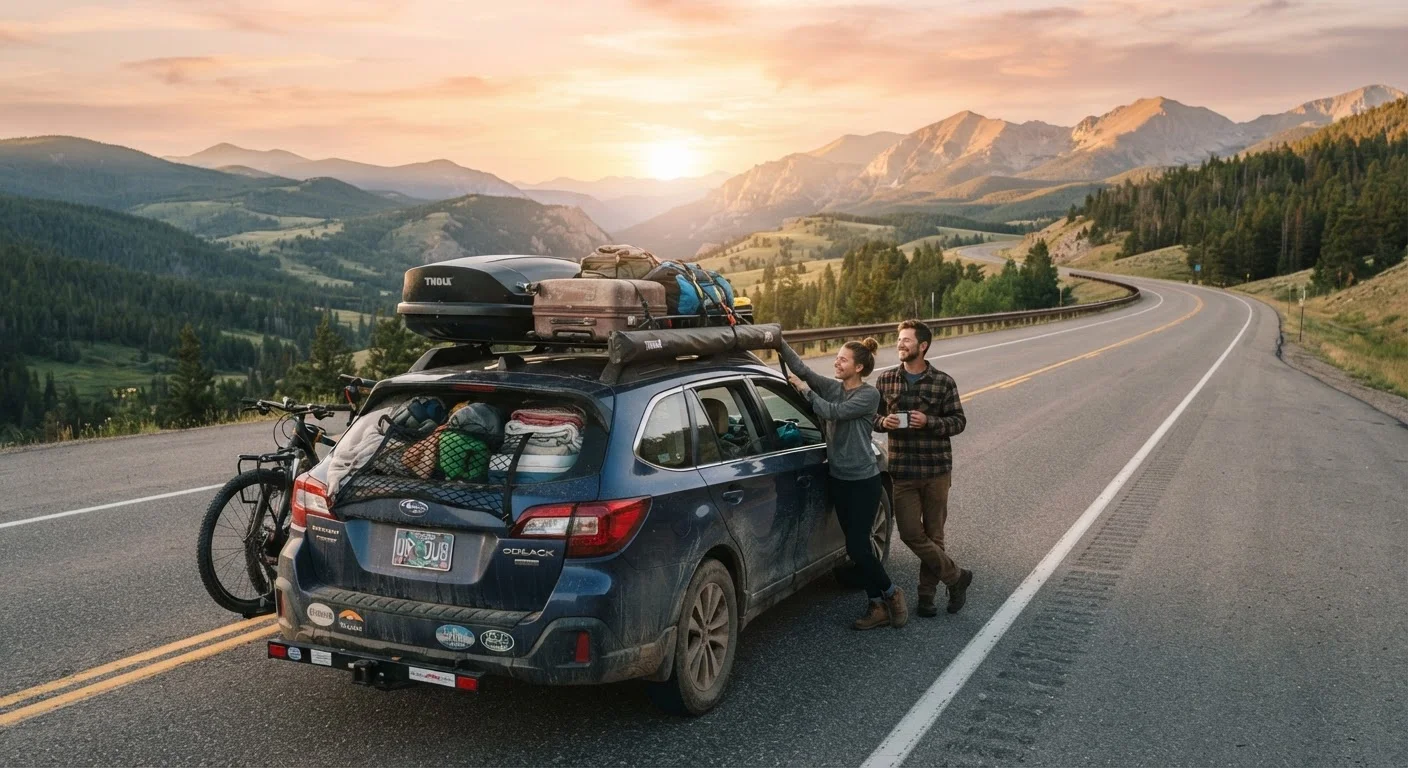
- Overpacking adds real weight that affects fuel economy and vehicle handling.
- Spontaneous detours are great, but relying entirely on GPS without a backup plan carries genuine risk.
- Driving straight through to save time often leads to fatigue, which is a serious safety hazard.
Why Road Trip Myths Persist — and Why They Matter
Road trips carry a powerful sense of freedom, and that spirit of adventure can make it easy to wave off preparation as unnecessary. Many common road trip beliefs have a kernel of logic — 'just pack extra,' 'push through and you'll get there sooner' — but apply that logic poorly to real driving conditions. The myths below don't just lead to inconvenience; some can result in breakdowns, safety hazards, or a trip that costs far more than expected.
Whether you're planning your first long drive or your twentieth, it's worth separating road trip folklore from practical reality. If you're starting from scratch, our comprehensive road trip planning guide covers the full picture from routes to logistics.
Myth
You can skip the pre-trip vehicle check if the car seems to be running fine.
Fact
Many mechanical problems — including low tire pressure, worn belts, and fluid leaks — show no obvious symptoms until they cause a breakdown.
A car that drives smoothly around town may still have tires inflated well below the recommended pressure, brake fluid that needs topping up, or a serpentine belt showing early wear. None of these announce themselves with warning lights or strange sounds until a problem develops — often far from any service station. A pre-trip vehicle check is not about distrust of your car; it's about knowing what you're working with before you commit to hundreds of miles. See also our practical pre-trip checklist for a step-by-step walkthrough.
Myth
The more you pack, the better prepared you'll be for anything.
Fact
Overpacking adds unnecessary weight that reduces fuel efficiency, strains the vehicle, and makes the trip physically and logistically harder.
There's a difference between being prepared and hauling everything you own. Extra weight — especially in smaller or older vehicles — measurably affects fuel economy and can alter handling on steep grades or sharp curves. Beyond the mechanical impact, an overstuffed car makes it harder to access what you actually need and contributes to decision fatigue at every stop. The packing decisions most drivers get wrong often come down to poor mental accounting of 'just in case' items that never get used.
Myth
Driving straight through without stops saves time and gets you there faster.
Fact
Long unbroken drives dramatically increase fatigue-related impairment, which slows reaction time and judgment — making the trip more dangerous, not more efficient.
The temptation to push through is understandable, but fatigue compounds quickly. Research consistently shows that after several hours of continuous driving, cognitive performance declines in ways similar to mild intoxication. Planned rest stops every couple of hours are not just a comfort measure — they're a safety practice. If the goal is to arrive, arriving safely requires treating rest as part of the route, not an interruption to it.
[important_callout]Myth
You should fill up at every gas station so you never risk running low.
Fact
Topping off at every stop wastes time and can cause fuel overflow in hot weather. Refueling when your tank reaches about a quarter-full is a practical, widely recommended approach.
Constantly stopping to add a few gallons is inefficient, particularly on routes where stations are plentiful. In warm weather, overfilling can cause fuel to expand and spill, which is both wasteful and environmentally harmful. A reasonable threshold — refueling around the quarter-tank mark — keeps you from running low while avoiding the habit of unnecessary stops. On remote or rural stretches, the calculus changes: check the distance to the next station and plan accordingly. Our route planning guide covers how to identify fuel gaps on longer stretches.
Myth
GPS navigation means you never need to research your route in advance.
Fact
GPS is a useful tool but an unreliable sole source — it can lose signal, show outdated road information, or route you onto roads unsuitable for your vehicle.
Navigation apps are helpful but fallible. They may not account for seasonal road closures, construction, unpaved forest roads, or low-clearance bridges. Some have routed drivers into genuinely dangerous situations by prioritizing speed over road suitability. Researching your route — checking state DOT alerts, park service advisories, and weather forecasts — before you leave is not redundant. It's the difference between an informed traveler and one who discovers a problem in real time with no alternatives. For a broader look at responsible route research, see how to research a destination responsibly.
[warning_callout]Myth
Road trips are essentially free once you account for gas.
Fact
Fuel is often just one of several significant costs — food, lodging, tolls, parking, and unexpected repairs frequently push total trip costs well above initial estimates.
The 'just gas money' assumption is one of the most common ways road trips go over budget. Meals on the road, overnight accommodation, highway tolls, and even basic incidentals add up quickly — and any mechanical issue can result in a repair bill that dwarfs everything else combined. Understanding where road trip money really goes before you set off is one of the most practical things you can do. Budgeting conservatively and keeping a contingency reserve is sound preparation, not pessimism.
Building Better Road Trip Habits
The through-line in most of these myths is a trade-off between comfort and preparation. Skipping the vehicle check feels like saving time; it rarely does. Packing light feels risky; in practice, it makes the trip more manageable. Driving straight through feels efficient; it's one of the more reliable ways to arrive exhausted or not at all.
Better habits start before you leave the driveway. Run through a pre-trip vehicle checklist, map a realistic daily driving distance — our route planning article can help — and budget honestly using our road trip cost guide. The open road is genuinely rewarding; it rewards the drivers who arrive informed just as much as it rewards those who arrive spontaneously. For a balanced look at planning versus flexibility, see the upsides and real downsides of spontaneous road trips.
~100,000
Drowsy-driving crashes annually in the US
The National Highway Traffic Safety Administration estimates approximately 100,000 police-reported crashes each year are related to driver fatigue.
1 in 3
Drivers who admit to falling asleep at the wheel
A survey by the AAA Foundation for Traffic Safety found that roughly one in three drivers reported having fallen asleep while driving at some point.
~3%
Fuel economy drop per 100 lbs of extra weight
According to the US Department of Energy, an extra 100 pounds in a vehicle can reduce fuel economy by about 1–2%, with smaller vehicles seeing larger impacts.