

Key Takeaways
- Overfeeding a high-quality food is still overfeeding — excess calories cause weight gain regardless of ingredient source.
- Feeding guidelines on packaging are starting points, not prescriptions; individual pets vary widely in caloric need.
- Obesity in pets is linked to joint disease, diabetes, and shortened lifespan — portion control is preventive care.
- Measuring cups and a kitchen scale are the most practical tools for consistent, accurate portions.
- Life stage, activity level, and whether a pet is spayed or neutered all significantly affect how much they should eat.
Portion Control in Pet Feeding
Portion control means consistently feeding your pet a measured, appropriate amount of food at each meal — not just offering what seems like a reasonable scoop. It's distinct from ingredient quality: even nutritionally excellent food causes weight gain and health problems when served in excessive amounts. Getting the quantity right is a foundational element of long-term pet wellness.
Caloric density varies significantly between food formats and brands, meaning the same volume of food can deliver very different energy intake. Veterinarians use kilocalories per cup or can (kcal/ME) alongside body condition scoring to determine appropriate serving sizes.
The Gap Between Ingredient Quality and Feeding Quantity
Many pet owners spend considerable time comparing ingredient lists, researching protein sources, and avoiding additives — and that attention to quality has real value. But ingredient labels tell you what is in the food, not how much your individual pet should eat. Those are two separate questions, and conflating them is one of the most common quiet mistakes in pet feeding.
A food made with high-quality animal protein and carefully balanced nutrients can still cause obesity if served in excess. Calories are calories: when intake consistently exceeds what a pet burns, the surplus is stored as fat — regardless of whether those calories came from premium or budget ingredients. Understanding what ingredient labels actually communicate is useful, but it's only half the picture.
59%
US dogs classified as overweight or obese
According to the Association for Pet Obesity Prevention's annual clinical survey of veterinary practices across the United States.
61%
US cats classified as overweight or obese
The same Association for Pet Obesity Prevention survey found cats outpaced dogs in obesity prevalence in recent reporting years.
2.5 years
Estimated lifespan reduction in obese dogs
Research published in veterinary nutrition literature suggests obesity can meaningfully shorten a dog's healthy lifespan compared to lean counterparts.
Why Portion Size Is a Health Issue, Not Just a Weight Issue
Veterinary medicine increasingly recognizes excess body weight in pets as a disease risk factor, not a cosmetic concern. Overweight dogs face elevated risk of osteoarthritis, type 2 diabetes, hypertension, and certain cancers. In cats, obesity is strongly associated with hepatic lipidosis (fatty liver disease) and feline diabetes. The connection between daily feeding habits and long-term animal health is well established in veterinary literature.
What makes portion overfeeding particularly insidious is that it happens gradually. A pet who receives even 10% more calories than they need daily will gain weight slowly — slowly enough that an owner may not notice until the excess is significant. By the time weight gain is visible, the metabolic and joint effects may already be underway.
Use a Scale, Not Just a Cup
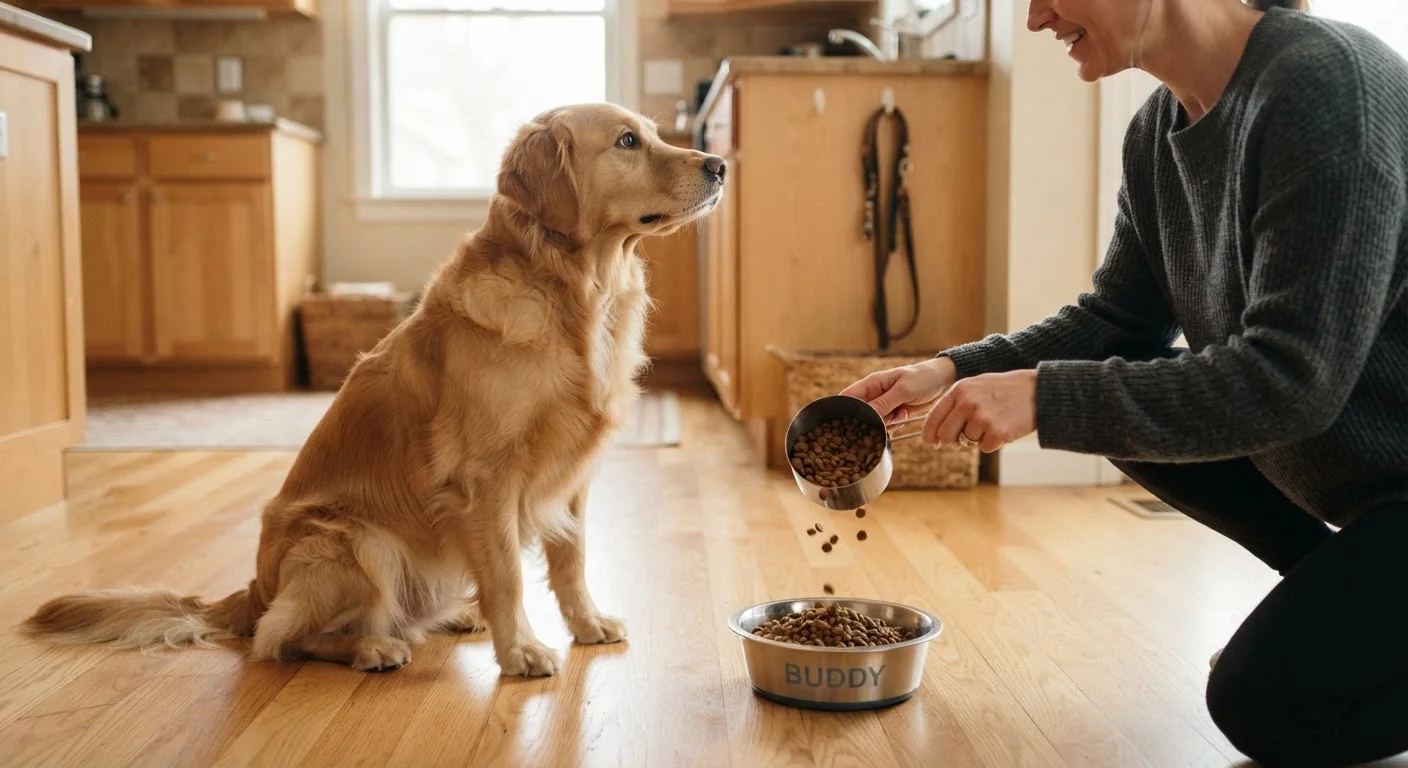
Measuring cups are better than eyeballing, but a kitchen scale is more accurate — especially for kibble, which can pack differently depending on piece size. Weigh your pet's daily portion in grams and split it across meals. This small habit change is one of the most effective ways to prevent gradual weight gain over time.
What Determines the Right Portion for Your Pet
There is no universal answer, which is precisely why packaging guidelines are inadequate as a sole reference. The right portion for a given pet depends on a cluster of intersecting factors:
- Caloric density of the food: A cup of one dry food may deliver 300 kcal; another brand's cup might deliver 450 kcal. Serving the same volume delivers very different energy intake. Wet and dry food formats differ considerably in caloric density, which affects how portions should be measured.
- Life stage: Puppies and kittens have high caloric demands relative to body size. Senior animals typically need less.
- Activity level: A working breed dog covering miles daily has fundamentally different needs than a same-sized companion dog with short daily walks.
- Reproductive status: Spayed and neutered pets generally have lower metabolic rates and need fewer calories than intact animals of the same size and age.
- Health conditions: Thyroid disorders, certain medications, and other conditions directly affect metabolism and appropriate intake.
For practical guidance, body condition scoring provides a more nuanced view of your pet's size than scale weight alone.
Practical Tools for Getting Portions Right
The most reliable habit change any owner can make is to measure food by weight rather than volume. Kitchen scales are inexpensive and eliminate the variation that comes from loosely filled or heaped measuring cups. Even consistent cup-measuring is significantly more accurate than estimating by eye.
Treats deserve their own accounting. Many owners accurately measure meals while freely offering treats throughout the day — effectively adding a second or third meal's worth of calories without realizing it. Free-feeding and untracked treats are among the most common feeding errors even in households that are otherwise attentive to pet care.
A veterinarian or veterinary technician can calculate a specific daily caloric target based on your pet's ideal body weight and condition score. That target — combined with the kcal/cup figure printed on your food packaging — gives you a precise daily gram or cup amount that no generic label guideline can match. For a deeper look at reading those nutritional figures, see how key nutritional terms on pet food labels translate to your pet's actual diet.
This article is for general informational purposes only and is not a substitute for veterinary advice. Consult your veterinarian before making significant changes to your pet's diet or feeding routine.