
Tracking Your Pet's Weight: Why the Numbers on the Scale Aren't the Whole Story

Key Takeaways
- A pet's weight alone cannot tell you whether that animal is at a healthy size for its breed and body type.
- Body condition scoring evaluates fat distribution through touch and visual assessment, not just the scale.
- Muscle mass is assessed separately and is especially important in senior, ill, or previously overweight pets.
- Breed standards and individual build mean that two pets of identical weight can have very different health statuses.
- Regular monitoring of body condition at home — between vet visits — can help catch gradual changes early.
- Always consult a veterinarian before making significant changes to your pet's diet or exercise routine.
Body Condition Score (BCS)
A body condition score is a standardized method veterinarians use to evaluate an animal's fat coverage and overall body composition through visual inspection and touch. Rather than relying solely on weight, it considers how easily ribs can be felt, whether there's a visible waist, and how fat is distributed across the body. Most vets use a 9-point scale, where 4–5 is considered ideal for most dogs and cats.
The BCS system was adapted from livestock assessment tools and is now widely used in companion animal medicine alongside muscle condition scoring (MCS), which specifically evaluates lean muscle mass — a separate but equally important marker.
Why Weight Alone Is an Incomplete Metric
When pet owners think about their animal's health, the bathroom scale often becomes the default measuring stick. It's concrete, easy to track, and produces a satisfying number. The problem is that a single weight figure strips away nearly all the context that actually matters — breed, bone structure, age, sex, and crucially, how much of that weight is fat versus lean muscle.
Consider two dogs, each weighing 65 pounds. One is a lean, muscular Labrador Retriever with clearly palpable ribs and a defined waist. The other is a smaller-framed mixed breed carrying excess fat around the abdomen. Same number on the scale; dramatically different health profiles. This is exactly why veterinarians rely on body condition scoring rather than weight charts alone.
Reading the physical signs of a healthy pet goes well beyond any single measurement. Weight is one data point — useful when tracked over time — but it must always be interpreted alongside a proper physical assessment.
~60%
US dogs and cats classified as overweight or obese
The Association for Pet Obesity Prevention has consistently reported in annual surveys that more than half of dogs and cats in the US are above their ideal body condition.
9-point
Standard scale used for feline and canine BCS
The 9-point body condition scoring system is the most widely adopted in North American veterinary practice for assessing companion animal fat coverage.
2–2.5 years
Potential reduction in lifespan linked to obesity in dogs
Research published in veterinary literature has found associations between excess body weight in dogs and meaningfully shorter lifespans compared to lean counterparts.
How Vets Actually Assess Healthy Size
The body condition score (BCS) is the tool most veterinarians use in practice. On the standard 9-point scale, a score of 4 or 5 is ideal for most adult dogs and cats. At that range, ribs are easily felt but not visibly jutting, a waist is evident when viewed from above, and the belly doesn't hang low or appear distended.
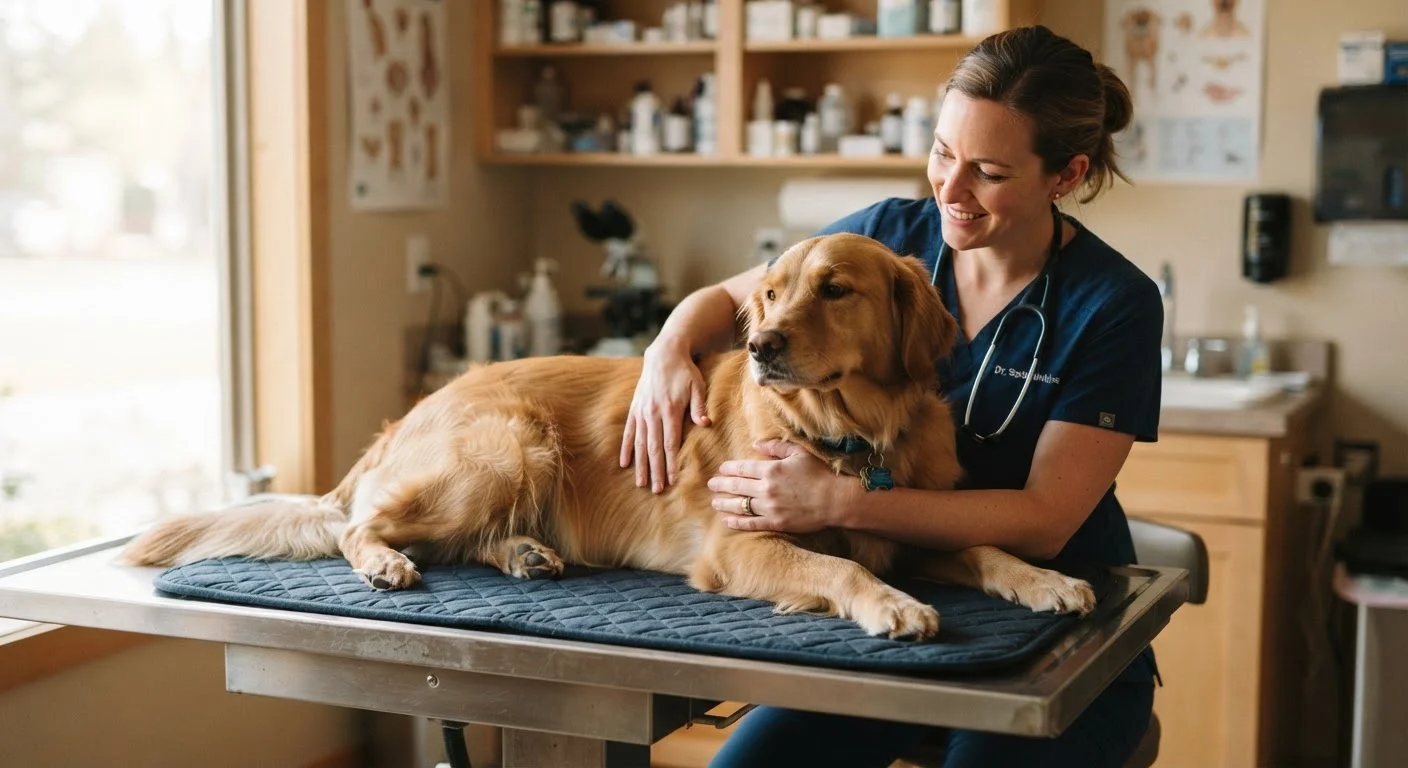
Assessment involves two things: looking and feeling. Visually, vets examine the profile and overhead view of the animal. Then they palpate — apply gentle hand pressure — over the ribs, spine, hips, and base of the tail, checking fat coverage in each area. This can't be replicated by a scale reading alone.
Alongside BCS, many vets now formally evaluate muscle condition score (MCS), which assesses lean muscle mass over the skull, scapulae, spine, and pelvis. Muscle loss — called sarcopenia — can occur even in overweight animals and is particularly significant in senior pets or those with chronic illness. An animal can be overweight by BCS standards while simultaneously experiencing dangerous muscle wasting.
For owners looking to understand their pet's full nutritional picture, understanding what goes into your pet's food is a useful complement to monitoring body condition.
“The scale gives us one dimension. Body condition scoring gives us the full picture — how the animal is actually carrying that weight, and whether what we're seeing is healthy tissue or excess fat.”
— Dottie Laflamme, Veterinary nutritionist and researcher in companion animal body condition assessment
Breed Norms, Age, and Individual Variation
Published weight ranges for dog and cat breeds are broad generalizations. A male Siberian Husky is listed as healthy between 45 and 60 pounds — a 15-pound range that can encompass both a lean working dog and an overweight house pet. Breed standards help frame expectations, but they don't replace an individualized assessment.
Age adds another layer of complexity. Puppies and kittens are expected to gain weight steadily, but the rate and pattern matter. Senior pets frequently lose muscle mass even when weight appears stable, which can mask the onset of conditions like kidney disease or hyperthyroidism. This is why monitoring older pets for subtle physical and behavioral shifts is especially important as animals age.
Sex and reproductive status also influence healthy weight ranges. Spayed and neutered animals tend to have lower caloric requirements than intact animals of the same breed and size, which affects both target weight and feeding guidelines.
Doing a Rib Check at Home
Place both hands on your pet's ribcage and apply firm but gentle pressure. You should feel individual ribs without having to press deeply — similar to running fingers over the back of your hand. If you can't feel ribs at all, or if they're plainly visible without touching, bring it up at your next vet visit. This quick check takes seconds and can catch gradual changes before they become health problems.
Monitoring at Home Between Vet Visits
Owners don't need clinical training to track meaningful changes in their pet's body condition. A simple at-home rib check — running hands firmly along both sides of the chest — can detect gradual fat gain or loss that might go unnoticed until the next annual exam. If ribs become difficult to feel without significant pressure, that's a signal worth noting. If they become more prominent than usual, that also warrants attention.
Keeping a simple health log that records weight alongside observations about coat condition, energy level, and appetite gives your vet useful context that a single in-clinic measurement cannot. Building a thorough health history for your pet helps identify patterns over time that might otherwise be invisible.
Portion control is another practical lever owners can engage directly. Even when feeding high-quality food, overfeeding is one of the most common contributors to weight gain in pets. Measuring meals rather than free-feeding, and adjusting for treats and table scraps, can make a meaningful difference in body condition over months.
This article is for general informational purposes only and is not a substitute for professional veterinary advice. Always consult a licensed veterinarian regarding your individual pet's health, diet, and weight management needs.