

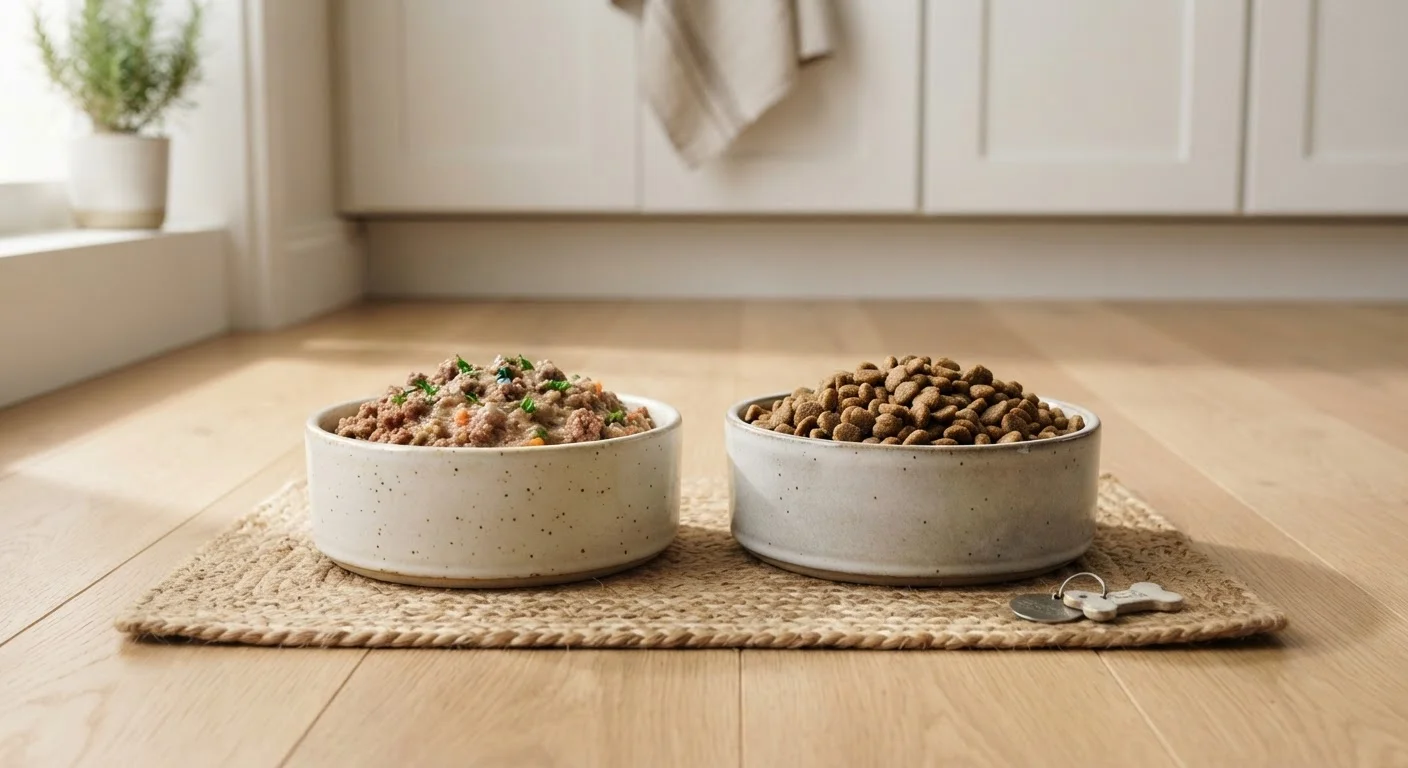
Key Takeaways
- Wet food contains significantly more moisture than dry food, making it valuable for pets who don't drink enough water.
- Dry kibble is more calorie-dense per ounce, so portion size matters greatly — regardless of food format.
- Neither format is universally superior; the right choice depends on your individual pet's health, age, and lifestyle.
- Many veterinarians recommend a mixed-feeding approach for cats to balance hydration and convenience.
- Always consult your veterinarian before making major changes to your pet's diet, especially if health conditions are involved.
Option A
Wet Pet Food
The moisture-rich, palatable option with strong nutritional density.
Best for: Pets with low water intake, urinary health concerns, dental issues, or picky appetites.
Option B
Dry Pet Food (Kibble)
The convenient, shelf-stable staple of most households.
Best for: Owners prioritizing cost-efficiency, ease of storage, and dental abrasion benefits.
If your cat has a history of urinary tract issues or kidney disease
Wet Pet Food
The high moisture content in wet food helps support urinary tract health and overall kidney function, which vets often prioritize in cats with these conditions.
If you need a cost-effective, easy-to-store daily staple for a healthy dog
Dry Pet Food (Kibble)
Dry food is significantly less expensive per calorie, stores easily without refrigeration, and works well as a complete diet for most healthy adult dogs.
If your pet is a picky eater or has a reduced appetite due to age or illness
Wet Pet Food
Wet food's stronger aroma and softer texture often appeal more to reluctant eaters, particularly senior pets or those recovering from illness.
If you want a practical everyday approach for a healthy adult cat
Wet Pet Food
Cats have a low thirst drive by nature, meaning their water intake often depends heavily on food moisture — wet food helps bridge that gap.
If dental health is a top priority and your pet tolerates chewing well
Dry Pet Food (Kibble)
The mechanical action of chewing dry kibble can help reduce plaque buildup, though it is not a substitute for regular tooth brushing or professional dental care.
What Sets These Two Formats Apart
At their core, wet and dry pet foods are distinguished by one fundamental difference: water content. Wet food — whether sold as pâté, chunks in gravy, or shredded varieties — typically contains 70–85% moisture. Dry kibble, by contrast, usually sits between 8–12% moisture. This gap shapes nearly every practical consideration that follows, from caloric density and palatability to storage and cost.
Both formats can be nutritionally complete when formulated to meet the standards established by the Association of American Feed Control Officials (AAFCO). The label language matters here: a food that has undergone feeding trials or meets AAFCO nutrient profiles for your pet's life stage is a reliable baseline. For a deeper look at decoding those labels, see our label-reading primer on what pet food packaging is legally required to tell you.
| Criterion | Wet Food | Dry Food (Kibble) |
|---|---|---|
| Moisture content | 70–85% | 8–12% |
| Caloric density (per ounce) | Lower | Higher |
| Palatability | Generally higher | Variable by pet |
| Storage after opening | Refrigerate; use within 1–2 days | Sealed container; weeks to months |
| Cost per meal | Generally higher | Generally lower |
| Dental abrasion benefit | Minimal | Modest (often overstated) |
| Hydration support | Strong | Low — water must come elsewhere |
| Suited to picky or senior eaters | Often well-tolerated | Less so for dental pain or low appetite |
Hydration, Calories, and Nutritional Considerations
Because cats evolved as desert-adapted predators, they have a naturally low thirst drive and tend to obtain most of their water from prey. Domestic cats on dry-only diets may consistently consume less water than is ideal, which is why many veterinarians recommend incorporating wet food — particularly for cats prone to urinary tract disease or early-stage kidney issues. This isn't a guarantee of prevention, but the hydration benefit is well-established. Our companion piece on pet hydration myths unpacks this further.
Dogs are more adaptable drinkers and can thrive on dry food provided they have consistent access to fresh water. That said, wet food can still be a practical tool for dogs with dental pain, swallowing difficulties, or conditions requiring increased fluid intake.
On the calorie front, dry kibble is far more calorie-dense by weight. A cup of dry food may deliver two to four times the calories of the same volume of wet food. This is why portion control is arguably more critical than food format — overfeeding kibble is easy to do without realizing it.
70–85%
Moisture content in typical wet pet food
Compared to just 8–12% in dry kibble, this difference has meaningful implications for cats' overall daily fluid intake.
2–4x
Caloric difference per cup: dry vs. wet
Volume-for-volume, dry kibble can deliver significantly more calories than wet food — a key reason portion accuracy matters so much.
~60%
Of US households that own at least one pet
According to the American Pet Products Association, pet ownership is widespread — making daily feeding decisions one of the most common animal care choices Americans make.
Practical Trade-Offs: Cost, Storage, and Feeding Habits
Dry food wins decisively on convenience and cost. A bag of kibble can sit in a sealed container for weeks; an opened can of wet food must be refrigerated and used within a day or two. For multi-pet households or owners with busy schedules, this difference is significant. Dry food also lends itself to puzzle feeders and automatic dispensers — useful tools for managing mealtimes and mental enrichment.
Wet food carries a higher per-meal cost in most markets, though the gap varies by brand tier and product type. For owners managing a budget, a mixed-feeding approach — wet food once daily supplemented by a measured kibble portion — can offer a practical middle ground that many veterinarians consider reasonable for healthy cats.
One nuance worth noting: dental benefits from dry food are often overstated. While the chewing action of kibble can modestly reduce plaque, many kibble pieces are small enough that pets swallow them with minimal chewing. Regular toothbrushing remains the most effective preventive measure, regardless of diet. Consider pairing feeding discussions with a broader look at how environment shapes long-term health risks for your pet.
Mixed Feeding: A Common Middle Ground
Many veterinarians and feline nutrition specialists consider a combination of wet and dry food a reasonable everyday approach for healthy adult cats. Wet food at one or more meals supports hydration, while a measured dry portion can provide convenience and cost savings. If you pursue this approach, be careful to account for total daily caloric intake across both formats to avoid unintentional overfeeding.
How to Make the Right Call for Your Pet
There is no single correct answer to this question — the best food format is the one that meets your individual pet's nutritional needs, supports any existing health conditions, fits your household routine, and gets eaten consistently. A nutritionally complete food that a pet refuses isn't helping anyone.
Your veterinarian is the most important resource in this decision, especially if your pet has chronic health issues, is a senior, or is a young animal still developing. Life stage matters too: kittens and puppies, adult pets, and seniors have meaningfully different caloric and nutritional requirements, so a format that works well at one age may need revisiting later. For guidance on building consistent, health-supportive daily habits around feeding, see building a daily routine your pet can rely on.
When evaluating any food — wet or dry — also look beyond the format to the full nutritional profile. Understanding what nutrition labels actually mean for your pet's species and life stage is a practical skill every owner benefits from developing.
This article is for general informational and educational purposes only and is not a substitute for personalized veterinary advice. Always consult a licensed veterinarian before making significant changes to your pet's diet, especially if your pet has existing health conditions.