

Key Takeaways
- Indoor pets face lower risks from trauma, predators, and infectious disease but are more prone to obesity and boredom.
- Outdoor access increases exposure to parasites, toxins, and injury but supports natural movement and mental stimulation.
- The healthiest arrangements often combine controlled outdoor access with enriched indoor environments.
- Regular veterinary check-ups matter regardless of lifestyle, as both environments carry distinct hidden risks.
- Subtle behavioral shifts can be early warning signs — environment affects what symptoms to watch for.
Dramatically reduced risk of traumatic injury
Road traffic accidents, falls, and attacks by other animals are leading causes of injury and death in outdoor pets. Keeping animals indoors removes these acute threats almost entirely.
Lower exposure to infectious disease
Diseases such as feline immunodeficiency virus (FIV), feline leukemia virus (FeLV), and distemper spread through contact with infected animals. Indoor pets have far fewer opportunities for such encounters.
Reduced parasite burden
Fleas, ticks, intestinal worms, and other parasites are significantly less common in pets with no outdoor access, simplifying prevention protocols and reducing associated health complications.
Protection from environmental toxins
Garden pesticides, antifreeze, toxic plants, and rodenticide baits are hazards pets can encounter outdoors. Indoor environments allow owners to control what their animals are exposed to.
More consistent temperature and shelter
Extremes of heat and cold present real physiological stress and can be dangerous, particularly for short-nosed breeds, elderly animals, or those with cardiac or respiratory conditions.
Higher risk of obesity and related disease
Reduced activity in confined spaces, combined with ad libitum feeding, contributes to weight gain. Obesity in pets is linked to diabetes, joint disease, and reduced life expectancy.
Increased parasite and disease exposure
Outdoor pets encounter other animals, soil, standing water, and wildlife, all of which are vectors for parasites and infectious disease, requiring more rigorous and consistent prevention.
Greater trauma and injury risk
Vehicle strikes, territorial fights, falls, and encounters with predators or wildlife are substantially more likely for pets with unsupervised outdoor access.
Exposure to environmental toxins
Pets exploring gardens, parks, or rural areas may ingest or contact herbicides, pesticides, toxic plants, or bait stations, sometimes with severe or fatal consequences.
Risk of getting lost or stolen
Outdoor cats and small animals in unsecured enclosures face a real risk of straying, becoming disoriented, or being taken, with outcomes that can be difficult to detect promptly.
Behavioral stimulation deficits indoors
Without deliberate enrichment, indoor-only environments can be understimulating, leading to anxiety, repetitive behaviors, or redirected aggression — particularly in naturally active species.
Our Verdict
Neither an exclusively indoor nor outdoor life is risk-free for pets. Indoor living significantly reduces threats from trauma, infectious disease, and predators, but creates its own challenges around weight, stimulation, and chronic stress. Outdoor or mixed access supports natural behavior but demands proactive parasite prevention, vaccination, and vigilant monitoring. The most informed owners tailor their approach to their specific animal's needs, health baseline, and local environment.
Owners who want to make a deliberate, evidence-informed decision about their pet's daily environment — particularly those caring for cats, small animals, or pets with existing health conditions.
Why Environment Is a Health Variable, Not Just a Lifestyle Choice
Where a pet lives — and how much access it has to the outdoors — is one of the most consequential factors shaping its long-term health profile. Yet many owners treat it as a matter of convenience or preference rather than a medical consideration worth examining carefully.
Research on domestic cats, the species most studied in this context, consistently shows that lifestyle correlates with measurable differences in injury rates, infectious disease exposure, lifespan estimates, and behavioral health outcomes. The same principle extends to rabbits, guinea pigs, and other small animals kept in outdoor hutches versus indoor enclosures. Understanding these trade-offs helps owners recognise which signs of ill health are most relevant to their pet's specific situation. For a broader look at the evidence specifically around cats, see our detailed breakdown of indoor vs. outdoor cat arrangements.
This Article Focuses on Cats and Small Animals
While the general principles apply broadly, the evidence base for environment and longevity is strongest for domestic cats. Dogs present a different set of considerations — they typically require outdoor time for exercise and elimination regardless of housing, which shifts the risk calculus. Small animals such as rabbits and guinea pigs kept in outdoor enclosures face their own distinct hazard profile, including predator stress and temperature extremes, which owners should discuss with a veterinarian familiar with exotic small animal care.
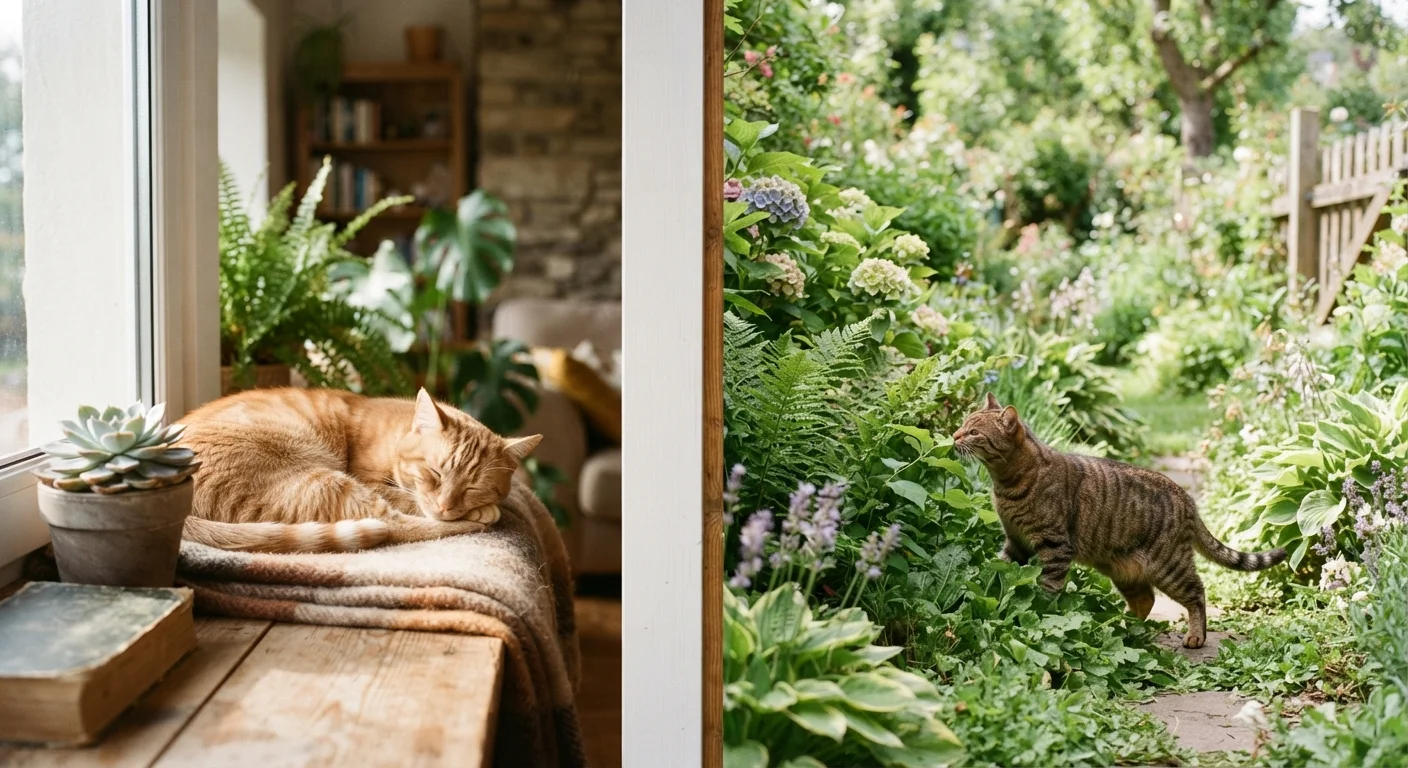
The Case for Keeping Pets Indoors
Indoor environments eliminate or substantially reduce a range of acute and chronic threats.
Dramatically reduced risk of traumatic injury
Road traffic accidents, falls, and attacks by other animals are leading causes of injury and death in outdoor pets. Keeping animals indoors removes these acute threats almost entirely.
Lower exposure to infectious disease
Diseases such as feline immunodeficiency virus (FIV), feline leukemia virus (FeLV), and distemper spread through contact with infected animals. Indoor pets have far fewer opportunities for such encounters.
Reduced parasite burden
Fleas, ticks, intestinal worms, and other parasites are significantly less common in pets with no outdoor access, simplifying prevention protocols and reducing associated health complications.
Protection from environmental toxins
Garden pesticides, antifreeze, toxic plants, and rodenticide baits are hazards pets can encounter outdoors. Indoor environments allow owners to control what their animals are exposed to.
More consistent temperature and shelter
Extremes of heat and cold present real physiological stress and can be dangerous, particularly for short-nosed breeds, elderly animals, or those with cardiac or respiratory conditions.
Despite these genuine advantages, indoor living is not without its own risks. Sedentary environments and calorie-dense diets are a well-documented combination: veterinary obesity surveys in the United States consistently identify indoor cats and dogs as overweight at higher rates than their more active counterparts. Boredom and understimulation can also manifest as repetitive behaviors, house-soiling, or anxiety — practical enrichment strategies can meaningfully offset these risks without requiring extra space.
The Risks That Come With Outdoor Access
Outdoor environments offer genuine benefits — exposure to natural stimuli, opportunities for species-typical behavior, and more varied physical activity. However, they also introduce a distinct set of hazards that require active management.
Higher risk of obesity and related disease
Reduced activity in confined spaces, combined with ad libitum feeding, contributes to weight gain. Obesity in pets is linked to diabetes, joint disease, and reduced life expectancy.
Increased parasite and disease exposure
Outdoor pets encounter other animals, soil, standing water, and wildlife, all of which are vectors for parasites and infectious disease, requiring more rigorous and consistent prevention.
Greater trauma and injury risk
Vehicle strikes, territorial fights, falls, and encounters with predators or wildlife are substantially more likely for pets with unsupervised outdoor access.
Exposure to environmental toxins
Pets exploring gardens, parks, or rural areas may ingest or contact herbicides, pesticides, toxic plants, or bait stations, sometimes with severe or fatal consequences.
Risk of getting lost or stolen
Outdoor cats and small animals in unsecured enclosures face a real risk of straying, becoming disoriented, or being taken, with outcomes that can be difficult to detect promptly.
Behavioral stimulation deficits indoors
Without deliberate enrichment, indoor-only environments can be understimulating, leading to anxiety, repetitive behaviors, or redirected aggression — particularly in naturally active species.
2–5×
Higher parasite infestation rate in outdoor cats
Studies comparing indoor and outdoor cat populations consistently find substantially elevated flea, tick, and worm burdens in cats with outdoor access.
~60%
US pet cats estimated to be overweight or obese
The Association for Pet Obesity Prevention has documented high rates of excess weight in domestic cats, with sedentary indoor lifestyles identified as a contributing factor.
Parasite exposure is among the most consistent outdoor risks. Fleas, ticks, intestinal worms, and ear mites are all significantly more prevalent in pets with regular outdoor access. Understanding how parasite prevention actually works is essential for any owner whose pet spends time outside, as gaps in knowledge can leave animals exposed even when some preventives are in use.
Reading Your Pet's Health Through an Environmental Lens
Recognising which health problems are most likely given your pet's environment helps you catch issues earlier. An indoor cat that suddenly loses weight and drinks excessively may point toward metabolic disease; an outdoor cat presenting with the same signs may additionally warrant screening for infectious diseases like FIV or FeLV. Environmental context shapes what a veterinarian looks for and what questions to ask.
Behavioral changes are often the earliest signal that something is wrong, regardless of lifestyle. Quiet shifts in routine or temperament — reduced grooming, altered sleep patterns, or changes in appetite — frequently precede obvious physical symptoms. Maintaining a detailed health history that includes environmental exposures gives your veterinarian the context needed to spot patterns and intervene earlier.
As pets age, environment interacts with the body's declining resilience. Older animals are less equipped to handle temperature extremes, physical hazards, or the stress of territorial encounters outdoors. Recognising which changes in senior pets warrant professional attention becomes especially important when lifestyle factors amplify age-related vulnerability.
This article is for general informational purposes only and does not constitute veterinary advice. Always consult a qualified veterinarian for guidance specific to your pet's health needs.