

Key Takeaways
- Mental stimulation is as important as physical exercise for a pet's overall wellbeing.
- Everyday household items can be repurposed into effective enrichment tools.
- Short, consistent enrichment sessions work better than occasional long activities.
- Scent work and foraging tap into instinctive behaviors that deeply satisfy both dogs and cats.
- Varying your pet's environment — even slightly — provides meaningful novelty without extra cost.
Why indoor enrichment matters more than you might think
A quiet day at home doesn't have to mean a dull one for your pet. Dogs and cats are cognitively capable animals with strong instinctive drives — to forage, explore, hunt, and solve problems — and when those drives go unmet, restlessness and frustration often follow. Mental stimulation isn't a supplement to good pet care; it's a core part of it, as fundamental as nutrition and exercise.
The good news is that meaningful enrichment rarely requires extra space, expensive products, or significant time investment. Most of the strategies that work best rely on understanding what your pet's brain actually needs — novelty, challenge, sensory engagement, and interaction — and delivering those things in practical, everyday ways. Whether you have a high-energy dog or a sedentary senior cat, the principles translate.
For pets who spend most or all of their time indoors, the stakes are particularly clear. How environment shapes long-term health risks in pets is well-documented — and a stimulation-poor indoor life carries its own set of concerns. The list below covers six practical, accessible approaches any owner can start using today.
Use puzzle feeders and food-dispensing toys
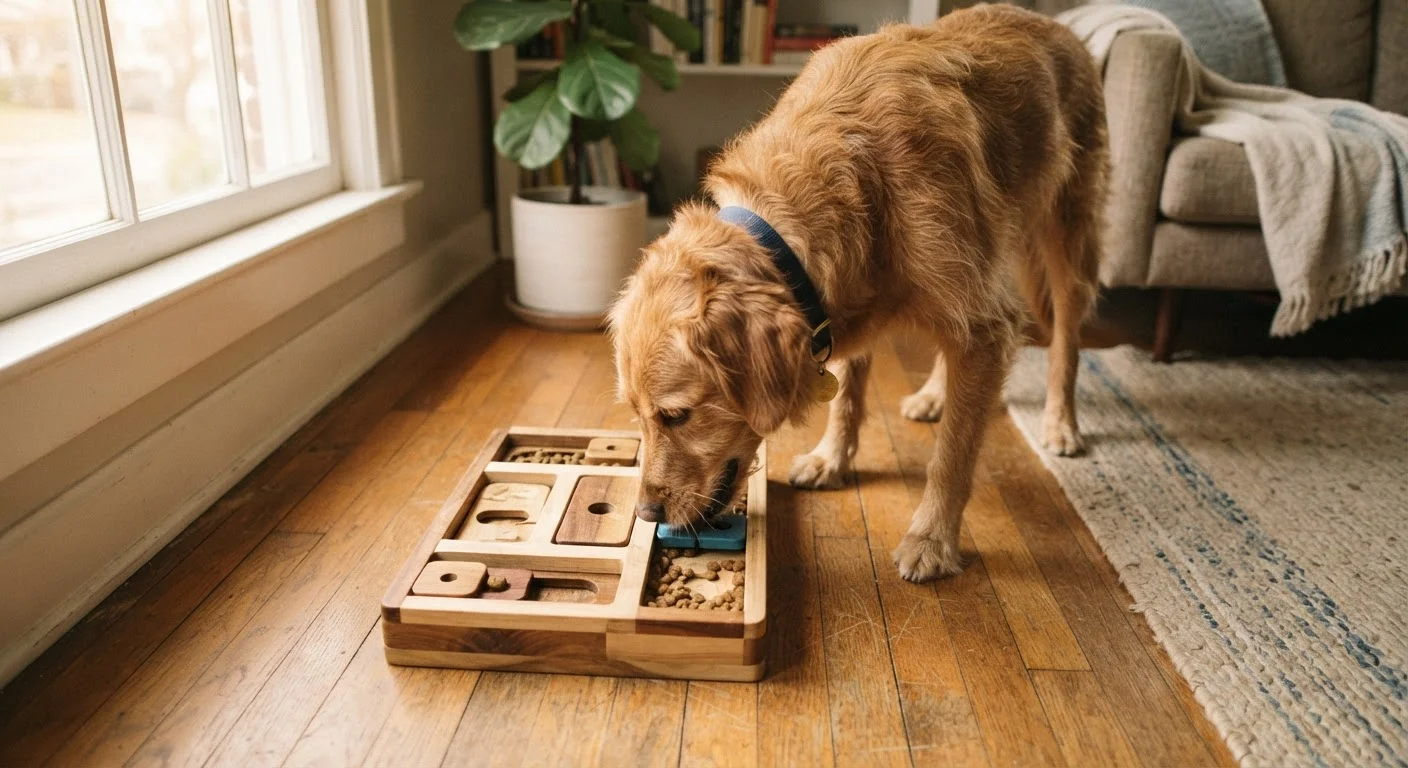
Replacing a standard food bowl with a puzzle feeder turns mealtime into a problem-solving challenge. Dogs and cats both benefit from having to work for their food — it slows eating, reduces boredom, and satisfies the foraging drive that domestication hasn't erased. Lick mats, snuffle mats, and rubber stuffable toys (frozen with wet food or soaked kibble) are all low-effort options that can occupy a pet for 10–20 minutes. Rotate different formats to prevent habituation — a puzzle that's too easy too often stops being stimulating.
Working for food satisfies the foraging drive that domestication hasn't erased.
Run a short, focused training session
Even five minutes of training provides significant cognitive engagement. Practicing known cues reinforces communication between pet and owner; introducing a new one — like a hand-signal variation or a simple trick — stretches your pet's working memory. For dogs, nose-work exercises like «find it» (hiding treats around a room) blend mental challenge with physical movement. Cats can learn cue-response behaviors too; short clicker sessions tapping into food motivation are often highly effective. Keep sessions brief and end on a success to maintain enthusiasm.
Five focused minutes of training can deliver more mental exercise than a long walk.
Set up a scent enrichment activity
Scent is the primary sense dogs use to interpret the world, and cats are similarly scent-driven. Simple nose-work games — hiding small amounts of food or a favorite toy under cups, inside cardboard boxes, or in scrunched paper — engage the olfactory system intensively. Research in animal behavior science suggests that scent-based activities can reduce stress indicators and improve overall emotional state in dogs. You don't need special equipment: a muffin tin covered with tennis balls, or a row of paper cups with one hiding a treat, creates a meaningful challenge with items already at home.
Scent activities engage the brain far more deeply than many owners expect.
Rearrange or introduce new environmental features
Novelty itself is enriching. Moving furniture slightly, placing a new cardboard box in the center of a room, or adding a paper bag (handles removed for safety) gives cats especially a new object to investigate and claim. For dogs, rotating which toys are available — rather than leaving all toys out at once — preserves novelty and keeps interest higher. Window perches positioned at bird-feeder height give indoor cats a passive enrichment source that can occupy hours of attention. Even a new smell introduced on a cloth — a pet-safe herb like valerian or silver vine for cats — can hold attention for extended periods.
Rotating available toys preserves novelty far better than leaving everything accessible at once.
Engage in owner-led interactive play
Structured play with a human partner is distinct from solo play and provides social enrichment alongside physical activity. For cats, wand toys that mimic prey movement — erratic, quick, and unpredictable — trigger predatory sequences that are deeply satisfying to complete. For dogs, tug games with clear rules (start and stop cues) build impulse control while providing an outlet for energy. The key is genuine engagement: passive toy-dangling while watching television doesn't offer the same benefit as focused, responsive play that reacts to the animal's movements. Even 10 minutes of intentional interactive play can noticeably shift a pet's mood.
Focused, responsive play with an owner delivers social enrichment no toy can fully replicate.
Offer species-appropriate sensory experiences
Enrichment doesn't have to be activity-based. Safe auditory and visual stimulation can provide gentle engagement on quieter days. Nature documentaries or bird-sound recordings at low volume interest many cats and some dogs. A fish tank or bird feeder visible from a window position provides ongoing visual novelty. For rabbits and small mammals, rotating safe chewable materials — untreated wooden blocks, hay twists, or fresh herbs — satisfies both dental needs and exploratory behavior. Tailoring enrichment to what a species actually perceives and values makes a meaningful difference in how engaged the animal remains.
Tailoring enrichment to a species' actual senses makes all the difference in real engagement.
Putting it all together
Enrichment works best when it's consistent rather than occasional. A single elaborate activity once a week delivers far less benefit than small, regular sessions threaded through each day. If you're building out a fuller routine, our guide on daily habits that support behavioural wellbeing offers practical, evidence-informed starting points.
Build enrichment into the daily routine
Sporadic enrichment is less effective than consistent, predictable sessions woven into the day. Pairing a puzzle feeder with the regular morning meal, or scheduling a five-minute training session before an evening walk, helps pets anticipate and benefit from mental stimulation reliably. See our guide on building a daily routine your pet can rely on for practical scheduling ideas.
Enrichment and behavioral health are linked
Persistent boredom and understimulation are among the most common drivers of destructive or anxious behavior in household pets. If your pet is regularly acting out despite enrichment efforts, it may signal something beyond boredom. See our coverage on how understimulation and stress manifest in pets for a deeper look. Consulting a veterinarian or certified animal behaviorist is advisable when behavioral changes are sudden or severe.
Pay attention to what your individual pet responds to most enthusiastically — enrichment isn't one-size-fits-all. A dog who finds scent work deeply satisfying may show little interest in puzzle feeders, and vice versa. Observing your pet's engagement closely is the best guide to what's actually working. When in doubt, variety is always a safe bet: rotate activities, introduce new textures and smells gradually, and keep sessions short enough that your pet ends each one wanting more.