

Key Takeaways
- Phrases like 'new and improved' have no standard legal definition and require no independent verification.
- Terms such as 'natural' and 'clinically tested' are loosely regulated and can be applied very broadly.
- Comparing price-per-unit rather than package claims is a more reliable measure of actual value.
- Understanding packaging language helps consumers make decisions based on substance rather than suggestion.
Why Packaging Language Is Rarely Neutral
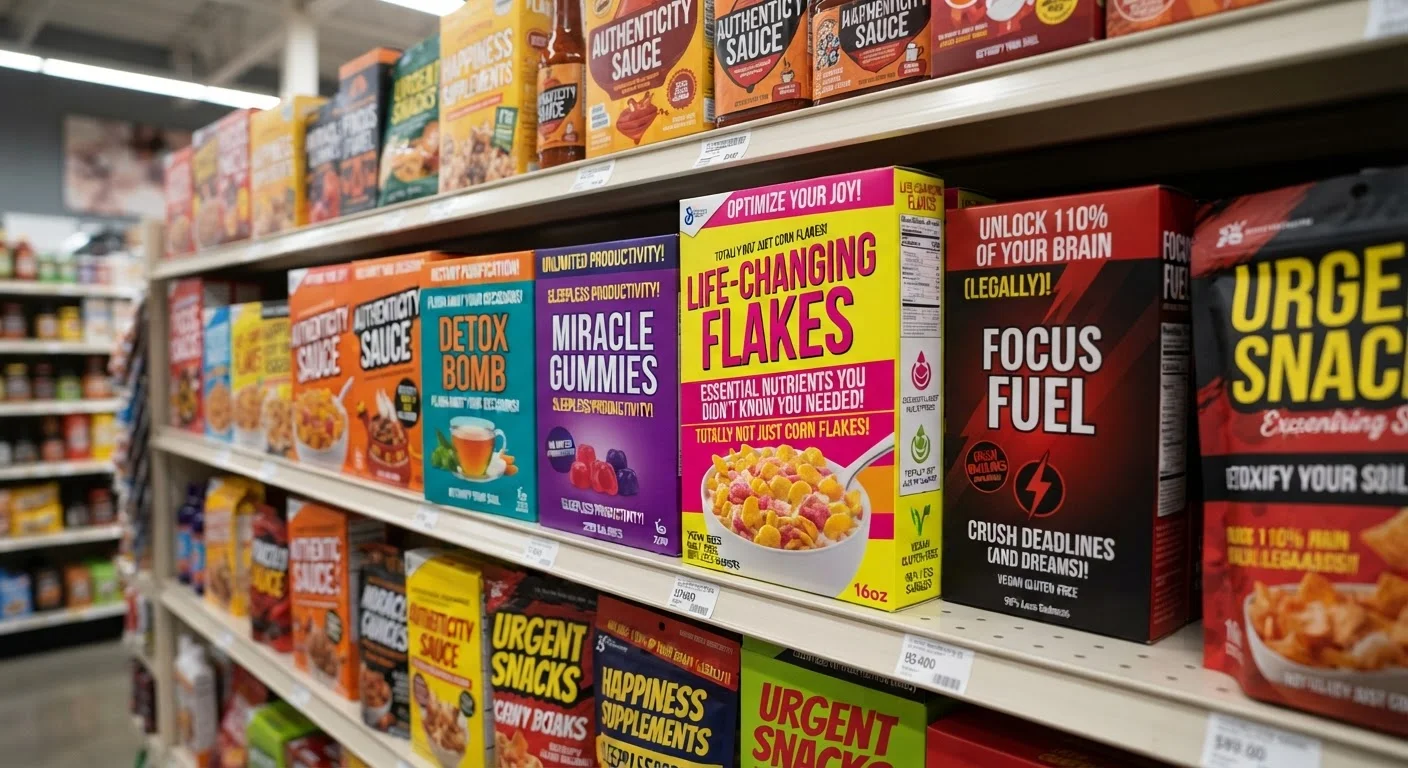
Every word on a product's packaging is deliberate. Marketers spend significant resources crafting phrases that create a perception of value, quality, or innovation — without necessarily delivering a verifiable promise. Understanding this dynamic is the first step toward becoming a more confident shopper.
Unlike nutritional facts or ingredient lists, which are subject to regulatory requirements, many marketing claims exist in a much looser space. They're designed to feel meaningful while remaining difficult to challenge. As with reading a property listing, where language is carefully chosen to sell rather than inform, product packaging rewards a skeptical eye.
The myth-vs-fact pairs below break down some of the most common phrases you'll encounter on shelves — and what they actually communicate.
Myth
'New and Improved' means the product has been meaningfully upgraded based on research or testing.
Fact
The phrase has no regulated definition in the US and can be applied after virtually any change, however minor.
'New and improved' is one of the oldest phrases in marketing, and it remains popular precisely because it signals progress without requiring proof of it. The US Federal Trade Commission requires that advertising claims be truthful and substantiated, but 'new and improved' is typically interpreted so broadly — a reformulated scent, a tweaked color, a new cap design — that it rarely faces challenge. Before assuming you're getting a genuinely better product, ask what specifically changed, and whether the change benefits you.
Myth
'Natural' on a label indicates the product is free from synthetic ingredients or has been produced without artificial processing.
Fact
Outside of specific categories like organic-certified foods, 'natural' is loosely defined and inconsistently applied across industries.
The FDA has considered but never finalized a formal definition for 'natural' on food labels, meaning manufacturers retain wide discretion in using it. In personal care products, the situation is even less regulated. A product can contain heavily processed ingredients alongside botanicals and still carry a 'natural' label. If ingredient transparency matters to you, reading the full ingredient list — rather than the front-panel claim — is a more informative approach.
Myth
'Clinically tested' or 'dermatologist tested' means a product has been proven effective in rigorous scientific trials.
Fact
These phrases indicate a product was tested in some capacity, but reveal nothing about study size, design, independence, or results.
'Clinically tested' means a test of some kind occurred — it says nothing about whether the results were positive, how many people participated, or whether the study was peer-reviewed. 'Dermatologist tested' often means a small panel of dermatologists reviewed the formula, not that they found it effective. Similarly, 'tested by experts' provides no information about methodology. When a product cites clinical data to support a specific claim, look for the actual figures rather than relying on the phrase alone.
Myth
'Light,' 'lite,' or 'reduced' on food packaging means the product is significantly lower in calories or a healthier choice overall.
Fact
These terms have specific regulatory meanings for some products, but they refer to comparisons against original versions and don't guarantee low absolute values.
For packaged foods, 'reduced' typically means at least 25% less of a particular nutrient — such as fat or sodium — compared to the original product. But if the original was very high, the 'reduced' version may still be substantial. 'Light' has additional regulatory definitions depending on context. The key habit is checking the nutrition facts panel rather than letting front-of-pack language substitute for it. This is particularly relevant for shoppers trying to make considered dietary choices rather than relying on banner claims.
Myth
A product described as 'free from' a specific ingredient is inherently safer or healthier than alternatives containing it.
Fact
'Free from' claims highlight an absence but offer no information about what replaces the omitted ingredient.
Removing one ingredient frequently requires substituting another. A 'paraben-free' preservative system may use an alternative preservative that carries its own considerations. 'Sugar-free' products often contain sugar alcohols or other sweeteners. This isn't to say 'free from' products are worse choices — but the absence of one ingredient shouldn't be treated as a general quality signal. Evaluating the full ingredient list remains more informative than acting on a single absence claim.
What to Do Instead of Trusting the Label
The most effective antidote to packaging language is a habit of comparing products on objective criteria. Price-per-unit (usually displayed on the shelf tag) cuts through size-based confusion and lets you evaluate products on an apples-to-apples basis. This matters especially in the context of shrinkflation, where a package may look the same while containing less.
For food and personal care products, the ingredient list is a more reliable document than the front-of-pack claims. Ingredients are listed in descending order by weight, which tells you considerably more about what you're actually buying than a banner promising 'advanced formula.' Our guide to reading a nutrition label walks through exactly how to approach this for food products.
When evaluating whether a store-brand or generic alternative offers comparable quality, set aside packaging aesthetics and check whether the ingredient profile is similar. Own-label products frequently originate from the same manufacturing facilities as name brands, making the packaging claims on either version largely irrelevant to actual quality.
~72%
Shoppers influenced by front-of-pack claims
Research published in consumer behavior journals consistently finds that the majority of shoppers report that front-of-package claims influence their purchasing decisions, even among those who consider themselves informed buyers.
No legal cap
Uses of 'natural' allowed in US personal care
The FDA has not established a formal regulatory definition of 'natural' for personal care or cosmetic products, meaning the term can be used at manufacturers' discretion.
Finally, be aware that the strategies used on human product packaging also appear in the pet food aisle. If you shop for a companion animal, the same critical approach applies — see our primer on what pet food packaging is legally required to tell you for guidance tailored to that category.