

Key Takeaways
- Serving size is the foundation of every figure on the label — always check it first.
- % Daily Value (%DV) tells you how much a nutrient contributes to a standard 2,000-calorie reference diet.
- Aim to limit saturated fat, sodium, and added sugars; prioritize fiber, vitamins, and minerals.
- Nutrition labels follow FDA regulations, so the format is consistent across most packaged foods.
- No single number tells the whole story — labels are most useful when read as a complete picture.
What you will need
Why the Nutrition Facts Panel Looks the Way It Does
The Nutrition Facts label is a federally regulated format required by the US Food and Drug Administration (FDA) on most packaged foods. Its current design — updated in 2016 and phased in through 2020 — reflects decades of nutritional science and public health priorities. The layout is intentionally standardized so that once you understand how to read one label, you can read virtually any of them.
That consistency makes the label a genuinely useful tool for the informed everyday shopper. The challenge is knowing which numbers are most meaningful for your purposes — and which ones are easy to misread without context.
Labels Inform — They Don't Diagnose
Nutrition labels are general educational tools, not personalized medical guidance. Individual nutrient needs vary based on age, health status, activity level, and medical conditions. If you are managing a specific health condition or following a therapeutic diet, consult a registered dietitian or your healthcare provider before making significant dietary changes.
Nutrition labels cover packaged foods, but many whole foods — fresh vegetables, bulk grains, unpackaged meat — don't carry them. For those, the USDA FoodData Central database is a reliable free reference. If you're also trying to make sense of what's listed in an ingredient list beneath the label, the ingredient list reading guide covers that separately.
What You'll Need
The food package itself
The primary source — the Nutrition Facts panel is printed directly on most packaged foods sold in the US.
USDA FoodData Central (online database)
A free government database for looking up nutrition information on foods without labels, such as fresh produce.
What you will need
How to Read a Nutrition Label Step by Step
Start with serving size and servings per container
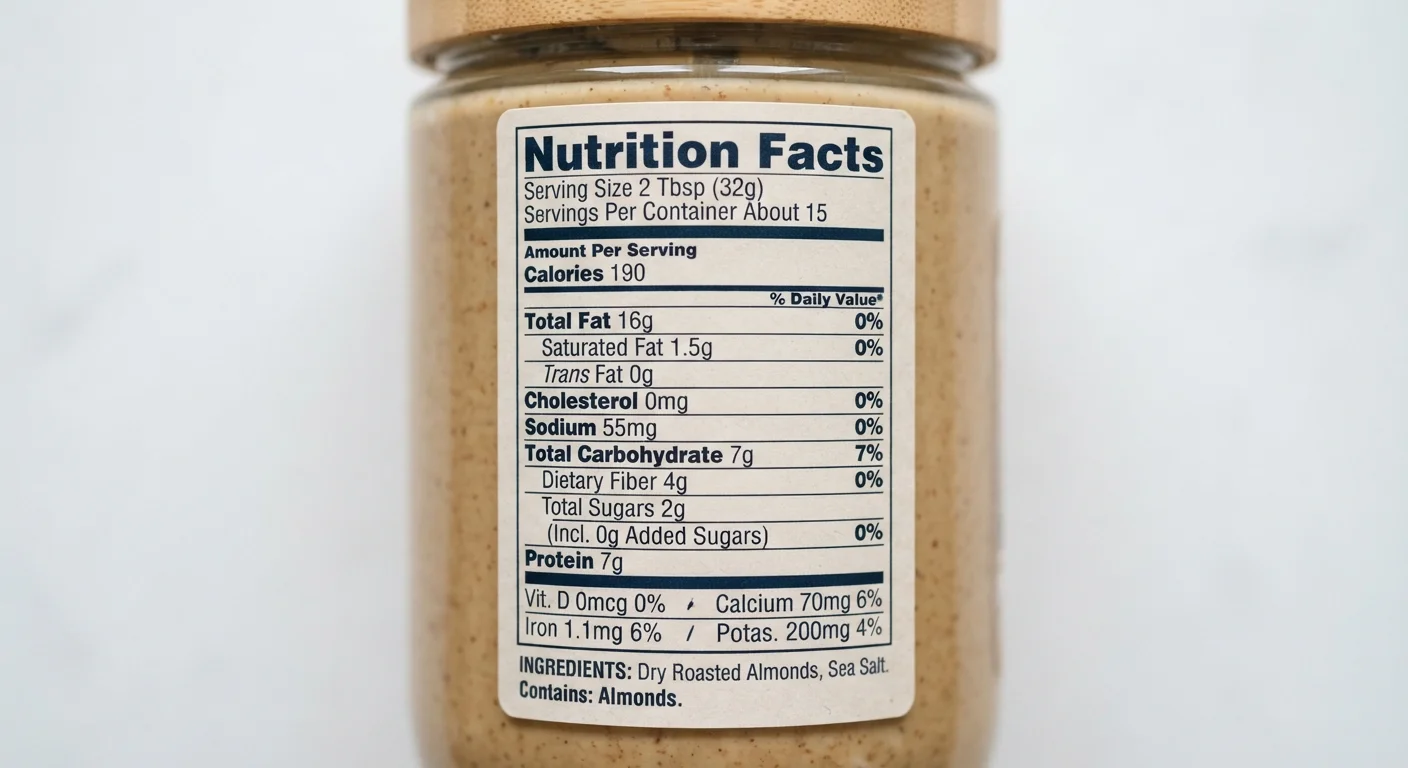
The very first lines of the Nutrition Facts panel are the most important to read before anything else. Serving size tells you the amount the label's figures are based on, expressed in a common household measure (e.g., 1 cup, 3 crackers) alongside a gram weight. Servings per container tells you how many of those portions are in the whole package.
Every number that follows — calories, fat, sodium, everything — applies to one serving, not the whole package. This distinction is where most label misreadings begin.
Note the calorie count
Calories are displayed prominently in large type. They represent the total energy provided by one serving of the food, combining energy from fat, carbohydrates, and protein. Calorie needs vary considerably between individuals — there is no universally correct daily target — but the label's reference point is a 2,000-calorie diet.
Calories are a useful orientation figure, but they don't reveal nutritional quality on their own. A 200-calorie serving of almonds and a 200-calorie serving of a sugary snack are very different nutritionally, even if the calorie line looks identical.
Identify nutrients to limit
The upper section of the nutrient breakdown lists items most Americans consume in excess. These include:
- Saturated fat: Associated with cardiovascular risk when consumed in high amounts; keep %DV low.
- Trans fat: Artificially produced trans fats are largely phased out in the US food supply, but the line still appears on some labels. Aim for 0g.
- Sodium: Excess sodium is linked to elevated blood pressure in some people. The American Heart Association generally recommends staying under 2,300mg per day for most adults.
- Added sugars: Distinguished from naturally occurring sugars (in fruit or dairy), added sugars contribute calories with minimal nutritional value. The %DV for added sugars is based on a limit of 50g per day.
Identify nutrients to prioritize
The lower section of the nutrient list highlights nutrients many people under-consume. Look for:
- Dietary fiber: Supports digestive health and is associated with reduced risk of several chronic conditions. A higher %DV is generally better.
- Vitamin D, Calcium, Iron, Potassium: These four are federally mandated on updated labels because deficiencies are common in the US population.
- Protein: Listed in grams; no %DV is required for most products, but the amount matters for satiety and muscle maintenance.
For a deeper look at specific vitamins and minerals and their roles, see the micronutrients reference guide.
Read the % Daily Value column
The % Daily Value (%DV) column appears on the right side of the label and expresses each nutrient's contribution as a percentage of a daily reference amount, based on a 2,000-calorie diet. It is not a personal prescription — it's a standardized benchmark set by the FDA to make comparisons between products easier.
Use %DV to quickly compare two versions of similar products (for example, two breakfast cereals) side by side, without needing to interpret raw gram amounts.
Look at total carbohydrates in context
Total carbohydrates include three sub-categories: dietary fiber, total sugars, and added sugars. Reading all three together is more informative than focusing on total carbohydrates alone. A food high in total carbohydrates but also high in fiber — such as legumes or whole grains — has a very different nutritional profile than one high in total carbohydrates from added sugars.
For more on how grain processing affects nutritional value, see what changes when wheat gets processed.
The 5%/20% Rule Is a Useful Shortcut
The FDA's general guidance suggests that 5% DV or less is considered low for a nutrient, while 20% DV or more is considered high. Use this as a quick filter: look for high %DV on nutrients you want more of (fiber, calcium, iron) and low %DV on nutrients to limit (saturated fat, sodium, added sugars).
Watch Out for Multiple Servings Per Package
A product that looks like a single-serving item — a small bag of chips or a bottled drink — may list two or three servings per container. All calories and nutrient values on the label apply per serving, not per package. Eating the whole container means multiplying every figure accordingly.
Putting It All Together
A nutrition label is most useful when read as a whole rather than fixated on one figure. A food with low calories but negligible fiber, high sodium, and significant added sugars is not necessarily a healthier choice than a more calorie-dense food built around whole ingredients. Context always matters.
Labels are also most valuable when used comparatively. Holding two similar products side by side and scanning the %DV column for saturated fat, sodium, fiber, and added sugars can surface real differences that marketing language on the front of the package often obscures. For help interpreting front-of-pack claims like "natural," "light," or "multigrain," see what common packaging claims actually mean.
If you're working toward a broader goal — like building more nutritious meals across your week — label reading pairs well with understanding portion proportions. The balanced plate guide offers a complementary framework for structuring meals beyond individual products.
This article is for general informational and educational purposes only and is not a substitute for professional medical or dietary advice. Please consult a qualified healthcare provider or registered dietitian for guidance tailored to your individual health needs.