

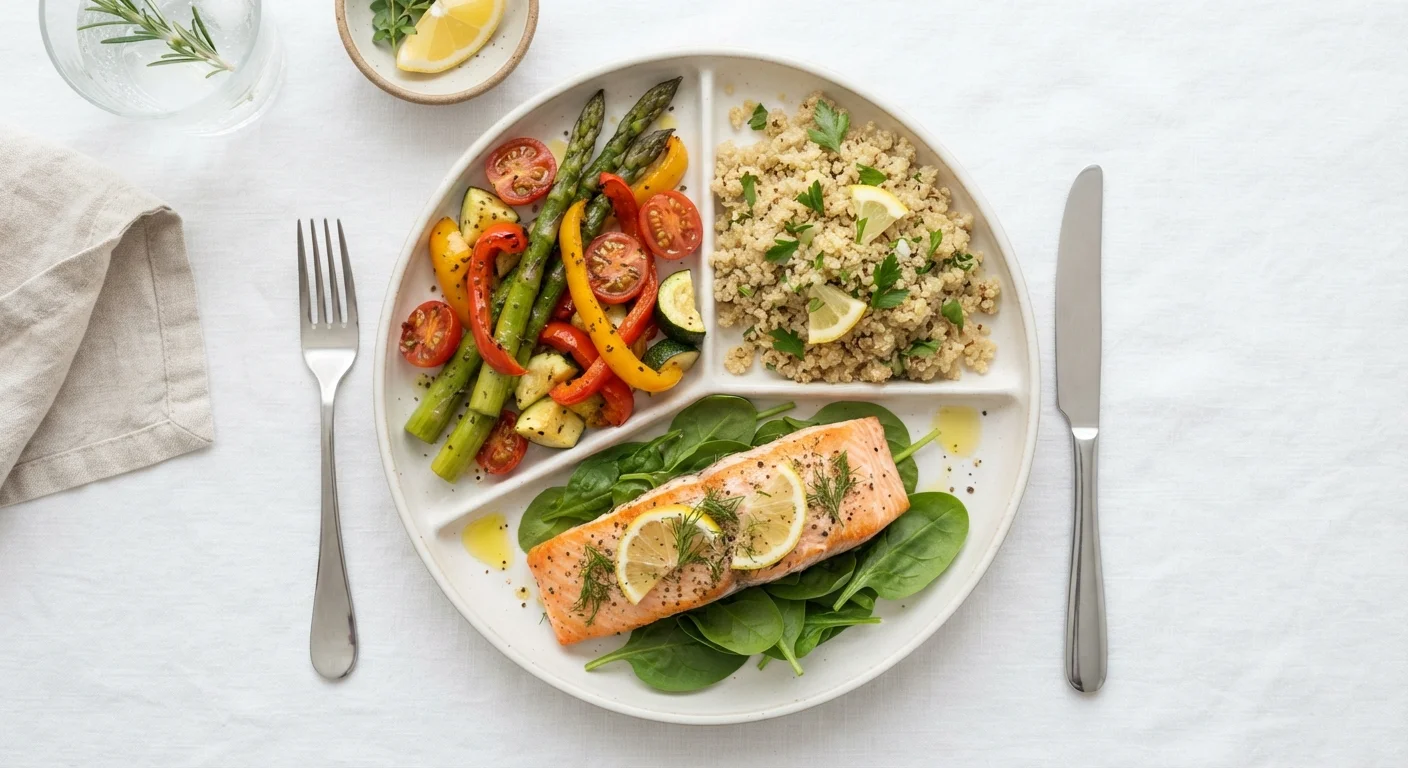
Key Takeaways
- Filling half your plate with vegetables and fruit is a widely recommended starting point for balanced eating.
- Whole grains and lean proteins should each occupy roughly one quarter of the plate.
- Visual guides like the USDA's MyPlate help simplify portion thinking without counting calories.
- Variety within each food group matters as much as overall proportion.
- Individual needs vary — consult a registered dietitian for personalized guidance.
Why Proportions Matter More Than Perfection
Most nutrition advice focuses on what to eat, but the how much of each thing question shapes everyday health outcomes just as meaningfully. Proportion — the relative share of your plate devoted to each food group — influences nutrient density, calorie balance, and dietary variety in a single visual decision.
The USDA's MyPlate framework, introduced in 2011, offers one of the most accessible tools for thinking about proportion. It replaced the older food pyramid with a simple divided plate graphic, making the guidance easier to apply at the dinner table. While no single model fits everyone, the underlying principle is durable: the more of your plate that nutrient-dense foods occupy, the less room remains for foods that offer fewer nutritional benefits.
Understanding proportions also pairs well with other nutrition skills. See our guide to reading nutrition labels for how to assess packaged foods alongside your plate-building habits.
“Healthy eating is not about strict dietary limitations or depriving yourself of the foods you love — it's about feeling great, having more energy, improving your health, and stabilizing your mood.”
— Walter Willett, Professor of Epidemiology and Nutrition, Harvard T.H. Chan School of Public Health
The Core Proportions: A Evidence-Based Starting Point
Public health guidance from organizations including the USDA, the Harvard T.H. Chan School of Public Health, and the World Health Organization converges on a broadly similar framework:
- Half the plate: vegetables and fruit. This group provides fiber, vitamins, minerals, and phytonutrients with relatively low calorie density. Aim for variety in color, as different pigments indicate different beneficial compounds.
- One quarter: whole grains. Whole grains — such as brown rice, oats, whole wheat, and quinoa — retain fiber and micronutrients that refined grains lose in processing. They support steadier blood glucose compared to their refined counterparts.
- One quarter: protein foods. This includes lean meats, poultry, fish, eggs, legumes, tofu, and nuts. Comparing protein sources across animal and plant foods can help you diversify this portion effectively.
A small amount of healthy unsaturated fat — from olive oil, avocado, or nuts — rounds out meals. Dairy or fortified alternatives can accompany meals as a calcium and vitamin D source.
9 in 10
Americans fall short of vegetable intake recommendations
According to the CDC's State Indicator Report on Fruits and Vegetables, the vast majority of U.S. adults do not meet federal dietary guidelines for vegetable consumption.
~50%
Of grain intake in the U.S. comes from refined grains
USDA dietary data consistently show that refined grains — white bread, white rice, processed snacks — make up roughly half of Americans' total grain consumption.
Practical Strategies for Building Balanced Meals
Applying proportion principles doesn't require a scale or a nutrition app. The following practices make the framework usable in real kitchens:
Use your plate as a visual template before serving food.
Mentally dividing the plate before filling it encourages intentional portioning rather than habit-driven heaping. It works across cuisines and meal formats, from stir-fries to grain bowls.
Prioritize variety within each food group, not just across groups.
Different vegetables, grains, and proteins supply different micronutrients. Rotating choices weekly reduces the risk of nutrient gaps and keeps meals engaging.
Anchor meals with vegetables first, then build around them.
Starting meal planning from the vegetable component — rather than the protein — naturally shifts proportions toward the evidence-based half-plate target.
Adjust portions to hunger and activity level, not plate size alone.
Plate size varies widely and can mislead visual estimates. Proportions matter more than absolute quantity, and individual energy needs differ based on age, activity, and health status.
Include a source of healthy fat without making it a dominant portion.
Unsaturated fats support nutrient absorption, particularly for fat-soluble vitamins found in vegetables. A modest addition — not a quarter of the plate — is the appropriate scale.
If you're exploring plant-forward eating, our introduction to plant-based eating covers how to maintain nutritional balance without animal products. Budget constraints needn't derail balanced eating either — eating well on a budget is achievable with the same proportional thinking.
Quick Wins You Can Apply at Your Next Meal
Shifting toward better-proportioned meals doesn't require an overhaul. Small, consistent adjustments compound over time.
Individual Needs Vary Significantly
The proportions described here reflect general public health guidance and are not a one-size-fits-all prescription. People with specific medical conditions, food allergies, pregnancy, or particular athletic demands may need different balances. Hydration is also part of the equation — see how what you eat affects fluid balance. Always work with a registered dietitian or physician for advice tailored to your circumstances.
This article provides general nutrition information and is not a substitute for personalized medical or dietary advice. Please consult a registered dietitian or qualified healthcare professional for guidance tailored to your individual health needs.