

Key Takeaways
- Coffee grounds are not a universal fertilizer and can harm soil if over-applied.
- Egg shells decompose too slowly to deliver meaningful calcium to garden plants.
- Watering in the morning is more effective than midday or evening irrigation.
- Adding gravel to container bottoms does not improve drainage and may worsen it.
- Organic matter, not pH tricks, is the most reliable way to improve most garden soils.
Why Garden Myths Are So Hard to Shake
Gardening advice travels fast — from grandparents to neighbors to social media feeds — and much of it sticks around simply because it sounds plausible. A tip that seems logical, or that worked once in one gardener's yard, can become accepted wisdom before anyone thinks to question it.
The good news is that plant science has given us better tools to evaluate these claims. Some long-held beliefs turn out to be solid. Others, despite their popularity, range from harmless but ineffective to actively counterproductive. Sorting through them helps you spend less time on rituals that don't work and more time on practices that genuinely support healthy plants.
The myth-and-fact pairs below address some of the most common pieces of gardening advice in US home gardens. For a deeper look at what actually supports plant health from the ground up, our guide to soil health is a useful companion read.
Myth
Coffee grounds make great all-purpose fertilizer and should be worked directly into your soil or spread around plants regularly.
Fact
Coffee grounds are mildly acidic and nitrogen-rich, but used in excess they can compact soil, inhibit water absorption, and harm plants that don't prefer acidic conditions.
Coffee grounds do contain nitrogen, which plants need, but they are not a balanced fertilizer. Applied in thick layers, they form a water-repelling crust and can suppress the beneficial microbial activity your soil depends on. They are most useful when added sparingly to a compost pile, where they break down alongside other organic materials and contribute to a balanced finished product. Using them directly around acid-loving plants like blueberries or azaleas in small quantities is unlikely to cause harm, but routine heavy application to general garden beds is not recommended.
Myth
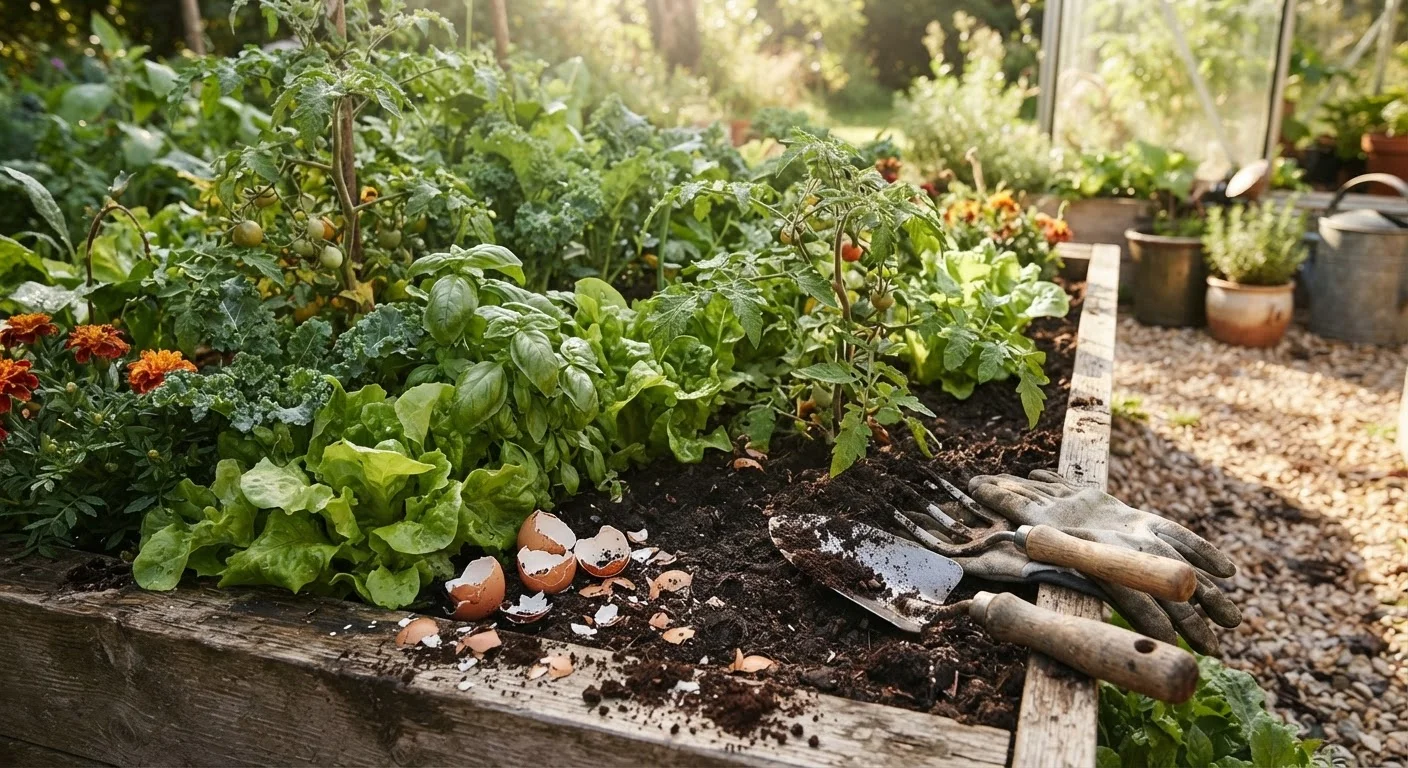
Crushed egg shells added to garden beds provide a quick calcium boost and help prevent problems like blossom end rot in tomatoes.
Fact
Egg shells decompose very slowly in outdoor conditions and are unlikely to release meaningful calcium within a growing season.
Blossom end rot in tomatoes and peppers is often linked to inconsistent watering rather than calcium deficiency in the soil. Even where soil calcium is genuinely low, egg shells take many months — sometimes years — to break down enough to become plant-available. If a soil test confirms low calcium, agricultural lime is a much faster and more reliable amendment. Egg shells are perfectly fine to add to your compost bin, where they'll eventually contribute, but don't expect them to solve nutrient problems in the short term.
Myth
Placing a layer of gravel at the bottom of a container improves drainage and prevents roots from sitting in water.
Fact
A gravel layer at the base of a pot can actually raise the water table within the container, keeping the soil above it wetter for longer.
This counterintuitive outcome is explained by a concept called the "perched water table." Water moving through soil doesn't drain freely into a coarser material below — it tends to saturate the fine-textured soil above the transition zone before flowing through. Adding gravel effectively shortens the column of soil and keeps the bottom portion wetter. The most reliable way to ensure good container drainage is to use a well-structured potting mix and make sure the container has adequate drainage holes. Our guide to container gardening covers this and other common pot-culture mistakes.
Myth
Watering plants during the middle of the day scorches leaves because water droplets act like a magnifying glass and burn foliage.
Fact
Leaf scorch from midday water droplets is not well supported by scientific evidence, but midday watering is still inefficient because of high evaporation rates.
Studies attempting to reproduce lens-burn from water droplets under realistic garden conditions have generally failed to show meaningful damage. That said, watering in the early morning remains the recommended approach — not because of burn risk, but because cooler temperatures reduce evaporation, water penetrates deeply before afternoon heat, and foliage has time to dry before nightfall, which reduces fungal disease pressure. Evening watering can work in dry climates but leaves foliage wet overnight, creating conditions that favor mildew and rot in more humid regions.
Myth
Adding sand to heavy clay soil loosens it up and improves drainage.
Fact
Mixing sand and clay without adding significant organic matter often creates a dense, concrete-like mixture that is harder to work than the original clay.
Clay particles are very fine, and without enough sand to completely dominate the mixture — typically more than 50% by volume — the sand fills the spaces between clay particles and creates a dense, compacted mass. The most effective way to improve clay soil is to add generous amounts of organic matter — compost, aged manure, or leaf mold — repeatedly over several seasons. This builds structure, improves aeration, and supports the earthworm and microbial activity that makes soil easier to work long-term. Our article on what changes in the soil provides useful context on soil amendments.
Putting Evidence-Based Gardening Into Practice
Correcting these myths isn't about being contrarian — it's about freeing up time, money, and effort for habits that genuinely help your garden thrive. Here are a few evidence-backed principles worth prioritizing instead:
- Test before you amend. A basic soil test (available through most cooperative extension offices) tells you what your soil actually needs rather than guessing. See our overview of what makes soil healthy for guidance on interpreting results.
- Water deeply and less often. Deep, infrequent watering encourages roots to grow downward, making plants more resilient during dry spells. Our article on watering your garden effectively walks through timing and technique in detail.
- Compost over quick fixes. Kitchen scraps and yard waste, properly composted, build organic matter in ways that no single ingredient shortcut can replicate. Composting at home is more straightforward than most beginners expect.
- Match technique to context. Many gardening rules are highly dependent on your specific soil type, climate, and plant species. What works reliably in one region may not translate elsewhere.
Don't Rely on Home Remedies for Serious Plant Problems
When plants show signs of nutrient deficiency, disease, or persistent poor growth, folk remedies like egg shells, banana peels, or Epsom salt may mask the real issue or delay effective treatment. A soil test and, where needed, advice from your local cooperative extension service are more reliable first steps than kitchen-cupboard fixes.
If you're growing in containers, be aware that pot-specific myths are especially common. Our look at container gardening realities covers what actually supports healthy plants in pots versus what's garden folklore.