
Automaker Mergers, Alliances, and Joint Ventures: How Industry Partnerships Shape New Models

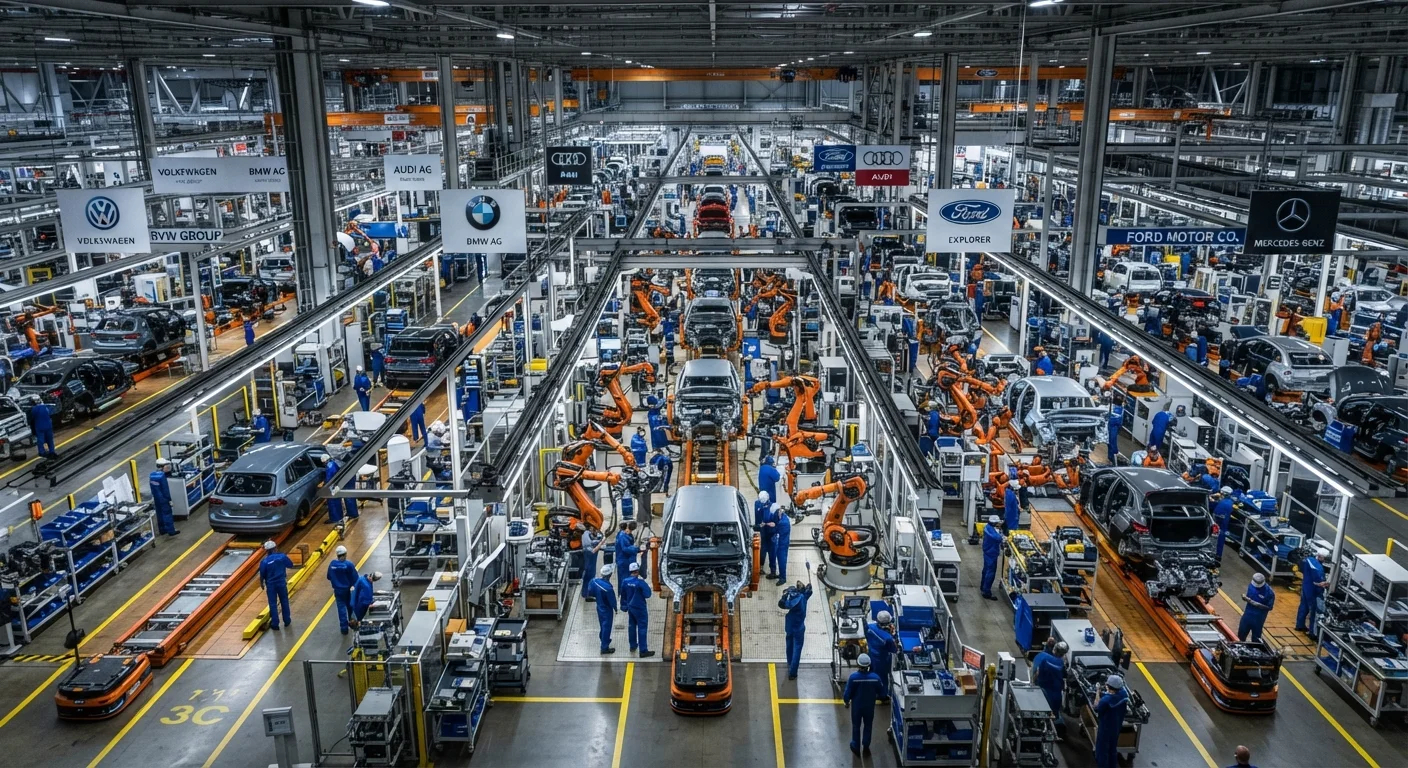
Key Takeaways
- Automaker alliances let competing companies share R&D costs for expensive technologies like EVs and autonomous driving.
- Joint ventures are commonly used to enter markets — especially China — where local manufacturing partnerships are required or advantageous.
- Platform sharing is one of the most tangible outcomes of alliances, with multiple brands building distinct models on identical underpinnings.
- Mergers create a single corporate entity, while alliances and joint ventures preserve each automaker's individual brand identity.
- Partnership decisions directly influence which new models get funded, designed, and eventually sold to consumers.
Automaker Alliances & Joint Ventures
An automaker alliance is a formal partnership between two or more car companies to share resources, technology, or manufacturing capabilities — without one company fully absorbing the other. Joint ventures are a specific type of arrangement where two companies create a separate, shared entity to develop or produce a product together. These structures allow automakers to split enormous development costs, enter new markets, and bring vehicles to market faster than either company could alone.
Alliances differ from mergers in that each partner retains its independent legal and brand identity; a merger results in a single consolidated entity, often with one name surviving.
Why Automakers Partner in the First Place
Developing a new vehicle from the ground up is extraordinarily expensive. Engineering a modern platform, powertrain, and safety systems can cost billions of dollars before a single car reaches a showroom. For that reason, even the world's largest automakers frequently look to partners to spread those costs — and the risk — across multiple companies and brands.
The pressure has intensified in recent years as the industry pivots toward electric vehicles, advanced driver-assistance systems, and connected-car technology. Each of these areas demands massive investment. Forming an alliance or joint venture allows automakers to access expertise and capital they may not have independently, while preserving their competitive position in the market.
Understanding how platform sharing works is essential context here — shared architecture is frequently the most concrete product of an alliance.
~$1B+
Typical cost to develop a new vehicle platform
Industry analysts broadly estimate that developing a modern full vehicle platform independently can run into the billions, making cost-sharing through alliances financially compelling for automakers of all sizes.
3
Brands in Renault-Nissan-Mitsubishi Alliance
The Renault-Nissan-Mitsubishi Alliance is one of the largest automotive partnerships in the world, coordinating vehicle development, purchasing, and EV strategy across three major brands.
14+
Vehicle brands under Stellantis umbrella
Following the 2021 merger of PSA Group and Fiat Chrysler Automobiles, Stellantis oversees more than a dozen automotive brands, illustrating the consolidation power of a full corporate merger.
Types of Partnerships: Mergers, Alliances, and Joint Ventures Explained
These three terms are often used interchangeably in automotive news, but they describe meaningfully different arrangements.
- Mergers: Two or more companies combine into a single legal and operational entity. Stellantis, formed through the merger of PSA Group and Fiat Chrysler Automobiles, is a prominent recent example. Under one corporate umbrella, it now oversees brands including Jeep, Ram, Peugeot, Citroën, and Fiat.
- Alliances: A partnership where each automaker remains an independent company but collaborates formally on technology, manufacturing, or purchasing. The Renault-Nissan-Mitsubishi Alliance is among the largest in the world by vehicle volume, yet each brand maintains its own identity and management.
- Joint Ventures: Two companies create a separate, co-owned entity to pursue a specific goal — often manufacturing in a particular region. These are especially common in China, where market conditions have long encouraged foreign automakers to partner with domestic firms.
Each structure carries different levels of commitment, risk, and reward. A joint venture might be limited in scope to one country or one product line, while a merger represents a permanent and sweeping integration of two businesses.
Alliances Can Shift Over Time
Partnership agreements are not permanent fixtures. Strategic priorities change, financial pressures evolve, and what made sense for two companies a decade ago may no longer align with where each is headed. The proposed merger between Fiat Chrysler and Renault, for example, was abandoned before it could be finalized. Readers following automotive news should treat announced partnerships as significant but not guaranteed until formal agreements are signed and implemented.
Real-World Examples and Their Impact on New Models
The effects of these partnerships show up directly in the vehicles consumers drive. When BMW and Toyota formalized a technology-sharing agreement, one tangible result was collaborative work on hydrogen fuel cell technology and shared research into lightweight materials — efforts that influence engineering decisions across both companies' model ranges.
Within the Renault-Nissan-Mitsubishi Alliance, shared EV platforms have allowed multiple brands to offer electric models at a scale none of them could have achieved as quickly alone. The expanding powertrain landscape across EV, hybrid, and plug-in hybrid options owes a significant debt to this kind of cooperative development.
Alliance decisions also influence which models get funded at all. When a partnership allocates capital toward a shared electric SUV platform, individual brands within that partnership must align their product plans accordingly. This shapes redesign cycles and the timing of new model introductions. Auto show reveals — often the public face of these decisions — reflect years of partnership negotiations happening behind closed doors. See how the auto show calendar connects to new car announcements for more context.
“Scale matters enormously in this industry. The capital required for electrification, software, and autonomous technology means that no single automaker — regardless of size — can afford to go it entirely alone.”
— Carlos Tavares, Former CEO of Stellantis, speaking on automotive industry consolidation
From Partnership Agreement to Showroom Floor
Partnership decisions made in boardrooms can take five to eight years to materialize as production vehicles. Once two companies agree to co-develop a platform, engineering teams must align on specifications, suppliers, manufacturing processes, and regulatory compliance across potentially multiple markets.
Regulatory requirements — from US safety standards to emissions rules — must be addressed for each market where a jointly developed vehicle will be sold. The journey from announcement to dealership is already complex for a single automaker; coordinating that process across two corporate structures adds substantial complexity.
For consumers, the most visible result is often a vehicle that carries one brand's badge but shares its engineering DNA with a model from a partner brand. This is increasingly common across the global auto industry, and understanding the corporate architecture behind a given model can explain similarities in driving dynamics, interior design, or available technology between ostensibly competing vehicles.
How to Research a Vehicle's Alliance Origins
If you're curious about the shared engineering behind a specific model, look up the vehicle's platform designation — often listed in automotive press coverage or manufacturer technical documentation. Knowing a car's platform can reveal which partner brands share its architecture, helping you understand similarities in performance, features, and long-term parts availability.