

Key Takeaways
- A public reveal is typically one of the earliest steps — not the final one — in a new model's launch.
- Federal safety and emissions certification can add months to a vehicle's development timeline.
- Production tooling, supplier contracts, and plant retooling often begin years before a car goes on sale.
- Logistics, dealer allocation, and pre-delivery inspections all happen before a car is available to buyers.
- Unexpected delays at any stage — supply chain disruptions, regulatory holds — can push back a launch date.
What you will need
Why the Gap Between Announcement and Availability Exists
Auto enthusiasts and general consumers alike often encounter a puzzling pattern: a car is announced with fanfare, generates significant press coverage — and then seems to disappear for a year or more before appearing in any showroom. This gap is not accidental or evasive. It reflects the genuine complexity of bringing a modern vehicle to market in the United States.
Regulatory requirements, manufacturing logistics, and global supply chains each impose their own timelines. Understanding these phases helps readers interpret auto news more critically and set realistic expectations when a new model catches their interest. Our guide to following new car news covers how to evaluate announcements at every stage.
Reveal Dates Are Not Sale Dates
Automakers frequently announce or reveal vehicles six to eighteen months before those vehicles reach dealerships. Some concepts previewed at auto shows never enter production at all. Treat an announcement as a signal of intent, not a purchase opportunity. See our guide to interpreting car reveals for a closer look at what a concept car actually tells us.
Track Development Milestones, Not Just Headlines
Rather than reacting to every teaser image or announcement, follow a model through its certification filings, production start confirmations, and first-drive press reports. Those markers are far more reliable indicators that a car is actually approaching dealerships. Our guide to reading auto news critically walks through exactly what to watch for.
The Step-by-Step Path to the Showroom Floor
The journey from announcement to availability follows a broadly consistent sequence across virtually all automakers selling vehicles in the US market. Each phase below represents a mandatory or near-mandatory milestone. Delays at any single stage cascade forward.
What you will need
Automaker press release archive
Tracks official milestone announcements such as production start dates, pricing reveals, and on-sale confirmations.
NHTSA safety ratings database
Confirms whether a model has completed federally required crash-test certification before reaching dealerships.
EPA fuel economy guide
Shows whether a model has received official EPA fuel economy or EV range ratings — a prerequisite for US sale.
Dealer inventory search tools
Used to verify real-world availability at franchise dealerships once a model's on-sale date is announced.
The Internal Development Phase Begins
Long before any public reveal, automakers spend years in internal development. This phase encompasses market research, platform decisions, powertrain engineering, and design iteration. A typical full vehicle program runs four to six years from initial approval to production. Much of this work — supplier sourcing, tooling investment, software architecture — happens entirely out of public view.
The Public Reveal or Concept Preview
An automaker stages a formal reveal — at an auto show, a dedicated event, or via a digital livestream — to generate press coverage and gauge public response. This is the moment most readers first learn a vehicle exists. However, at this point the car is often still months or years from production readiness. Design details, trim levels, and final pricing are frequently incomplete or subject to change.
Federal Safety Certification (NHTSA)
Before any new vehicle can legally be sold in the United States, it must meet federal safety standards administered by the NHTSA. This involves crash testing, occupant protection evaluation, and compliance with Federal Motor Vehicle Safety Standards (FMVSS). Automakers often voluntarily pursue additional NHTSA New Car Assessment Program (NCAP) star ratings to support marketing. This process requires physical test vehicles and can take several months.
EPA Emissions and Fuel Economy Rating
Simultaneously, the vehicle must receive official fuel economy ratings from the EPA, or, for electric vehicles, an official range rating. These figures must appear on the Monroney label (the window sticker required by federal law on every new car). For EVs, this step is particularly consequential — EPA-rated range frequently differs from automaker claims, and finalizing it can influence positioning and pricing decisions. See our article on EV range and manufacturer responses for context on why rated range matters to buyers.
Production Line Preparation and Manufacturing Start
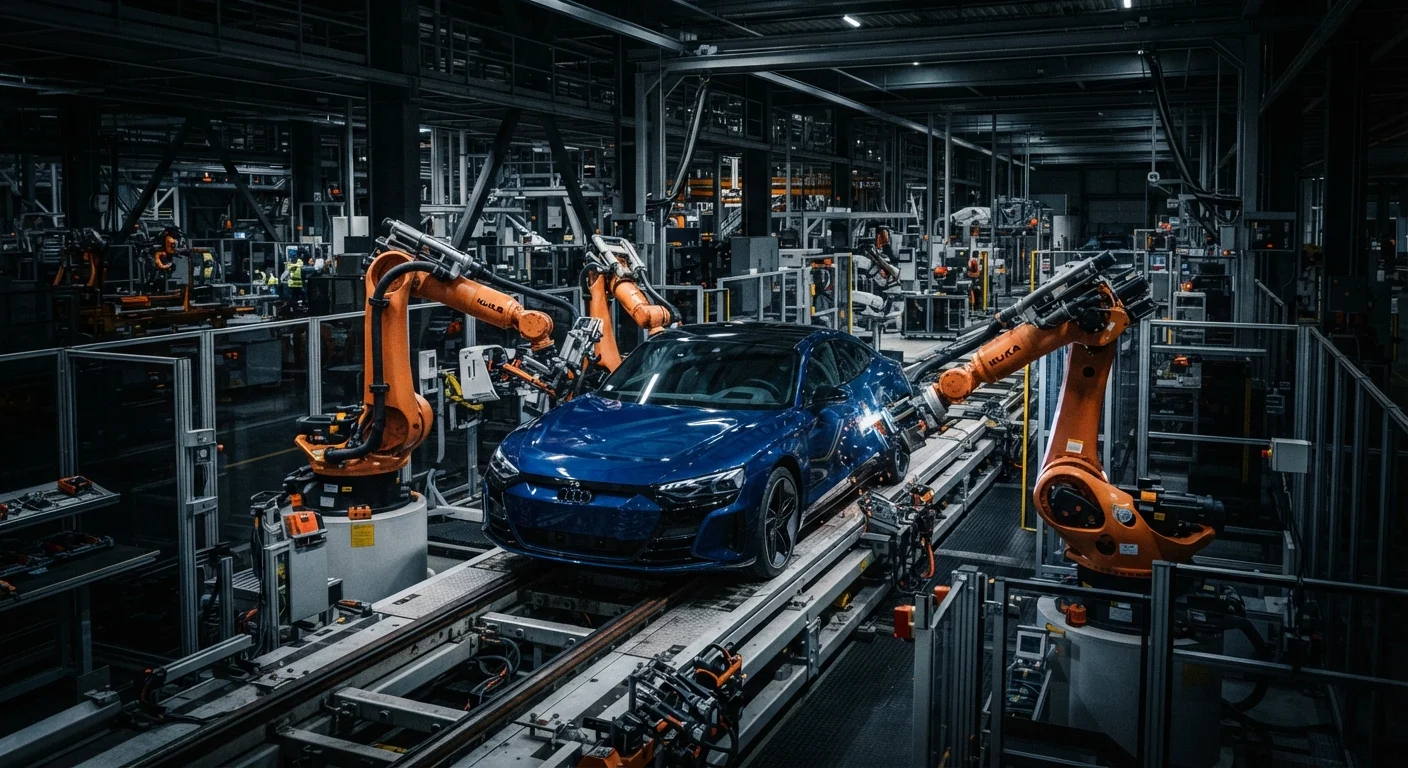
With regulatory approvals in hand, the factory transitions to full production. This involves final tooling installation, assembly line worker training, quality control calibration, and supplier delivery scheduling. Automakers typically announce a formal Job 1 date — the first production unit to roll off the line — which signals that retail deliveries are imminent. Plant retooling for an all-new model can temporarily idle a facility, affecting existing production schedules.
Dealer Allocation, Shipping, and Pre-Delivery Inspection
Finished vehicles are allocated to dealerships by region based on historical sales data, order banks, and market demand projections. Cars are transported by rail and truck to regional distribution points, then to individual franchise dealers. Before any unit is sold, the dealer's service team conducts a Pre-Delivery Inspection (PDI) — checking fluids, tire pressure, software updates, and documentation. Only after PDI is a vehicle considered retail-ready.
For context on how vehicle segments affect allocation patterns, see our segment reference guide.
Supply Chain Disruptions Can Delay Any Stage
Even after a vehicle completes certification and production begins, external factors — semiconductor shortages, shipping bottlenecks, natural disasters affecting suppliers — can delay delivery to dealers. Build launch-date estimates with flexibility, and verify timelines directly with automakers or franchise dealers closer to the expected on-sale date.