

Key Takeaways
- Major auto shows give automakers a predictable, global stage for new vehicle announcements.
- Show timing is strategically chosen to align with product development cycles and regional market priorities.
- Digital reveals and online events have grown alongside — and sometimes replaced — traditional auto show debuts.
- Not every show carries equal weight; Detroit, Geneva, Los Angeles, and Tokyo historically attract the biggest reveals.
- Understanding the show calendar helps readers critically evaluate which announcements signal real upcoming products.
Auto Show Calendar
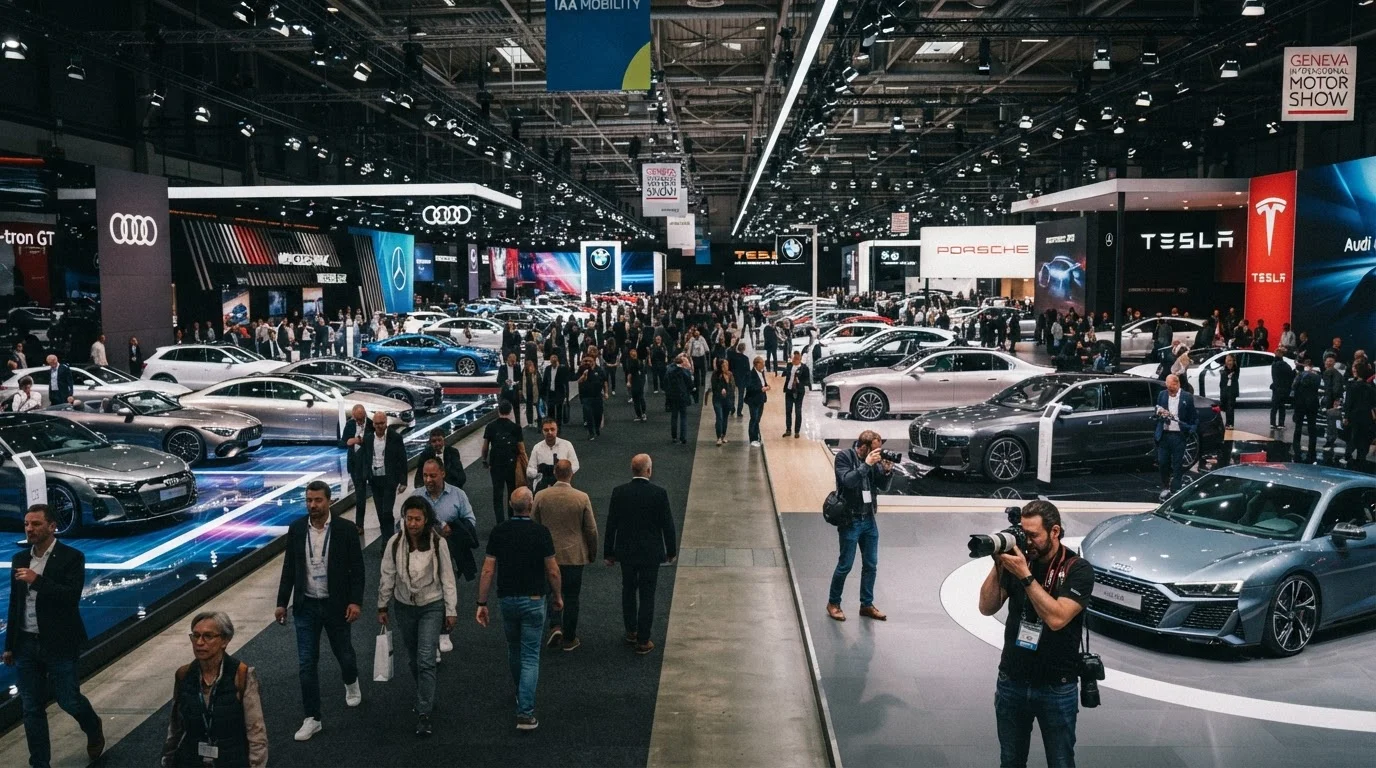
The auto show calendar is the annual schedule of major international motor shows — events held in cities like Detroit, Geneva, Tokyo, and Los Angeles — where automakers formally unveil new vehicles, concept cars, and technology. These events function as coordinated industry stages, giving manufacturers a predictable, high-visibility moment to reveal products to press, dealers, and the public simultaneously. The timing of reveals is deliberately planned months or years in advance to maximize media coverage and market impact.
Automakers differentiate between 'world premiere' reveals at major shows and regional debuts at smaller events — the distinction signals how significant a model is to global strategy versus a specific regional market.
Why the Show Calendar Exists
The global auto show calendar didn't emerge by accident. It evolved over more than a century as manufacturers needed predictable, neutral venues where they could reach press, dealers, and consumers simultaneously — without each competitor needing to organize its own event. Shows became the industry's shared infrastructure for communication.
For automakers, the calendar provides a reliable drumbeat of public moments. Product development teams plan vehicle introductions years in advance, and a scheduled show gives engineering, design, and marketing teams a firm deadline to align against. The show date effectively becomes a launch anchor — everything from regulatory approval timelines to dealer training programs flows backward from it.
For journalists and consumers, the show circuit creates a coherent news rhythm. Rather than monitoring hundreds of individual manufacturer press conferences throughout the year, auto media knows that a cluster of significant announcements will arrive around certain shows each season. This concentration of news is by design.
Show Participation Changes Over Time
Auto show lineups are not fixed. Manufacturer participation at any given show changes from year to year based on product cycles, budget decisions, and strategic priorities. A show that attracted dozens of world premieres a decade ago may draw fewer today, and vice versa. Always check current event announcements rather than relying on historical patterns when anticipating what will be revealed at a specific show.
The Major Shows and What They Signal
Not all auto shows carry equal weight. A handful of events have historically served as the primary stage for world premieres — the first global public unveilings of new models.
- Detroit (NAIAS): Long considered the most prestigious show for North American market reveals, Detroit has historically attracted full-size truck and SUV debuts, reflecting the US market's outsized appetite for those segments.
- Geneva: Neutral ground in the heart of Europe, Geneva attracted European and global luxury and sports car reveals, partly because Switzerland sits outside the EU and provided an impartial stage. The show has faced participation challenges in recent years.
- Tokyo: Heavily weighted toward Japanese domestic market previews and forward-looking concept cars. Tokyo reveals have often hinted at technology directions before those ideas reached global production.
- Los Angeles: Held in the fall, the LA Auto Show has grown in significance for electric vehicle reveals, reflecting California's role as the US EV policy and adoption leader.
Understanding which show a manufacturer chooses for a debut tells you something about the intended audience. Reading auto news critically means paying attention not just to what was announced, but where.
100+
Years of organized auto show history in the US
The Detroit Auto Show traces its roots to 1907, making it one of the longest-running automotive exhibition events in the world.
~800,000
Annual public attendees at peak LA Auto Show years
The Los Angeles Auto Show has reported attendance figures in that range during strong years, reflecting its status as a major public-facing event alongside its press days.
Months to years
Lead time for auto show reveal planning
Industry sources indicate that major vehicle reveal programs at flagship auto shows are typically locked into planning cycles 12 to 36 months before the show date.
How the Calendar Shapes What Gets Announced
The show calendar interacts directly with automaker product cycles. Decisions about when to redesign a vehicle are made years in advance, and show dates often serve as the target reveal moment. A full redesign may be timed to debut at a flagship show, while a mid-cycle refresh might be reserved for a smaller regional event.
Competitive positioning also drives timing. If a manufacturer knows a rival plans to unveil a competing model at a particular show, it may accelerate or delay its own reveal to avoid being overshadowed — or to directly counter the announcement. The show floor is, in this sense, a strategic arena.
Concept car reveals at major shows serve a different purpose than production announcements. They generate brand attention and test audience reaction to design language without committing to a production timeline. Distinguishing between the two is essential context for any auto news reader.
How to Follow Auto Show News Effectively
Auto show press days typically precede public opening days by 48 to 72 hours — most significant reveals happen during those media sessions, not on the public floor. Following credible automotive press outlets during press day windows gives you access to announcements, full specs, and photography before the broader news cycle catches up. Note whether a reveal is described as a 'world premiere' (first global unveiling) or a 'North American premiere' (shown elsewhere first) — the distinction matters for understanding how new the announcement actually is.
The Rise of Digital and Standalone Reveals
The traditional show model has shifted meaningfully. Beginning in the early 2020s, several major manufacturers reduced or eliminated their participation at established shows, opting instead for independently produced digital reveals or proprietary brand events. These standalone presentations offer more control over messaging, staging, and timing — but sacrifice the concentrated media and industry audience a major show guarantees.
Some automakers now use a hybrid approach: streaming a global reveal online while simultaneously presenting the vehicle at a show venue. This captures both broad digital reach and the physical presence that press and dealers value.
The shift also reflects changing media dynamics. A digital reveal can generate immediate global coverage without the logistics and cost of a full show stand. For readers following auto news, this means significant announcements can arrive at any time of year — not only during traditional show windows.
Once a vehicle is revealed, a separate and often lengthy process begins. The path from announcement to dealership involves regulatory approvals, manufacturing ramp-up, and distribution logistics that can take a year or more.
This article is for informational and general educational purposes only. Show schedules, manufacturer participation, and industry practices change regularly; readers should verify current event details through official sources.