

Key Takeaways
- Concept cars are design and technology previews, not confirmed production vehicles.
- Only a fraction of concept features typically survive the path to a showroom model.
- Automakers use concepts to test public reaction before committing to full development.
- Proportions and overall silhouette tend to carry over more reliably than interior or tech details.
- Context matters: a 'production-intent' reveal signals a much firmer commitment than a pure concept.
- Reading a reveal critically helps set realistic expectations about what a future car will actually be.
Concept Car
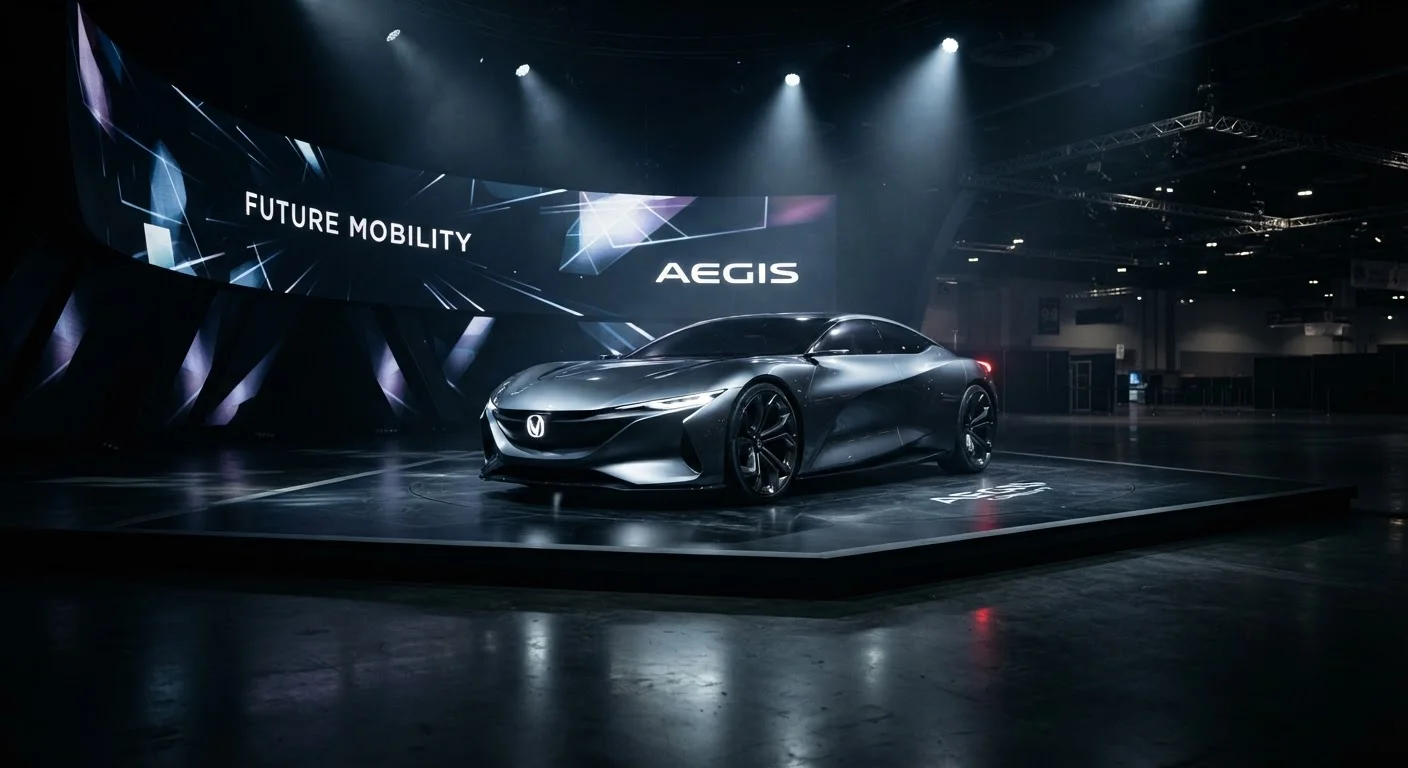
A concept car is a vehicle built by an automaker to showcase design ideas, new technology, or a possible future direction — without any guarantee it will be sold to the public. Concept cars are typically displayed at auto shows or press events to gauge public and industry reaction. They often push boundaries in styling or engineering that production realities would normally prevent.
In industry parlance, concepts differ from 'production-intent' or 'near-production' show cars, which are closer to a confirmed model and carry fewer stylistic liberties.
Why Automakers Stage Big Reveals
Every major auto show season brings a new wave of dramatic unveilings: spotlights, curtain drops, and sweeping claims about the vehicles of tomorrow. Understanding why automakers invest in these events is the first step to reading them clearly.
Concepts serve as carefully managed communications tools. A single show car can generate months of earned media coverage, signal a brand's design trajectory to investors, and test consumer appetite for a new segment or technology — all without the full cost and risk of a committed production program. For context on how the global show circuit shapes announcement timing, see how industry events shape new car announcements.
Knowing an automaker has a strategic reason to generate buzz — separate from any obligation to build the car shown — is the foundation for critical interpretation.
The Spectrum from Pure Concept to Production-Intent
Not all show cars are equal. The automotive industry uses an informal but meaningful spectrum to describe how close a revealed vehicle is to actual production.
- Pure concept: A design exercise with few or no production constraints. May be non-drivable, use hand-formed panels, and feature technology that doesn't exist at scale. Treat as inspiration, not preview.
- Near-production concept: Uses confirmed platform architecture and plausible technology, with styling that's intentionally dramatic but directionally accurate. Many details will change, but overall form often persists.
- Production-intent reveal: A formal announcement of a vehicle the automaker has committed to building. Styling is largely final; specs may still be estimates. This is the most reliable category.
Automakers rarely label their reveals this explicitly. Readers need to infer the category from context — how close is a projected on-sale date? Are powertrain details confirmed? Is the car described as a "concept" or a "preview"?
What Typically Survives — and What Doesn't
Even when a concept does lead to a production model, the transformation is rarely straightforward. Design elements filter through the hard constraints of crash safety regulations, manufacturing tolerances, cost targets, and supplier capabilities.
What tends to carry over: Overall silhouette and proportions, signature lighting elements (distinctive headlight or taillight shapes), grille design language, and platform underpinnings when the concept previews a specific model family.
What typically doesn't survive: Flush door handles that violate safety egress requirements, ultra-thin seats that can't pass side-impact tests, exotic or hand-finished materials that can't be produced at volume, and futuristic interior displays that rely on technology not yet at production cost.
For a fuller picture of how a car evolves after its reveal, the journey from announcement to dealership covers the regulatory and engineering steps between a reveal and retail availability.
Reading a Reveal Like an Industry Insider
A few practical filters help separate signal from spectacle when a new concept appears.
- Check the language: "Vision," "concept," and "study" signal design exploration. "Reveal," "debut," and a specific model name suggest a production commitment. Words matter in press releases.
- Look for a timeline: An on-sale date — even approximate — is one of the strongest indicators a vehicle will actually be built. Vague language about "the future of mobility" is not.
- Assess the platform: If the automaker confirms the concept shares architecture with an existing or announced production vehicle, many features are more likely to carry through.
- Follow the money: Concepts tied to announced investment plans, new manufacturing commitments, or regulatory compliance strategies (such as fleet electrification targets) carry more weight than standalone design statements.
For broader guidance on evaluating automotive announcements critically, what to look for when following new car news is a useful companion read.
Concepts as Windows into Brand Strategy
Even a concept that never reaches production isn't without value as information. The design language automakers choose to showcase reflects where their studios are heading — and often previews elements that will appear across multiple future production models rather than a single car.
Concepts also reveal competitive positioning. An automaker showing a battery-electric concept signals intent to investors and regulators, regardless of whether that specific vehicle is built. Similarly, a luxury brand debuting an autonomous-capable concept is communicating to the market about its long-term ambitions, even if the technology timeline is uncertain. Range anxiety and EV adoption concerns are often precisely the kind of real-world constraints that shape how ambitious EV concepts get translated — or scaled back — in production.
Understanding concepts as strategic communications, not just car previews, makes reveals far more informative — and far less likely to disappoint when the eventual production model looks more conventional than the show car that preceded it.