

Key Takeaways
- Standard low-beam headlights illuminate roughly 160–200 feet of road, less than most drivers expect.
- Overdriving your headlights means traveling fast enough that stopping distance exceeds your visible range.
- Reducing speed at night is one of the most effective ways to stay within safe visibility margins.
- Dirty or misaimed headlights can dramatically reduce effective nighttime illumination.
- High beams should be used on unlit roads whenever oncoming traffic and weather allow.
What 'Overdriving Your Headlights' Actually Means
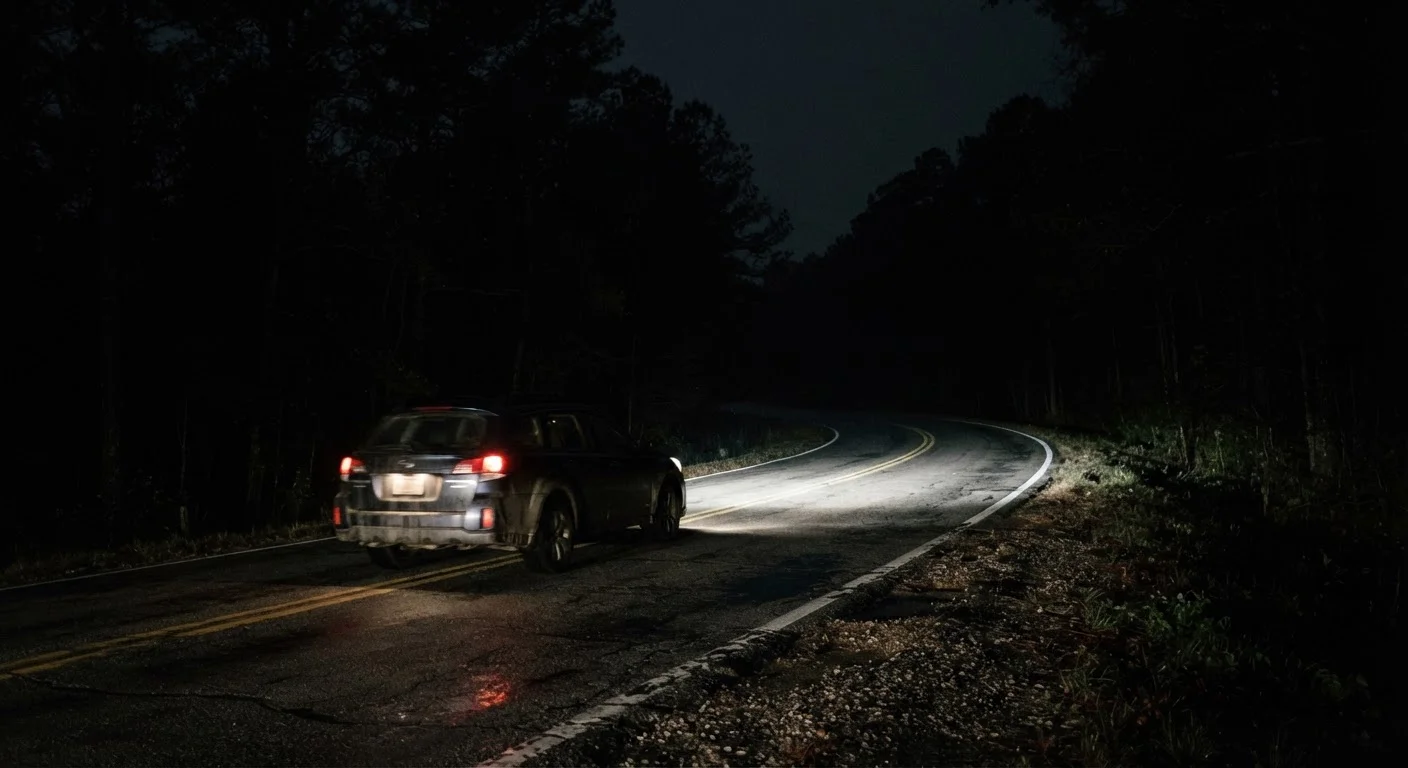
Most drivers don't think carefully about what their headlights can and can't do. On a typical US road at night, standard low-beam headlights illuminate somewhere between 160 and 200 feet ahead. High beams extend that to roughly 350–500 feet. Those figures sound adequate — until you factor in stopping distances.
At 60 mph, a vehicle travels about 88 feet per second. Add a typical driver reaction time of 1.5 seconds, plus braking distance on dry pavement, and your total stopping distance can easily approach or exceed 200 feet. That's the edge of your low-beam range. Travel at 65 or 70 mph, and you've crossed it — you're moving faster than your headlights allow you to safely react.
This is what safety professionals call overdriving your headlights: traveling at a speed where, if an obstacle appeared at the outer edge of your illuminated range, you would not have enough distance to stop before reaching it. It's a situation millions of US drivers unknowingly put themselves in every night.
Understanding how stopping distances scale with speed is essential context for night driving — the physics don't change after dark, but your visibility window narrows sharply.
~90%
Of fatal crashes occurring in darkness or low light
According to the National Safety Council, nighttime driving accounts for a disproportionate share of traffic fatalities relative to vehicle miles traveled after dark.
160–200 ft
Typical low-beam headlight range
Standard low-beam headlights on most US passenger vehicles illuminate approximately 160 to 200 feet of road ahead under normal conditions.
Best Practices for Safe Night Driving Visibility
Staying safe at night requires deliberate adjustments to speed, following distance, and vehicle condition. The practices below address the most common gaps between what drivers assume and what nighttime conditions actually demand.
Reduce your speed at night relative to posted limits when visibility is limited.
Posted speed limits reflect daytime conditions and adequate visibility. At night on unlit roads, those limits can place you well into overdrive territory for your headlights. Slowing down is the most direct way to bring stopping distance back within your visible range.
Use high beams on unlit roads whenever oncoming traffic is absent.
High beams can nearly double your illuminated range, giving you significantly more time to identify hazards and brake. Most drivers underuse them out of habit or unfamiliarity, reducing their nighttime safety margins unnecessarily.
Increase your following distance substantially after dark.
Tailgating is risky in daylight; at night it becomes far more dangerous because your view of the road beyond the lead vehicle is blocked and reaction time is effectively compressed. A larger gap gives you independent visibility and braking room.
Keep windshield glass and headlight lenses clean before night drives.
A film of road grime, dust, or oil on the inside or outside of the windshield scatters incoming light — particularly oncoming headlights — creating glare that temporarily blinds the driver. Dirty external lenses reduce output. Both are easy to address and routinely overlooked.
Look toward the right edge of the road when oncoming headlights are bright.
Staring directly at oncoming headlights causes temporary glare-induced vision loss that can last several seconds after the vehicle passes. Shifting gaze to the right edge line maintains lane position and reduces that effect.
Headlight Condition and Aim Matter More Than Most Drivers Know
Even a perfectly driven vehicle creates serious risk if its headlights are degraded. Clouded or yellowed polycarbonate headlight lenses — common on vehicles more than five or six years old — can reduce light output significantly. A lens that looks merely dull from the outside may be cutting your effective illumination by a third or more.
Restore Cloudy Headlight Lenses
If your headlight covers have turned yellow or hazy, lens restoration kits are widely available and can improve light output noticeably. For severely degraded lenses, replacement may be more effective. Either way, a qualified mechanic can assess which option makes sense for your vehicle's age and condition.
Headlight aim is equally important. Lenses that are aimed too low shorten your illuminated field. Lenses aimed too high can blind oncoming drivers before they provide useful road coverage. Aim can drift over time due to minor impacts, suspension wear, or vehicle loading. A qualified mechanic can verify and adjust headlight aim as part of routine service.
Before long nighttime trips, include headlights in your pre-departure check. A quick walkthrough is outlined in our pre-trip vehicle safety checklist. Clean lenses and properly aimed beams cost nothing to verify and can measurably extend your safe reaction window.
Quick Wins You Can Apply Tonight
Most night-driving improvements don't require new equipment or professional service — they start with decisions you make before and during your drive. The following actions can have an immediate effect on your safety margins.
Driver fatigue compounds every visibility problem. Reduced reaction times mean that even adequate headlight range may not be enough if alertness is compromised. If you're planning a long night drive, review what research says about managing fatigue on long-distance drives before you leave.
Night driving conditions overlap with other hazardous scenarios, including fog, rain, and ice — each of which further reduces effective visibility. See how these conditions interact in our guide to adapting your driving to fog, ice, and heavy rain.
This article is for general informational purposes. Always follow applicable traffic laws and use your own judgment based on actual road and weather conditions.