

Key Takeaways
- Tyre pressure fluctuates with temperature — check it monthly and after significant weather changes.
- Tread depth below 2/32 of an inch is legally insufficient; replacing tyres at 4/32 provides a meaningful safety margin.
- Rotating tyres every 5,000–7,500 miles promotes even wear and extends overall tyre life.
- Switching to winter or all-season tyres before cold weather arrives significantly improves stopping distance.
- Visual inspections for cracks, bulges, and embedded objects should be part of every driver's routine.
Why Seasonal Tyre Care Matters
Tyres are the only point of contact between your vehicle and the road. Their condition directly affects braking, cornering, fuel economy, and the risk of a blowout — yet tyre maintenance is one of the most commonly neglected areas of car ownership. Seasons bring dramatic shifts in temperature, road surface, and precipitation, all of which place different demands on your rubber. A tyre that performed flawlessly through summer may be dangerously compromised on an icy January morning.
Understanding what your tyres need — and when — takes the guesswork out of upkeep. For a deeper look at the specific numbers involved, see tyre pressure and tread depth benchmarks that every driver should know.
Check tyre pressure at least once a month and before any long drive.
Pressure changes with ambient temperature, and both under- and over-inflation reduce traction, accelerate wear, and hurt fuel economy. A consistent monthly habit catches drift before it becomes a problem.
Always inflate to the vehicle manufacturer's recommended PSI, not the maximum printed on the tyre sidewall.
The sidewall figure is the tyre's maximum capacity, not the optimal operating pressure. The correct spec — found on the driver's door jamb sticker or owner's manual — is calibrated for your specific vehicle's weight and handling characteristics.
Rotate tyres every 5,000–7,500 miles to promote even tread wear.
Front and rear tyres wear differently depending on drivetrain layout and braking dynamics. Rotation redistributes this stress, allowing all four tyres to wear at a similar rate and extending the usable life of the full set.
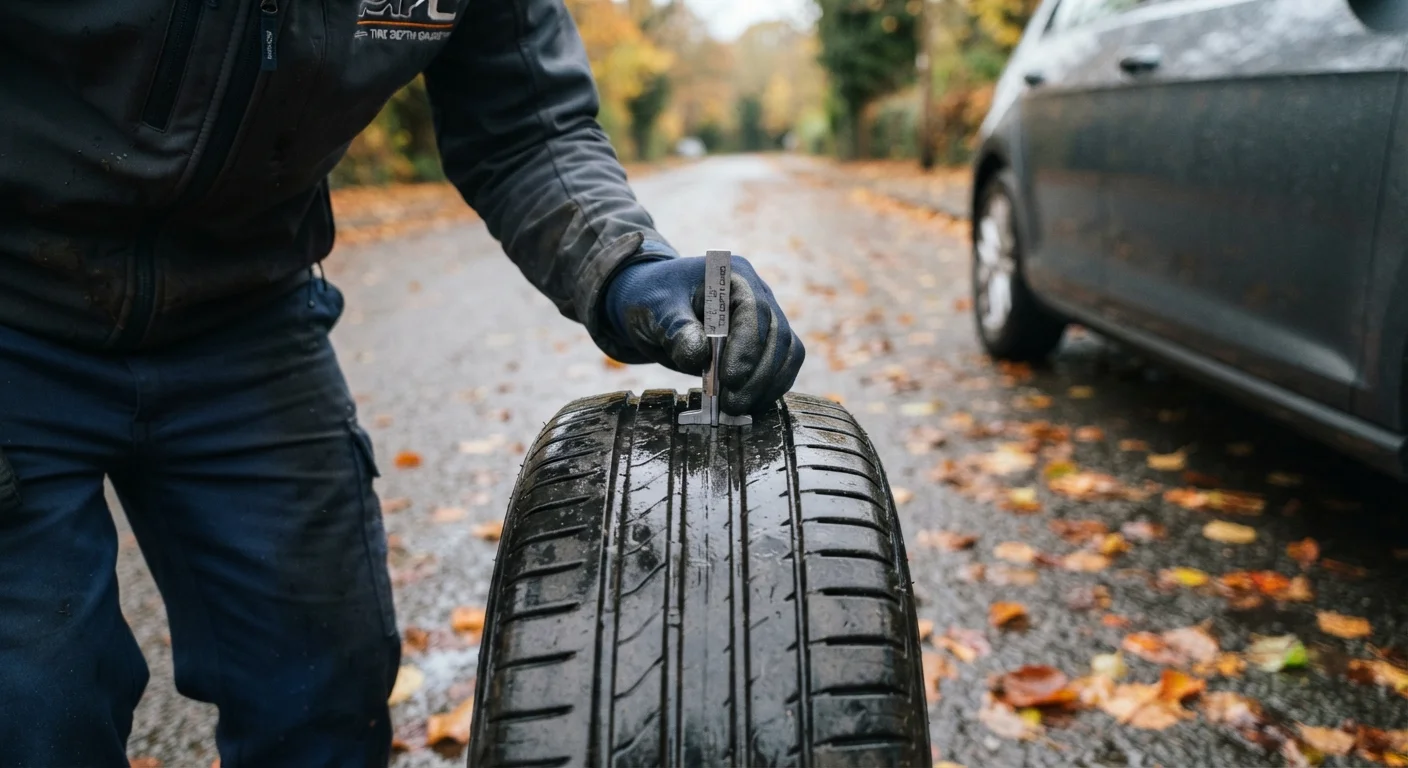
Inspect tread depth monthly using the penny test or a dedicated tread-depth gauge.
Tread channels evacuate water between the tyre and road; as they wear down, wet-weather stopping distances increase significantly. Catching wear early gives you time to plan a replacement rather than facing an urgent safety situation.
Switch to winter tyres — or verify all-season tyres are adequate — before temperatures consistently drop below 45°F.
Summer and standard all-season rubber compounds harden in cold temperatures, reducing grip. Winter tyres use specialized compounds and tread patterns designed to remain flexible and channel slush effectively.
Conduct a visual inspection of tyre sidewalls and surfaces every time you fuel up.
Sidewall bulges indicate internal structural damage; embedded nails or screws, if caught early, can often be professionally plugged before a full flat develops. These issues are invisible until you look for them.
Season-by-Season Maintenance Practices
Each season introduces its own tyre stressors. Cold air causes tyre pressure to drop — roughly 1 PSI for every 10°F fall in temperature. Summer heat does the opposite, expanding air inside the tyre and risking overinflation. Spring and autumn bring wet roads and debris. Building seasonal check-ins into your routine protects against hazards specific to each period.
Check Pressure When Tyres Are Cold
Tyre pressure readings are most accurate when the tyres haven't been driven on for at least three hours. Driving heats the air inside the tyre and raises the reading artificially. For best results, check pressure first thing in the morning before the vehicle has moved. If you must check after driving, add about 4 PSI to your target and recheck when the tyres cool.
If you're deciding between tyre types for a particular season, a comparison of all-season, summer, and winter tyres can help clarify the trade-offs in grip, handling, and safety.
Quick Wins You Can Act On Today
Tyre maintenance doesn't require a workshop visit for every task. Several high-impact checks take less than five minutes and need only a basic tyre gauge — a tool available at most auto parts stores for a modest cost. The penny-and-quarter tread test (insert a penny into the tread groove; if you can see the top of Lincoln's head, the tread is too worn) gives an immediate field reading. Regular attention at home reduces the likelihood of unpleasant surprises on the road.
Before any long drive, tyre checks should be part of a broader pre-departure inspection. The pre-road-trip vehicle checklist covers tyres alongside fluids, brakes, and lights for complete peace of mind.
Knowing When to Replace — Not Just Rotate
Rotation and inflation management extend tyre life, but no tyre lasts forever. In addition to tread depth, age matters: most manufacturers and safety organizations recommend replacing tyres that are 6–10 years old regardless of apparent condition, because rubber compounds degrade over time even when a tyre looks serviceable. Sidewall cracks, bulges, or persistent slow leaks are signs a tyre needs professional evaluation immediately — not at the next scheduled service.
11%
Of vehicles with tyre-related crash involvement
NHTSA data has consistently found that a significant share of tyre-related crashes involve vehicles with at least one tyre that is underinflated or has insufficient tread depth.
1 PSI
Pressure drop per 10°F temperature fall
This relationship between ambient temperature and tyre pressure is a widely cited figure in tyre engineering, meaning seasonal pressure checks are especially important in climates with large temperature swings.
Owners of higher-mileage vehicles should pay particular attention, as worn suspension components can accelerate uneven tyre wear. Keeping a high-mileage car roadworthy outlines how maintenance priorities shift as components age. Similarly, anyone planning extended travel will benefit from reviewing what 'road trip ready' actually means for your vehicle before setting out.
Tyre Age vs. Tyre Appearance
A tyre can look perfectly fine on the outside and still be unsafe. Rubber compounds oxidize and degrade over time, reducing flexibility and increasing the risk of sudden failure — particularly at highway speeds. The manufacturing date is encoded in the last four digits of the DOT code on the sidewall (week and year). Even if tread remains adequate, tyres older than six years warrant a professional inspection, and most industry guidance recommends replacement by ten years regardless of condition.