

Key Takeaways
- City breaks maximize the number of destinations visited within a short, fixed vacation window.
- Slow travel prioritizes depth of experience over geographic coverage, often reducing daily costs.
- Neither approach is inherently superior — the right choice depends on your goals, time, and travel style.
- City breaks require tighter logistics planning; slow travel demands more flexibility and openness.
- Slow travelers often report lower stress but must manage longer periods away from home and routine.
Option A
City Break Travel
The efficient, highlight-driven approach to destination discovery.
Best for: Travelers who want to experience multiple destinations in limited vacation time.
Option B
Slow Travel
The immersive, depth-over-breadth philosophy of staying longer in fewer places.
Best for: Travelers who want genuine local connection and a more relaxed, unhurried experience.
If you have two weeks and want to see multiple European capitals
City Break Travel
A city break itinerary lets you move efficiently between destinations, hitting major landmarks and neighborhoods without committing extended time to any one place.
If you want to understand daily life in a foreign culture
Slow Travel
Spending several weeks in one location allows you to shop at local markets, build neighborhood familiarity, and move past the tourist layer of a place.
If you're traveling with a tight budget and limited accommodation flexibility
Slow Travel
Longer stays often unlock lower weekly or monthly rental rates, and cooking some meals in reduces daily expenditure significantly.
If you're visiting a destination for a first-time orientation
City Break Travel
A focused short visit helps you assess whether a place warrants a longer return trip, without over-committing time upfront.
If you experience travel fatigue easily or have mobility considerations
Slow Travel
Fewer transitions, less packing and unpacking, and a stable home base reduce the physical and mental strain of being on the road.
What Each Philosophy Actually Means
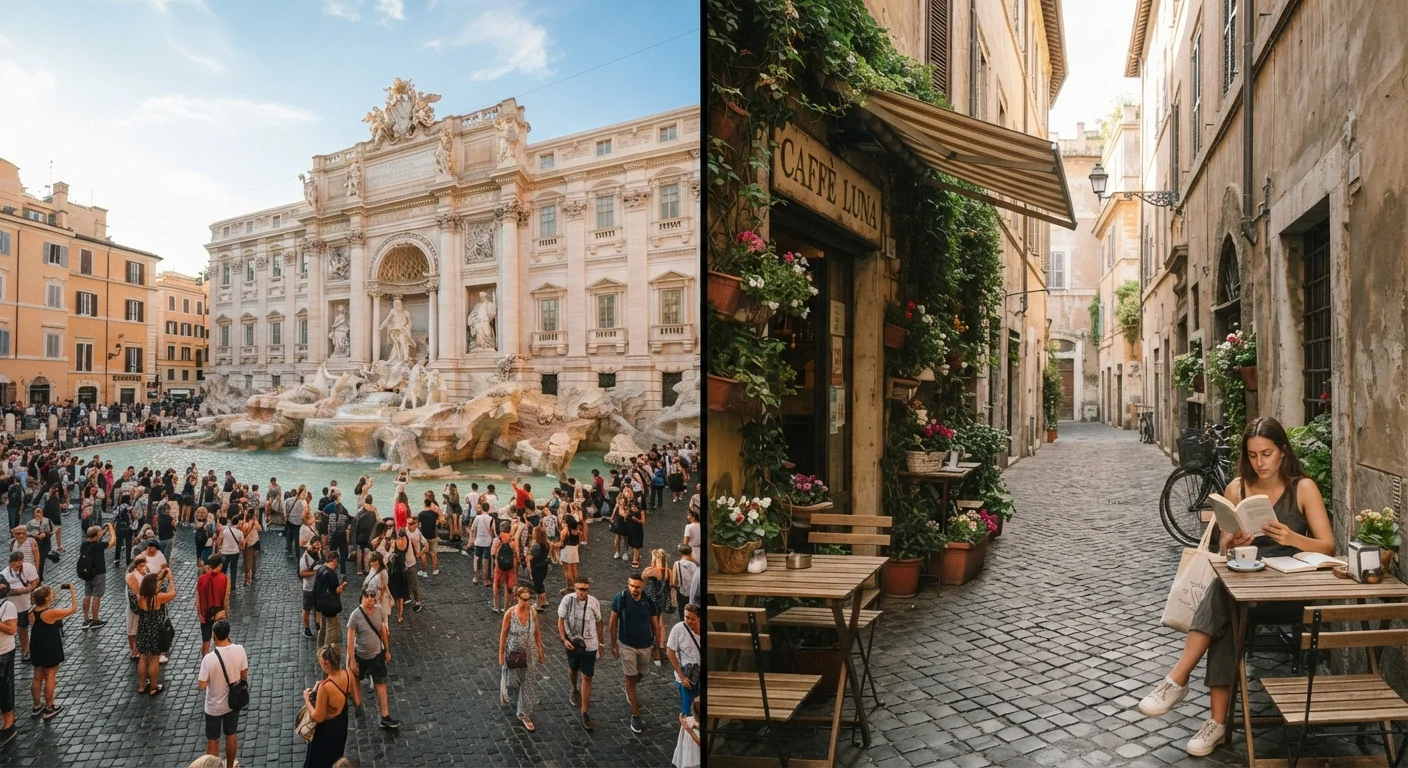
A city break is a short, focused trip — typically two to five days — centered on one urban destination, or a rapid sequence of stops that strings together several cities within a single journey. The structure is efficient by design: you move through a curated list of landmarks, neighborhoods, restaurants, and experiences before returning home or moving on. City breaks suit travelers working within the standard constraints of limited paid vacation days and fixed departure windows.
Slow travel operates on a different premise entirely. Rather than treating destinations as items to check off, slow travelers spend weeks or even months in a single place, renting an apartment, establishing routines, and allowing the rhythms of ordinary local life to reveal themselves. The concept is sometimes traced to the broader "slow movement" — a cultural push back against speed and efficiency as default values — but in practical terms it simply means choosing depth over breadth.
Both approaches can be done well or poorly. A city break executed with realistic expectations can be genuinely memorable. Slow travel done without intention can drift into expensive, purposeless limbo. Understanding what each delivers — and what it demands — is the starting point for choosing wisely. For a related contrast in destination types, see our urban vs. rural destinations guide.
Side-by-Side: How the Two Approaches Compare
The practical differences between city break travel and slow travel become clear when you examine specific decision points — cost structure, logistics, and the kind of experience each produces.
| Criterion | City Break | Slow Travel |
|---|---|---|
| Typical duration | 2–5 days per destination | 2–12 weeks in one place |
| Daily cost | Higher (hotels, dining out) | Lower (rentals, self-catering) |
| Logistics complexity | High — frequent transitions | Low once settled |
| Destinations covered | Many in a short period | One or two per trip |
| Cultural immersion | Surface to moderate | Deep with time |
| Flexibility required | Low — tight scheduling | High — open-ended days |
| Best suited for | Limited vacation time | Remote workers, sabbaticals |
| Physical demand | High — constant movement | Low — stable base |
One dimension the table can't fully capture is energy expenditure. City breaks compress a great deal into a short window, which many travelers find exhilarating but others find exhausting. Arriving in a new city, navigating transit, locating your accommodation, and immediately beginning sightseeing is a different kind of effort than waking up in a familiar apartment and deciding at breakfast what the day will hold.
The Real Costs — Time, Money, and Mental Load
City breaks can be deceptively expensive on a per-day basis. Hotel rates for short stays are typically higher than longer-term rentals, and the pressure to make the most of limited time often leads to paid tours, restaurant meals at every sitting, and entrance fees stacked one after another. That said, the total trip expenditure is bounded by its short duration.
Slow travel flips this equation. Daily costs often drop — a monthly apartment rental in many cities costs significantly less per night than a hotel, and having a kitchen eliminates the need to eat every meal out. However, the cumulative cost of a month abroad will still exceed a weekend city break in absolute terms. Travelers comparing the two need to think in terms of cost per day rather than total trip cost.
10–15%
Typical hotel cost savings for stays over 7 nights
Many hotels and short-term rental platforms apply weekly or extended-stay discounts, reducing the nightly rate for longer bookings.
4.2 days
Average US vacation trip length
According to travel industry surveys, the average American leisure trip lasts just over four days, making the city break format a natural fit for most workers' schedules.
90 days
Standard visa-free stay limit in the Schengen Area
US passport holders can spend up to 90 days within any 180-day period across Schengen member countries, a key constraint for slow travelers targeting Europe.
The less-discussed cost of slow travel is logistical: arranging longer-term accommodation requires more lead time, visa rules may restrict stays beyond 90 days in many countries, and maintaining financial and administrative life at home from abroad takes real effort. If you're weighing accommodation options for extended or multi-stop trips, our overview of overnight stays on a road trip covers the range of formats worth considering.
What You Actually Experience — and What You Miss
City breaks are very good at delivering highlights. If your goal is to stand in front of a famous cathedral, eat a canonical local dish, and walk a celebrated neighborhood, a well-planned short trip can accomplish all of that. The limitation is that highlights are, by definition, the most curated, most visited, and most performative version of any destination. You see the city's front-facing presentation.
Slow travel, when it works, peels that layer back. After two or three weeks, you stop consulting the map to reach the market. You begin to recognize faces. You discover that the most interesting café isn't the one in the guidebook. You also discover the less romantic realities: the neighborhood construction that starts at 7 a.m., the administrative frustration of a language barrier when something goes wrong, the social isolation that can accompany traveling without a fixed social circle.
Neither experience is more authentic in any absolute sense — a tourist's perspective has its own validity — but they are genuinely different. Travelers who have tried both often describe city breaks as exhilarating and slow travel as grounding, though individual temperament shapes this significantly. The European rail travel experience is one context where slow travel and city break approaches frequently intersect, with many travelers combining both on the same trip.
Slow Travel and Remote Work
The growth of location-flexible work arrangements has expanded slow travel beyond sabbaticals and retirees. Travelers who can work remotely often structure slow travel around a stable time zone overlap with their home office, spending mornings working and afternoons exploring. This approach changes the financial calculus considerably — ongoing income offsets travel costs in a way that pure vacation travel cannot. However, visa rules in most countries do not formally permit working while on a tourist visa; travelers should verify the legal framework of any destination before combining work and extended stays.
Choosing the Right Approach for Your Trip
The honest answer is that most travelers will find value in both styles across a lifetime of travel, and many trips blend elements of each — a few nights in a major city followed by a longer stretch in a smaller town, for instance. The decision framework comes down to three questions:
- How much time do you have? If your window is under a week, slow travel isn't really on the table. If you have a month or more, the question becomes whether you want to cover ground or go deep.
- What do you want to take away? Memories of places and landmarks, or a felt sense of having briefly lived somewhere? Neither answer is wrong.
- What is your tolerance for uncertainty? City breaks reward planning; slow travel rewards adaptability. If an unscheduled day feels like opportunity rather than anxiety, slow travel is likely a natural fit. If you prefer knowing what comes next, a structured itinerary will serve you better.
For travelers drawn to the spontaneous end of the spectrum, our look at the real upsides and downsides of spontaneous road trips addresses how flexibility plays out in practice — including where it tends to create genuine problems. Whichever approach you favor, the travel tips hub has practical guidance to help you prepare well.