

Key Takeaways
- European rail travel offers city-centre-to-city-centre convenience that flying cannot match on shorter routes.
- Eurail and Interrail passes are not always the most cost-effective option — point-to-point tickets can be cheaper when booked early.
- High-speed and overnight trains are comfortable; regional trains vary widely in quality and punctuality.
- Seat reservations are mandatory on many routes and cost extra, even with a rail pass.
- Rail suits flexible, multi-stop itineraries more than fixed one-destination trips.
City-centre arrivals save hours of transit time
Most major European train stations sit in or near city centres, eliminating the 45–90 minute airport transfers that bookend every flight.
Comfortable and spacious on high-speed routes
High-speed services offer more legroom than economy air travel, the freedom to walk around, and often a dining or café car.
Scenic journeys add value to the trip itself
Routes through the Alps, along Atlantic coastlines, and across river valleys turn travel time into a destination experience.
Overnight trains save on accommodation costs
A sleeper service between distant cities means you cover ground while you sleep, effectively replacing one night's hotel stay.
Lower carbon footprint than flying
Rail travel produces substantially fewer CO₂ emissions per passenger kilometre than short-haul aviation, making it a lower-impact choice for environmentally minded travellers.
Mandatory reservation fees add unexpected costs
On most high-speed and overnight trains, a seat reservation is required even with a rail pass, adding €5–€40 per leg depending on the route and class.
Booking across multiple national operators is fragmented
There is no single platform that handles all European rail reservations. Travellers must navigate different websites for French, Italian, Spanish, and German services, each with separate rules.
Regional trains are often slow and unreliable
Outside major intercity corridors, train frequency drops, journey times lengthen, and delays are more common — particularly in parts of Southern and Eastern Europe.
Passes may not save money for planned itineraries
Advance point-to-point tickets frequently undercut the combined cost of a pass plus reservation fees, making passes most valuable only for very spontaneous, high-frequency travel.
Missed connections are a genuine risk
If a train is late and you miss a connection, compensation and rebooking policies vary by operator and are not always straightforward, especially on cross-border journeys.
Our Verdict
European rail travel lives up to a good deal of its reputation — it is comfortable, scenic, and genuinely practical for multi-city trips. The booking system, mandatory reservation fees, and variable punctuality can frustrate first-timers, but with a little preparation the trade-offs are manageable. It rewards travellers who plan ahead and keep some flexibility in their schedule.
Best suited to travellers visiting three or more cities, those who value comfort over speed on medium-distance routes, and anyone who wants to arrive in a city centre without the friction of airports.
The Case for Travelling by Rail in Europe
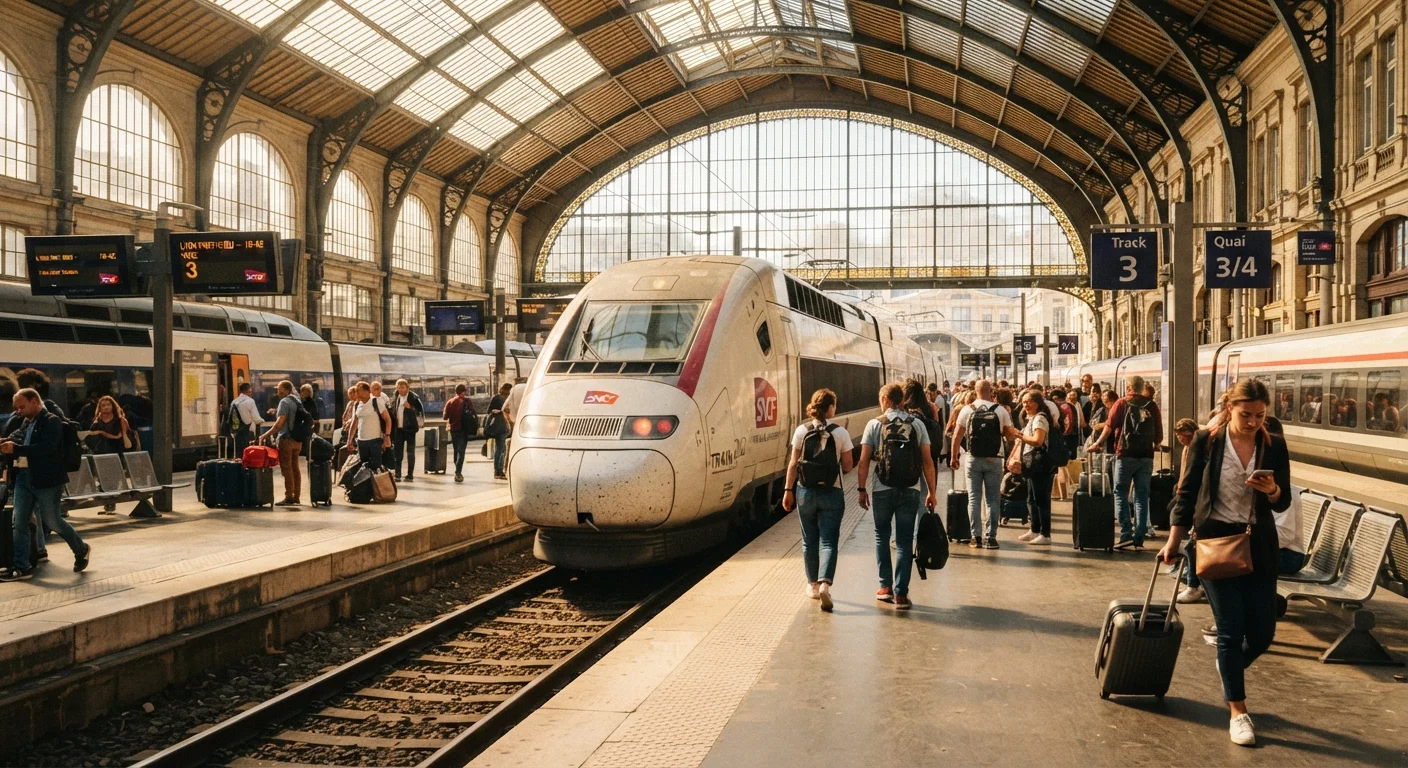
Europe's rail network is one of the densest in the world, linking major capitals and small towns alike. The core appeal is simple: trains deliver you from city centre to city centre, bypassing the time sunk into remote airports, security queues, and baggage reclaim. On routes under three hours — Paris to Brussels, Amsterdam to Cologne, Barcelona to Madrid — rail frequently beats flying on total travel time once airport logistics are included.
Comfort is another genuine selling point. High-speed trains such as the Eurostar, Thalys (now Eurostar International), Frecciarossa, and AVE offer wide seats, café cars, and reliable Wi-Fi on many routes. You can move around, charge devices, and watch the landscape shift in ways that a short-haul flight cabin simply cannot offer. For travellers curious about slow travel, rail naturally supports that pace — see our guide to city breaks vs. slow travel for how to think about that choice.
City-centre arrivals save hours of transit time
Most major European train stations sit in or near city centres, eliminating the 45–90 minute airport transfers that bookend every flight.
Comfortable and spacious on high-speed routes
High-speed services offer more legroom than economy air travel, the freedom to walk around, and often a dining or café car.
Scenic journeys add value to the trip itself
Routes through the Alps, along Atlantic coastlines, and across river valleys turn travel time into a destination experience.
Overnight trains save on accommodation costs
A sleeper service between distant cities means you cover ground while you sleep, effectively replacing one night's hotel stay.
Lower carbon footprint than flying
Rail travel produces substantially fewer CO₂ emissions per passenger kilometre than short-haul aviation, making it a lower-impact choice for environmentally minded travellers.
The Real Frustrations: Booking, Passes, and Hidden Costs
The biggest misconception first-timers carry is that a Eurail or Interrail pass unlocks unlimited, spontaneous train travel. It does not. On most high-speed and overnight services — the trains you actually want to take — seat reservations are compulsory and carry a separate fee, even if you hold a pass. Those fees add up quickly across a two-week itinerary.
Point-to-point advance tickets, booked directly through national rail operators, are often significantly cheaper than pass-plus-reservation combinations. The catch: they tie you to a specific train and date, removing flexibility. Booking systems across countries — SNCF in France, Trenitalia in Italy, Renfe in Spain, Deutsche Bahn in Germany — do not share a single unified platform, so multi-country itinerary planning requires navigating multiple websites, each with different interfaces and refund policies.
Mandatory reservation fees add unexpected costs
On most high-speed and overnight trains, a seat reservation is required even with a rail pass, adding €5–€40 per leg depending on the route and class.
Booking across multiple national operators is fragmented
There is no single platform that handles all European rail reservations. Travellers must navigate different websites for French, Italian, Spanish, and German services, each with separate rules.
Regional trains are often slow and unreliable
Outside major intercity corridors, train frequency drops, journey times lengthen, and delays are more common — particularly in parts of Southern and Eastern Europe.
Passes may not save money for planned itineraries
Advance point-to-point tickets frequently undercut the combined cost of a pass plus reservation fees, making passes most valuable only for very spontaneous, high-frequency travel.
Missed connections are a genuine risk
If a train is late and you miss a connection, compensation and rebooking policies vary by operator and are not always straightforward, especially on cross-border journeys.
~32,000 km
High-speed rail lines across Europe
The European Union's high-speed network spans approximately 32,000 kilometres, making it the largest such network outside China, according to European Commission infrastructure data.
80%
Less CO₂ than equivalent short-haul flight
The European Environment Agency has estimated that rail travel produces around 80% fewer greenhouse gas emissions per passenger kilometre compared to flying on comparable routes.
For broader practical guidance before your trip, the first international trip planning guide covers entry requirements and logistics that apply whether you travel by rail or otherwise.
What to Actually Expect on Board
Experiences differ sharply depending on the type of service. High-speed intercity trains (think Paris–Lyon or Madrid–Barcelona) are modern, quiet, and reliably punctual. Regional trains connecting smaller towns are a different matter — older rolling stock, less predictable schedules, and crowded carriages during peak periods are common, particularly in Southern and Eastern Europe.
Overnight sleeper trains have seen a revival, with routes between Vienna, Brussels, Amsterdam, and beyond. A couchette (basic shared sleeping berth) or a private sleeper cabin lets you cover long distances without losing a day. They are not luxurious, but they are practical. Delays do occur — the European rail system as a whole is not uniformly as punctual as its reputation suggests, and missed connections are a real risk on tight itineraries. Build buffer time between trains wherever a connection is critical.
Overnight Train Booking Tips
Sleeper cabins and couchette berths on overnight trains sell out well in advance, especially in summer. Book directly through the operating carrier — for example, ÖBB Nightjet for Austrian-run routes — as soon as your dates are confirmed. Single-occupancy private cabins cost more but offer considerably more comfort and security for solo travellers. Check each operator's luggage storage policies before you travel.
If this is your first time navigating unfamiliar transit systems, our guide to using public transport abroad walks through the basics of reading maps, buying tickets, and avoiding common errors.
Who Rail Travel Works Best For
European rail suits some travel styles more than others. If you are visiting multiple cities across two or more countries, rail is hard to beat for sheer convenience and the quality of the journey itself. It also pairs naturally with solo travel — train compartments are social spaces where conversations happen, and navigating platforms is straightforward once you understand the reservation system. Our solo travel guide for first-timers covers how to manage logistics and stay confident on your own.
If you are heading to one destination and staying put, rail's multi-stop advantages disappear and a low-cost flight may be more practical. Travellers who need a car at their destination — for rural areas, remote coastlines, or self-guided touring — may find rail gets them only part of the way there. In those cases, consider how rail and road travel might combine, or explore the road trips hub for alternative approaches. Rail is a tool, not a universal solution — knowing when it fits your itinerary is the key skill.
Travel conditions, timetables, prices, and reservation requirements change regularly. Always verify current information with official rail operators and your government's travel advisory before booking.