
Anchoring, Scarcity, and Social Proof: A Field Guide to Retail Persuasion Tactics

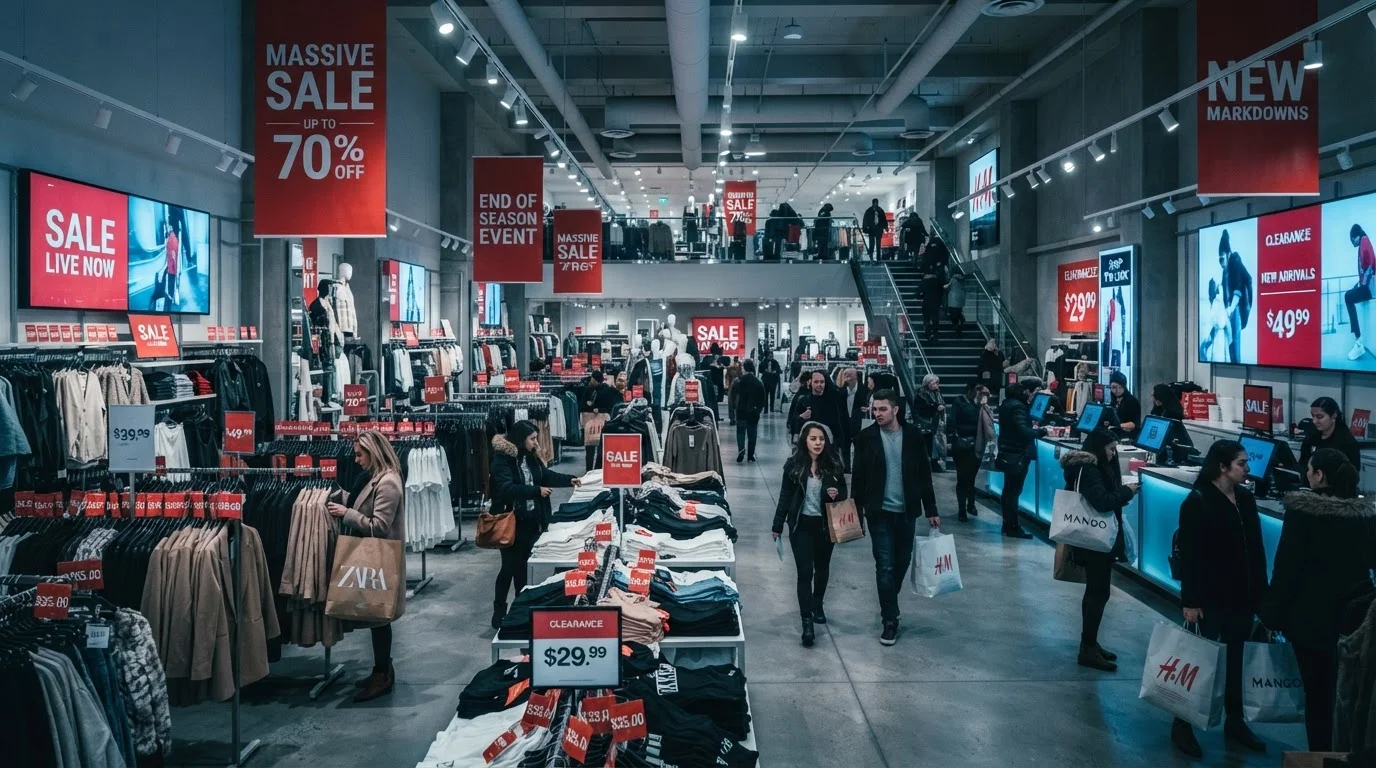
Key Takeaways
- Anchoring uses a high reference price to make the actual selling price feel like a bargain, regardless of real value.
- Artificial scarcity creates urgency that can override careful decision-making — even when supply is plentiful.
- Social proof tactics like ratings and review counts exploit our tendency to defer to crowd behavior.
- Awareness of these techniques doesn't make you immune, but it does slow down reactive purchases.
- Pausing before checkout — online or in-store — is one of the most effective counters to persuasion pressure.
Why Retailers Invest in Persuasion Architecture
Modern retail — whether a big-box store or an e-commerce homepage — is not designed neutrally. Every price format, countdown timer, and star-rating widget reflects decades of research into how people make decisions under mild cognitive pressure. These aren't manipulation tricks confined to shady operators; they are standard, documented techniques used broadly across the industry.
Understanding how these tactics function doesn't require a psychology degree. It requires knowing what to look for. The tactics covered here are among the most widely used and best studied. For a deeper look at how pricing psychology intersects with discount framing, see the psychology behind sale signs. This guide focuses on the mechanics and what a more deliberate shopper can do in response.
Price Anchoring
What it is: Anchoring occurs when a retailer displays a high reference price — often labeled "was," "MSRP," or "compare at" — alongside the selling price. The first number you see becomes a mental benchmark, making the actual price feel like a relative bargain even if you have no independent basis for evaluating the original figure.
What to watch for: Crossed-out prices, manufacturer's suggested retail prices presented as a baseline, and "you save $X" callouts. Online, anchors often appear in large font directly above the current price.
The counter: Ask what the item is worth to you at the current price, independent of what it was supposedly priced at before. If you wouldn't pay it without the strikethrough, that reference number is doing more work than the actual value.
The first number you see becomes a benchmark — whether or not it reflects genuine market value.
Artificial Scarcity
What it is: Scarcity messaging — "Only 3 left in stock," "Limited time offer," "Selling fast" — activates loss aversion, a well-documented tendency to weight potential losses more heavily than equivalent gains. When something feels scarce, its perceived value rises.
What to watch for: Countdown timers on product pages, low-stock warnings that don't change over days, and flash-sale windows that recur regularly. Not all scarcity is artificial — some items genuinely sell out — but the framing is worth scrutinizing.
The counter: Check whether the urgency is real. If a "48-hour" sale has been running for a week, or the "only 2 left" counter hasn't moved, the scarcity is likely manufactured. Give yourself permission to wait.
Scarcity messaging exploits loss aversion — the psychological weight we place on what we might miss.
Social Proof
What it is: Social proof is the tendency to treat the behavior or endorsement of others as evidence of quality or correctness. In retail, this appears as star ratings, review counts, "bestseller" badges, and real-time purchase notifications ("12 people are viewing this right now").
What to watch for: Aggregate ratings without context, reviews that can't be verified as authentic, and purchase-count displays that may reflect historical data rather than current popularity.
The counter: Read a spread of reviews — specifically middle-range ones — rather than relying on aggregate scores. High review counts are meaningfully different from high review quality. Look for reviews that describe specific use cases relevant to yours.
A high review count signals volume, not quality — reading middle-range reviews often tells you far more.
Decoy Pricing
What it is: Also called the asymmetric dominance effect, decoy pricing involves introducing a third option designed not to sell, but to make one of the other two options look clearly superior. A mid-tier option priced close to the premium tier — but offering noticeably less — steers buyers toward the premium choice.
What to watch for: Three-tier pricing structures where the middle option seems oddly limited relative to its price. Subscription services, software plans, and concession menus frequently use this structure.
The counter: Evaluate each tier independently against your actual needs. If you don't need the premium features, the decoy's job — making the premium look like obvious value — shouldn't factor into your choice.
The middle option in a three-tier structure often exists to make the premium tier feel like an obvious deal.
The Endowment Effect and Free Trials
What it is: People tend to value things more highly once they feel a sense of ownership over them. Free trials and "try before you buy" programs exploit this — once you've used a product or integrated a service into your routine, the psychological cost of giving it up often feels higher than the monetary cost of keeping it.
What to watch for: Subscription trials that require credit card details upfront, products sent home for a trial period, and loyalty programs that create a sense of accumulated investment.
The counter: Set a calendar reminder before any free trial ends. Evaluate the service as if you were being asked to sign up for the first time, not as someone who has to actively cancel. Default inertia is a feature of these programs, not a coincidence.
Free trials turn the endowment effect into a retention tool — canceling feels like a loss, not a neutral choice.
Bundling and Perceived Value
What it is: Bundling combines multiple items or features at a combined price, making it harder to evaluate the cost of any single component. It can genuinely offer value, but it can also move buyers toward spending more than they intended by obscuring individual item costs.
What to watch for: "Value packs" containing items you wouldn't independently choose, upsell prompts at checkout combining a core purchase with accessories, and streaming or service bundles that include platforms you won't use.
The counter: Mentally (or literally) price out only the components you'd actually use. If those items alone justify the bundle price, the deal may be real. If the math only works because of items you don't need, the bundle is doing persuasive work on your behalf.
Bundles obscure per-item costs — pricing each component you'd actually use separately reveals the real deal.
Shopping More Deliberately in a Designed Environment
Recognizing a persuasion tactic doesn't automatically defuse it — cognitive biases operate partly below conscious awareness. But awareness creates a gap between stimulus and response, and that gap is where better decisions get made.
The Pause Habit
Before completing any non-essential purchase — in-store or online — try a simple pause: close the browser tab or step away from the shelf for at least 10 minutes. Research on impulse purchasing consistently finds that brief delays reduce reactive buying without significantly increasing regret. The tactic is low-effort and works across most persuasion scenarios.
Building habits that introduce friction — writing a list before you shop, waiting 24 hours on non-essential purchases, or checking an item's price history before buying online — consistently outperforms willpower alone. For a practical framework, structured pre-purchase research and shopping with a list are two evidence-grounded habits worth developing. Retail environments will always be designed to nudge — the goal isn't to outsmart them entirely, but to make decisions you'll stand behind after leaving the store. This article is part of a broader complete guide to smart shopping.