

Key Takeaways
- Shopping lists reduce impulse purchases by giving the brain a pre-committed decision framework before entering the store.
- The format of your list — digital, handwritten, or categorized — affects how consistently you follow it.
- Reviewing your list before checkout, not just at entry, significantly improves adherence.
- Combining a shopping list with a realistic budget creates stronger financial guardrails than either tool alone.
- Habit cues like a consistent time and place for list-making help the behavior become automatic over time.
Why Lists Work: The Behavioral Science
Walking into a store without a list is a bit like navigating an unfamiliar city without directions — you'll get somewhere, but probably not where you intended. Shopping environments are deliberately designed to encourage unplanned purchases, using product placement, ambient cues, and promotional signage to redirect attention. A list counteracts this by functioning as a pre-commitment device.
Pre-commitment is a concept from behavioral economics: when people lock in a decision before facing temptation, they're far more likely to follow through on their original intention. A shopping list makes your decisions at home — when you're calm, not hungry, and not surrounded by marketing stimuli — rather than on the store floor. Research in consumer psychology consistently shows that shoppers with lists spend less time in stores and make fewer unplanned additions to their carts.
Understanding the tactics retailers use to trigger impulse spending can sharpen your appreciation for why preparation matters. The psychology behind sale signs explains exactly which cognitive biases are being activated — and knowing them helps you shop with clearer eyes.
“The road to financial wellness isn't paved with willpower alone — it's paved with systems that make the right choice the easy choice.”
— Behavioral Economics Research Community, Academic field studying how context and design influence everyday financial decisions
Best Practices for Building an Effective List
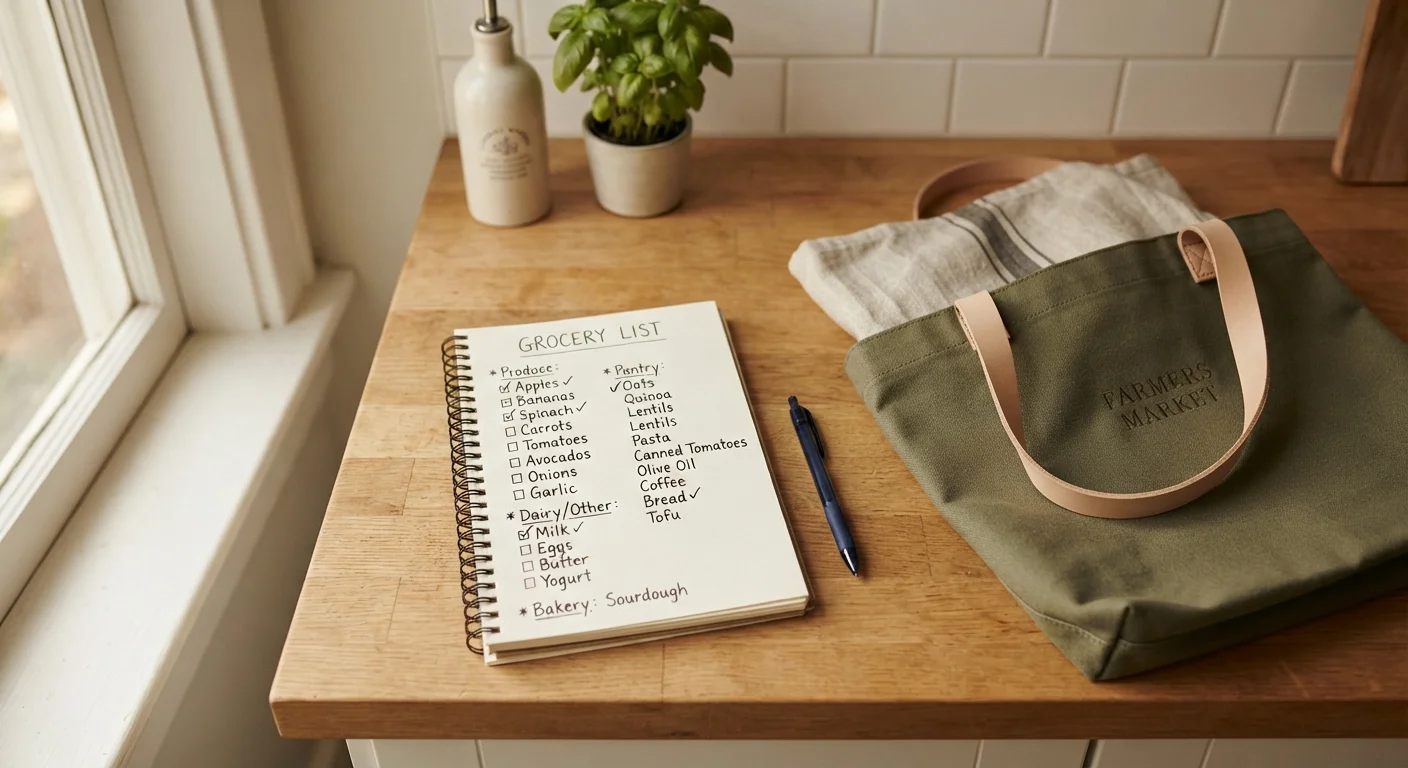
Not all lists are created equal. A scrawled collection of vague reminders is less effective than a structured list that's been thoughtfully prepared. The following practices draw on habit research and practical shopping behavior to help your list actually do its job.
Write your list before you're hungry or in a hurry.
Hunger and time pressure both impair decision-making and increase susceptibility to impulse choices. Preparing your list when you're calm and well-fed helps ensure it reflects actual needs rather than momentary cravings.
Organize your list by store section or category.
A list organized by produce, dairy, pantry, and so on mirrors the physical layout of most stores. This reduces backtracking, shortens time spent in the store, and limits exposure to promotional displays in aisles you don't need to visit.
Set a specific quantity next to each item.
Vague entries like "cheese" or "snacks" leave too much room for in-store interpretation, which is where impulse choices sneak in. Specific quantities anchor decisions made at home.
Review your list at the checkout line, not just at the store entrance.
Many shoppers check their list entering the store but skip this at the end. A final review before paying catches items that were skipped and surfaces anything in the cart that wasn't on the list — giving you a conscious moment to reconsider.
Use a running list updated throughout the week.
Waiting to build a list the morning of a shopping trip increases the chance of forgetting items and leads to return trips — each of which carries its own impulse-spending risk. A live list captures needs as they arise.
Making the Habit Stick
Even a well-constructed list fails if making one never becomes routine. Habit formation research — including the widely cited cue-routine-reward framework — suggests that attaching a new behavior to an existing one is among the most reliable ways to make it automatic.
Pairing list-making with broader spending habits compounds its impact. If you're working toward consistent financial goals, the habits that keep a budget working long-term offer practical routines that reinforce this kind of structured approach to everyday spending. For purchases that go beyond groceries, a structured pre-purchase research process helps extend the same discipline to larger decisions.
~23%
Reduction in unplanned grocery purchases with a list
Consumer behavior studies have consistently found that shoppers using lists purchase notably fewer unplanned items compared to those without one.
60%+
Of grocery purchases made without a plan
Industry research on in-store shopping behavior suggests the majority of grocery purchases are either unplanned or only loosely decided before entering the store.
Lists as Part of a Larger Shopping Strategy
A shopping list is most powerful when it sits inside a broader system of intentional purchasing. On its own, it handles the tactical layer — what you need. But layering it with a budget addresses the financial layer — what you can spend. And pairing both with an understanding of retail psychology closes the loop on why unplanned purchases happen in the first place.
The complete guide to smart shopping brings these elements together, covering pricing tactics, quality evaluation, and subscription management in one cohesive framework. For day-to-day money decisions, the Everyday Money Tips hub is a practical resource for building small financial habits that add up over time.
Digital vs. Handwritten: Does It Matter?
Both formats work — the research doesn't strongly favor one over the other. Digital lists offer convenience, shareability, and the ability to update in real time. Handwritten lists may encourage more deliberate thinking at the time of writing, since the slower pace of writing by hand can help reinforce the items you're committing to. The best format is whichever one you'll actually use consistently.
The goal isn't perfection — it's consistency. A list followed imperfectly, most of the time, still provides meaningful protection against the kind of drift that gradually erodes a household budget.