

Key Takeaways
- The skin barrier is a physical and chemical structure that keeps moisture in and irritants out.
- Ceramides, cholesterol, and fatty acids are the key lipids that hold the barrier together.
- A compromised barrier causes dryness, redness, and increased sensitivity.
- Over-cleansing and harsh actives are common causes of barrier damage.
- Supporting barrier health is a foundational step in any effective skincare approach.
Skin Barrier
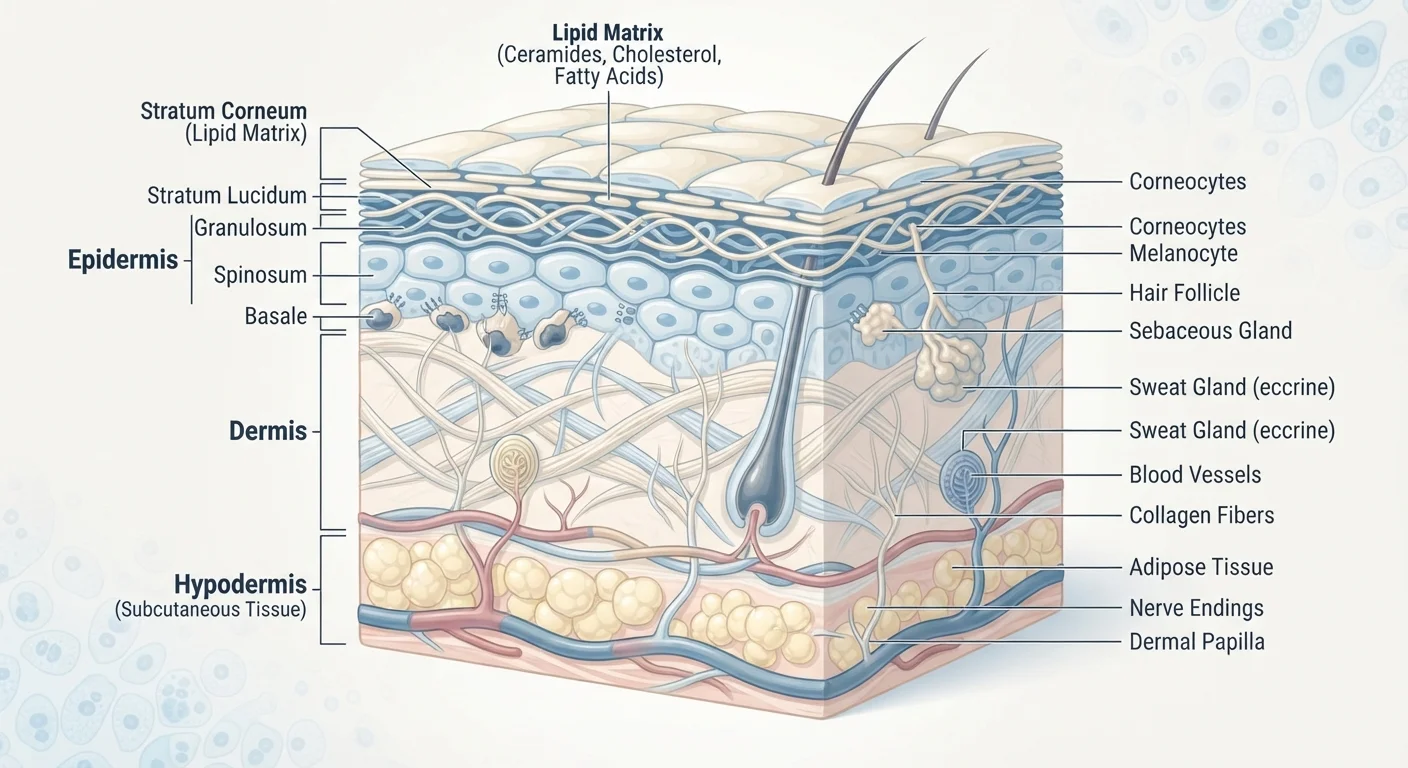
The skin barrier — formally called the stratum corneum — is the outermost layer of your skin. It acts as a two-way shield: keeping moisture in while blocking environmental irritants, allergens, and pathogens out. Think of it as a brick wall, where skin cells are the bricks and a mixture of lipids (fats) acts as the mortar holding everything together.
The lipid matrix consists primarily of ceramides, cholesterol, and fatty acids in roughly equal proportions. Disruption to this ratio is associated with conditions such as eczema and rosacea.
What the Skin Barrier Actually Is
Despite how often the term appears on skincare packaging, the skin barrier is rarely explained in plain terms. At its core, the stratum corneum is the outermost portion of the epidermis — a tightly organized stack of flattened, largely protein-filled cells called corneocytes, embedded in a lipid-rich matrix. This structure is sometimes described using the "brick and mortar" analogy: the corneocytes are the bricks, and the surrounding lipids — ceramides, cholesterol, and free fatty acids — form the mortar.
This isn't just a passive layer of dead skin cells, though that's a common misconception. The stratum corneum is metabolically active, constantly renewing itself through a process called desquamation (natural shedding), and it actively regulates water loss through a mechanism dermatologists call transepidermal water loss (TEWL). A healthy barrier keeps TEWL low, meaning your skin stays hydrated from within rather than relying entirely on products applied to the surface.
The barrier also has a slightly acidic pH — typically between 4.5 and 5.5 — often referred to as the acid mantle. This acidity helps inhibit the growth of harmful microorganisms and supports the enzymes responsible for maintaining the lipid matrix.
What Happens When the Barrier Is Compromised
A disrupted skin barrier loses its ability to regulate moisture effectively. Water escapes more readily, and the skin simultaneously becomes more permeable to external irritants. The result is a self-reinforcing cycle: dryness and inflammation weaken the barrier further, making skin more reactive and harder to treat.
~50%
Of skin lipids are ceramides
Research published in dermatological literature estimates ceramides make up roughly half of the stratum corneum's lipid content, underlining their role in barrier integrity.
30–40%
Water content in healthy stratum corneum
Skin scientists generally cite this range as the threshold for maintaining normal barrier enzyme activity and flexibility; levels below this are associated with dry skin and impaired function.
Common triggers for barrier disruption include:
- Over-cleansing or using harsh surfactants that strip the skin's natural oils
- Overuse of exfoliating acids or retinoids without adequate rest periods
- Environmental stressors such as cold air, low humidity, and UV exposure
- Hot water, which disrupts the lipid matrix during prolonged exposure
Skin conditions such as eczema (atopic dermatitis), rosacea, and psoriasis are all associated with measurable barrier dysfunction. For those experiencing persistent sensitivity, it's worth considering whether the issue stems from a compromised barrier rather than inherent skin type — a distinction explored in depth in our article on sensitive vs. sensitised skin.
This article is for informational purposes only and does not constitute medical advice. If you are experiencing persistent skin symptoms, consult a qualified dermatologist or healthcare professional.
Supporting Your Skin Barrier Through Your Routine
Barrier health isn't built by any single product — it's the cumulative result of consistent, well-considered habits. The core principles are straightforward: cleanse gently, moisturise promptly, and protect from UV damage daily.
Give Your Barrier Time to Recover
If you've been using multiple active ingredients simultaneously, consider scaling back to a simpler routine for two to four weeks. Focus on a gentle cleanser, a ceramide-containing moisturiser, and broad-spectrum sunscreen. Reducing the overall 'load' on the barrier is often more effective than adding more products to address symptoms.
Moisturisers that contain the three key barrier lipids — ceramides, cholesterol, and fatty acids — are frequently recommended in dermatological literature for barrier support. Humectants like hyaluronic acid draw moisture into the skin, while occlusives such as petrolatum or squalane help seal it in. Understanding how these ingredient categories work together is a useful foundation — our guide to common skincare ingredient terms breaks these down in accessible detail.
Applying products in the right order also affects how well they perform. Because the barrier regulates what penetrates the skin, applying a heavy occlusive before a humectant, for instance, can limit absorption. For a practical breakdown, see our piece on layering skincare products correctly.
If you're starting from scratch or reassessing an existing routine, building a skincare routine from scratch provides a grounded starting point that naturally supports barrier health. And if your moisturiser has started to feel ineffective, barrier disruption — not product failure — is often the explanation; our article on why moisturisers stop working explores this in detail.