

Key Takeaways
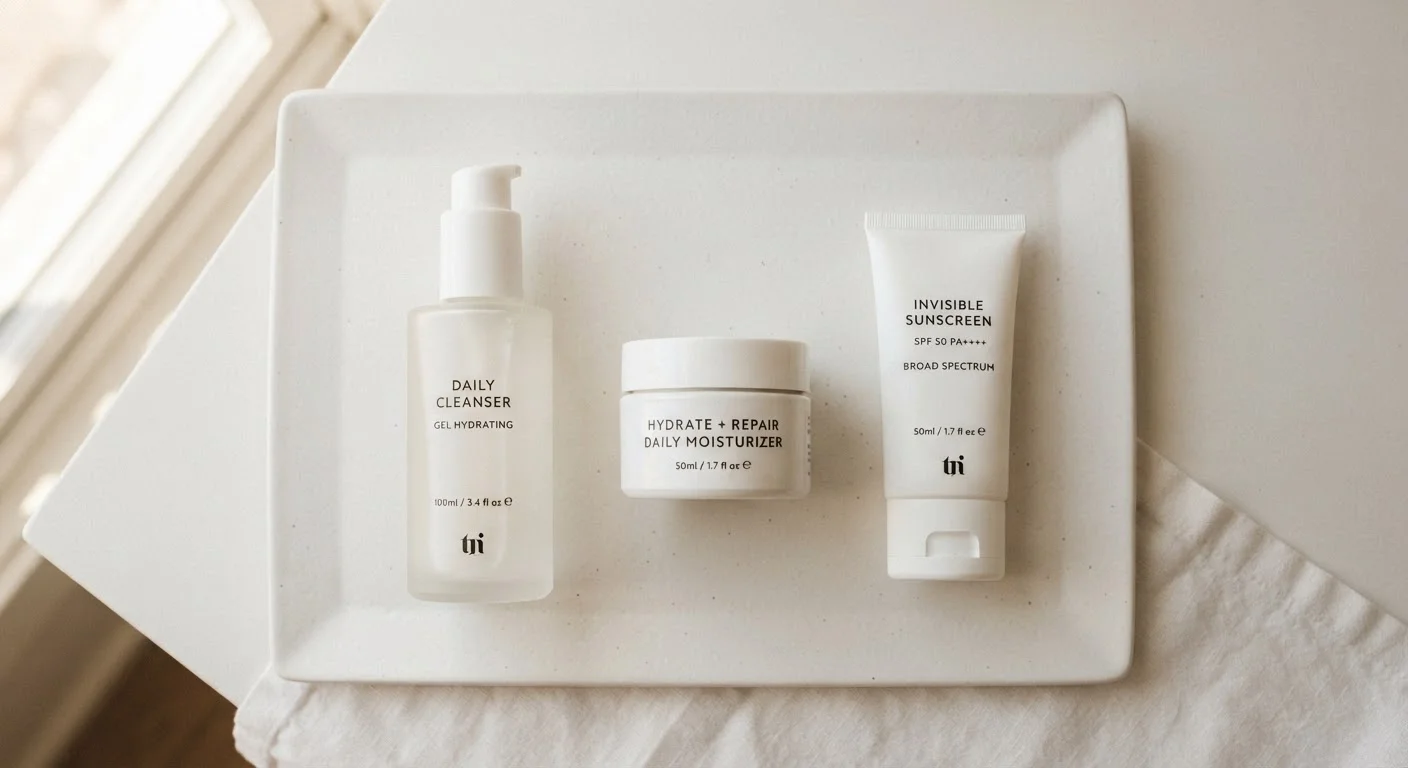
- A three-step routine — cleansing, moisturizing, and sun protection — covers the essential bases for most people.
- Knowing your skin type helps you choose products that work with your skin, not against it.
- Consistency matters more than complexity; a simple routine done daily outperforms an elaborate one done sporadically.
- Adding active ingredients like exfoliants or serums should come after the basics are established.
- Sunscreen is the single most evidence-backed step for long-term skin health.
Start here
Why Start with the Basics?
Next
The Core Three: Cleanse, Moisturize, Protect
Then
Understanding Your Skin Type
Apply it
Building Your Routine Step by Step
When you're ready
What to Add Later (and What to Avoid Early On)
Why Start with the Basics?
Walk into any beauty aisle and the volume of choices can feel genuinely paralyzing — serums, toners, essences, exfoliants, face oils, and more. The skincare industry is vast, but the science behind healthy skin is considerably simpler. Effective skincare for most people begins — and can remain — with just three well-chosen steps.
Starting simple also means you can actually identify what is and isn't working. When you introduce too many products at once, there is no way to know which one caused a breakout, irritation, or improvement. A stripped-back routine is the most honest way to learn what your skin genuinely needs.
Skin barrier
The outermost layer of the skin that acts as a protective shield, keeping moisture in and irritants out. Maintaining it is central to healthy skin.
Broad-spectrum SPF
A sunscreen that protects against both UVA rays (which contribute to aging) and UVB rays (which cause sunburn). 'Broad-spectrum' on the label confirms both are covered.
Sebum
The natural oil produced by glands in the skin. It helps keep skin lubricated, but excess production can contribute to an oily appearance or breakouts.
Active ingredients
Ingredients in skincare that produce a measurable change in the skin — such as exfoliating acids or retinoids — as opposed to base or filler ingredients.
pH balance
A measure of acidity or alkalinity. Healthy skin is slightly acidic, and using cleansers with a compatible pH helps preserve the skin barrier.
The Core Three: Cleanse, Moisturize, Protect
These three steps form the foundation of virtually every dermatologist-recommended routine:
- Cleansing removes dirt, excess oil, pollution, and the day's residue without stripping the skin's natural moisture barrier. A gentle, low-pH cleanser is a reliable starting point for most skin types.
- Moisturizing reinforces the skin barrier by delivering and sealing in hydration. Even oily skin benefits — a lightweight moisturizer helps regulate oil production rather than encouraging more of it.
- Sun protection is the most evidence-supported step for preventing premature aging and reducing UV-related skin damage. Broad-spectrum SPF 30 or higher, applied every morning, is the standard recommendation from skin health authorities.
If you only ever do these three things consistently, you are already doing more for your skin than most people manage. Once established, see our guide to layering skincare products to understand how additional steps fit together.
Apply sunscreen last — every morning
Sunscreen should always be the final step in your morning routine, applied after moisturizer. This ensures the UV filters sit at the surface where they can work effectively. Even on overcast or indoor days, daily application is considered best practice by skin health authorities.
Understanding Your Skin Type
Choosing products that suit your skin type makes a genuine difference in how your routine feels and performs. The four broad categories most commonly used are:
- Normal
- Balanced — neither notably oily nor dry, with few sensitivities and small pores.
- Oily
- Produces excess sebum, often leading to shine, enlarged pores, and a tendency toward breakouts.
- Dry
- Produces less sebum, which can cause tightness, flaking, or a dull appearance.
- Combination
- An oily T-zone (forehead, nose, chin) with drier cheeks — the most common skin type.
Some people also have sensitive skin, which is less a standalone type and more a tendency to react — with redness, stinging, or irritation — to certain ingredients or environmental factors. If that sounds familiar, our article on fragrance in skincare is worth reading before you shop.
Building Your Routine Step by Step
Once you know your skin type, building your routine becomes more straightforward. Here is how to approach it:
- Morning: Rinse or gently cleanse, apply moisturizer, finish with sunscreen. That is a complete AM routine.
- Evening: Cleanse (this matters more at night to remove the day's buildup), then moisturize. A slightly richer moisturizer can be useful at night when the skin is in repair mode.
- Give it time: Commit to this routine daily for at least four to six weeks before judging results or adding anything new.
It is worth periodically reviewing your habits as your routine grows. The grooming habits checklist covers common missteps that can quietly undermine an otherwise solid routine.
Patch-testing new products is worth the effort
Before applying any new product to your full face, apply a small amount to the inside of your wrist or behind your ear and wait 24 hours. This simple step can flag sensitivities before you commit to a full application and helps you avoid unnecessary irritation.
What to Add Later (and What to Avoid Early On)
Once the core routine is stable, you may want to address more specific goals — uneven tone, fine lines, or texture. This is where ingredients like exfoliating acids (AHAs and BHAs), vitamin C serums, and retinoids come in. These are effective but require gradual introduction to avoid irritation.
Introduce one new product at a time, spaced at least two to three weeks apart, so you can observe how your skin responds. Some active ingredients also interact unfavorably with each other — our article on ingredients that don't play well together explains which combinations are worth approaching carefully.
For those curious about exfoliation options specifically, chemical exfoliants vs physical scrubs breaks down how each method works and who each approach tends to suit best.
This article provides general skincare information and education. It is not a substitute for advice from a licensed dermatologist or healthcare provider. If you have a skin condition or persistent concern, consult a qualified professional.